




 USD
USD
Balancer Shuts Down Labs After $128M Exploit, Slashes Budget and Ends BAL Emissions in DAO-Led Reset

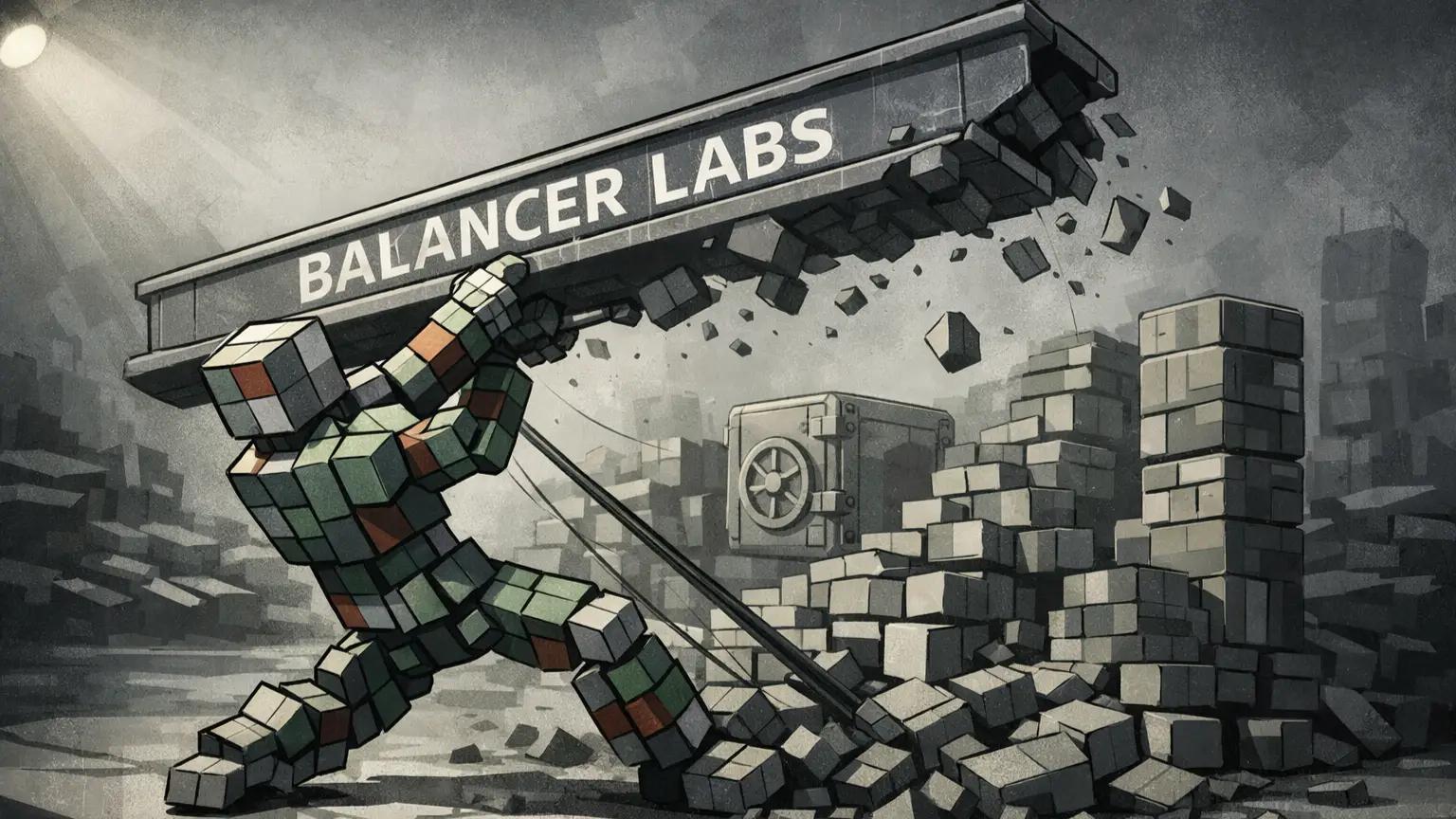
Governance overhaul redirects 100% protocol fees to treasury, introduces buyback plan and compensation for veBAL holders
TL;DR
- Balancer proposes shutting down Labs after a $128 million exploit and restructuring operations under DAO control
- Annual budget cut to $1.9 million, workforce halved, and emissions model fully removed
- New tokenomics routes all fees to treasury, introduces buybacks and $500,000 compensation plan
We’ve launched the all-new COIN360 Perp DEX, built for traders who move fast!
Trade 130+ assets with up to 100× leverage, enjoy instant order placement and low-slippage swaps, and earn USDC passive yield while climbing the leaderboard. Your trades deserve more than speed — they deserve mastery.
Balancer is moving to shut down Balancer Labs and consolidate operations under a DAO-led structure following a $128 million exploit tied to its V2 system, according to governance proposals dated March 23, 2026. The restructuring plan transitions responsibilities to Balancer OpCo acting as an agent of the DAO while maintaining protocol continuity. The move follows months of crisis response after the November 3, 2025 incident, which targeted composable pool logic and enabled attackers to manipulate balances and drain funds across multiple networks, including Ethereum, Polygon, and Arbitrum.
The exploit was described across reports as a design-level vulnerability involving rounding inconsistencies and invariant manipulation, allowing attackers to bypass safeguards within smart contract interactions. Ethereum pools accounted for approximately $100 million of the losses, while an additional $28 million was drained from other deployments. Recovery efforts following the incident included whitehat interventions that retrieved about $8 million in user funds, alongside a separate $19.7 million handled through StakeWise-related pools under structured reimbursement terms.
Balancer’s internal restructuring reduces headcount from roughly 25 to 12.5 full-time equivalents while cutting the annual operating budget to $1.9 million from $2.87 million. The prior economic model showed the DAO capturing about $290,000 per year while running a deficit of roughly $2.6 million and issuing around 3.78 million BAL tokens annually. The revised framework is designed to reduce the deficit to about $700,000 and extend treasury runway from under four years to approximately nine years, with expected annual fee capture rising to $1.22 million under the updated structure.
The governance proposal eliminates BAL emissions entirely, removes veBAL, and redirects 100% of protocol fees to the DAO treasury while reducing the protocol’s share of V3 swap fees from 50% to 25% to increase liquidity provider incentives. The Balancer Alliance program is also being discontinued, and governance authority is shifting toward a more centralized core team mandate for operational decisions while maintaining tokenholder control over major changes. A buyback-and-burn program capped at 35% of treasury value, estimated at about $3.6 million, is included as part of the transition.
The plan introduces a $500,000 stablecoin compensation campaign distributed over six months for veBAL holders affected by the removal of locking incentives. At an estimated price of $0.16 per BAL, the buyback mechanism could retire around 35% of circulating supply if fully executed. Market conditions following the exploit saw BAL decline more than 60% and remain down over 99% from its 2021 peak, with liquidity withdrawals accelerating as users exited positions during the crisis period, according to COIN360 crypto price index data reflecting broader crypto price and coin market cap movements.
Balancer co-founder and CEO Marcus Hardt said, “The technology works. Balancer v3 works. Boosted pools work. The infrastructure we built is strong,” while adding, “What stopped working was the economic model around it.” He also addressed tokenholder impact, stating, “If you locked in good faith, losing those economic rights is painful.” Co-founder Fernando Martinelli said he considered shutting down the protocol entirely but noted that it continued generating over $1 million in annualized fees over the last three months, citing ongoing activity as a basis for continuing operations under a revised structure.
Martinelli also supported ending token emissions and acknowledged governance distortions tied to external incentives, stating the existing system had turned into a meta-governance structure influenced by bribery markets and external actors. He said the DAO had been capturing only 17.5% of generated value under the prior model and backed a fair-price buyback approach to allow holders to exit positions. The restructuring plan narrows the protocol’s product focus to core offerings including reCLAMM pools, liquidity bootstrapping pools, stablecoin and liquid staking token pools, and weighted pools across selected chains.
This article has been refined and enhanced by ChatGPT.


