




 USD
USD
California’s Proposed 5% Billionaire Wealth Tax Triggers Crypto and Tech Backlash, Raising Fears of Capital Flight


Crypto and Tech Leaders Warn Unrealized Gains Tax Could Accelerate California Wealth Exodus
TL;DR
- California’s proposed 5% wealth tax on billionaires, including unrealized gains, is drawing sharp criticism from crypto and tech executives.
- Industry leaders warn the measure could force asset sales, discourage innovation, and accelerate capital and talent migration out of the state.
- The proposal is heading toward a 2026 ballot vote, with legal, economic, and political risks still unresolved.
We’ve just launched the all-new COIN360 Perp DEX, built for traders who move fast!
Trade 130+ assets with up to 100× leverage, enjoy instant order placement and low-slippage swaps, and earn USDC passive yield while climbing the leaderboard. Your trades deserve more than speed — they deserve mastery.
California’s proposed 2026 Billionaire Tax Act is rapidly becoming a flashpoint between state policymakers and some of the most influential figures in crypto and technology, as industry leaders warn that a 5% tax on net worth above $1 billion—applied even to unrealized gains—could fundamentally reshape the state’s economic landscape. The measure, filed for the November 2026 ballot, would impose a one-time levy, payable either immediately or over five years with interest, on assets that have not been sold or converted to cash. Critics argue this structure misunderstands how modern wealth is held, particularly among founders whose net worth is tied to volatile startup equity or long-term crypto holdings rather than liquid income.
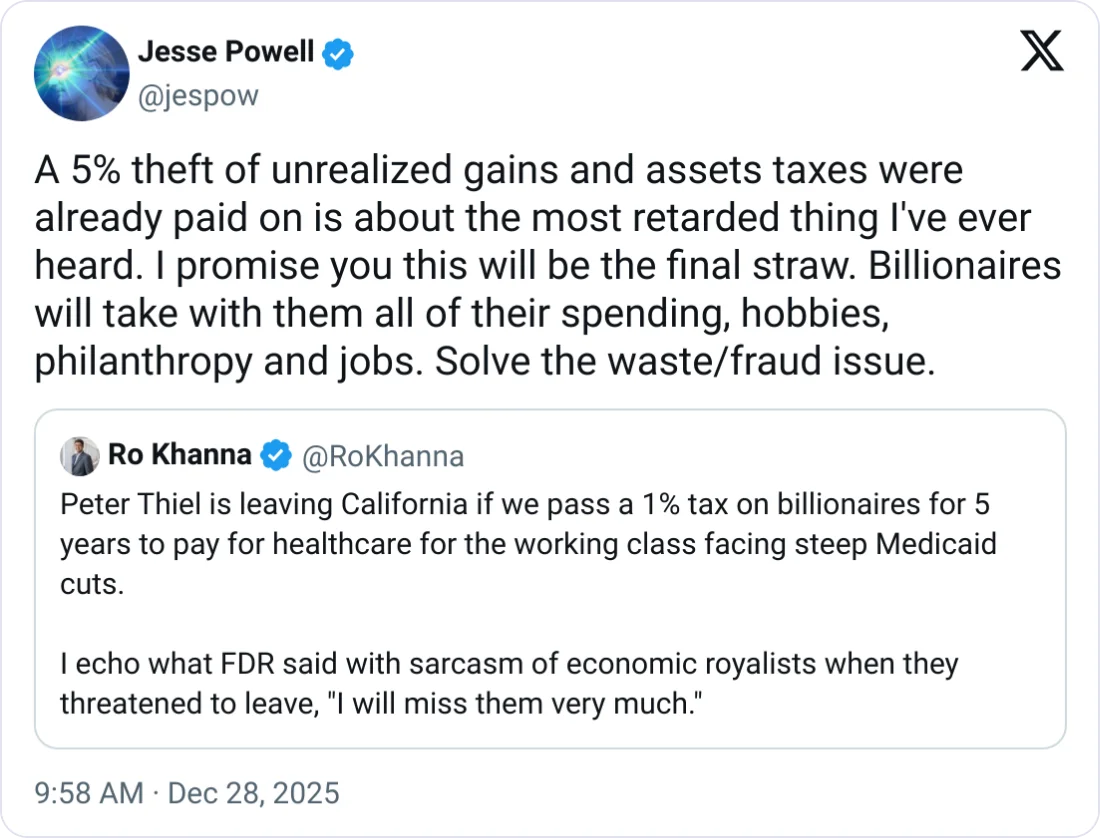
Opposition has been especially vocal within the crypto sector, where executives and investors stress that taxing unrealized gains introduces asymmetric risk. Asset values reflected in a crypto price index or broader coin market cap can swing dramatically, yet the tax obligation would remain fixed even if valuations collapse. Jesse Powell, co-founder of Kraken, warned publicly that such a policy would be a breaking point, saying billionaires would leave California entirely, taking with them not just capital but also spending, philanthropy, and jobs.
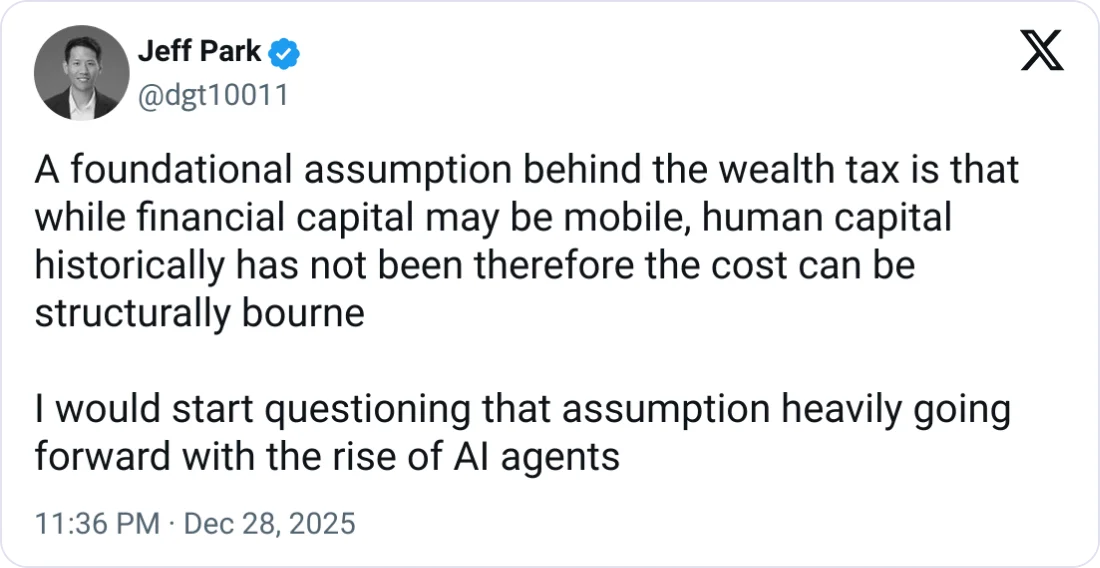
Others, including ProCap BTC chief investment officer Jeff Park, echoed the sentiment, arguing that founders could be forced into premature liquidity events—selling equity, crypto assets, or borrowing against holdings—purely to satisfy tax bills, a dynamic they say discourages long-term innovation and risk-taking.
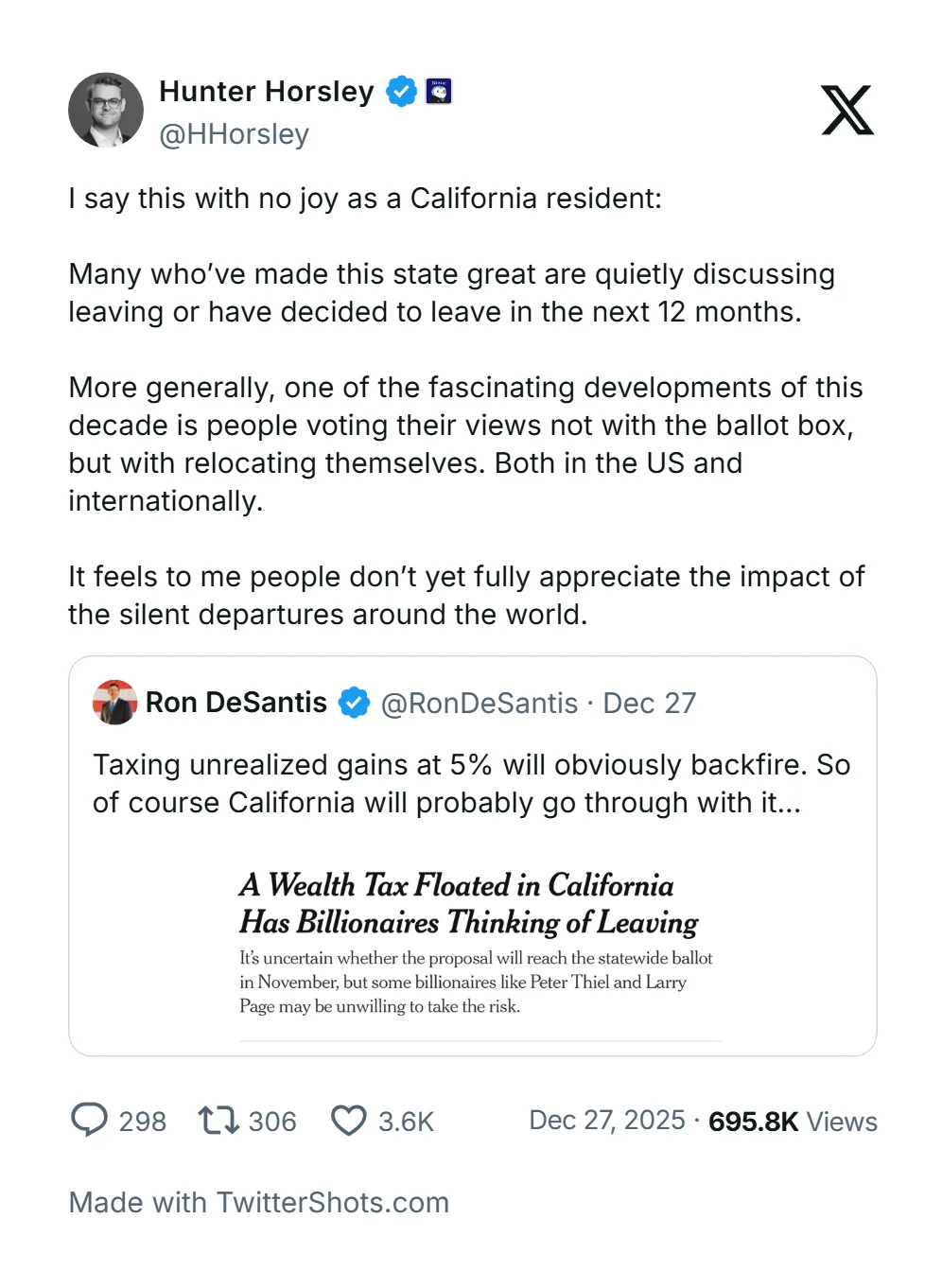
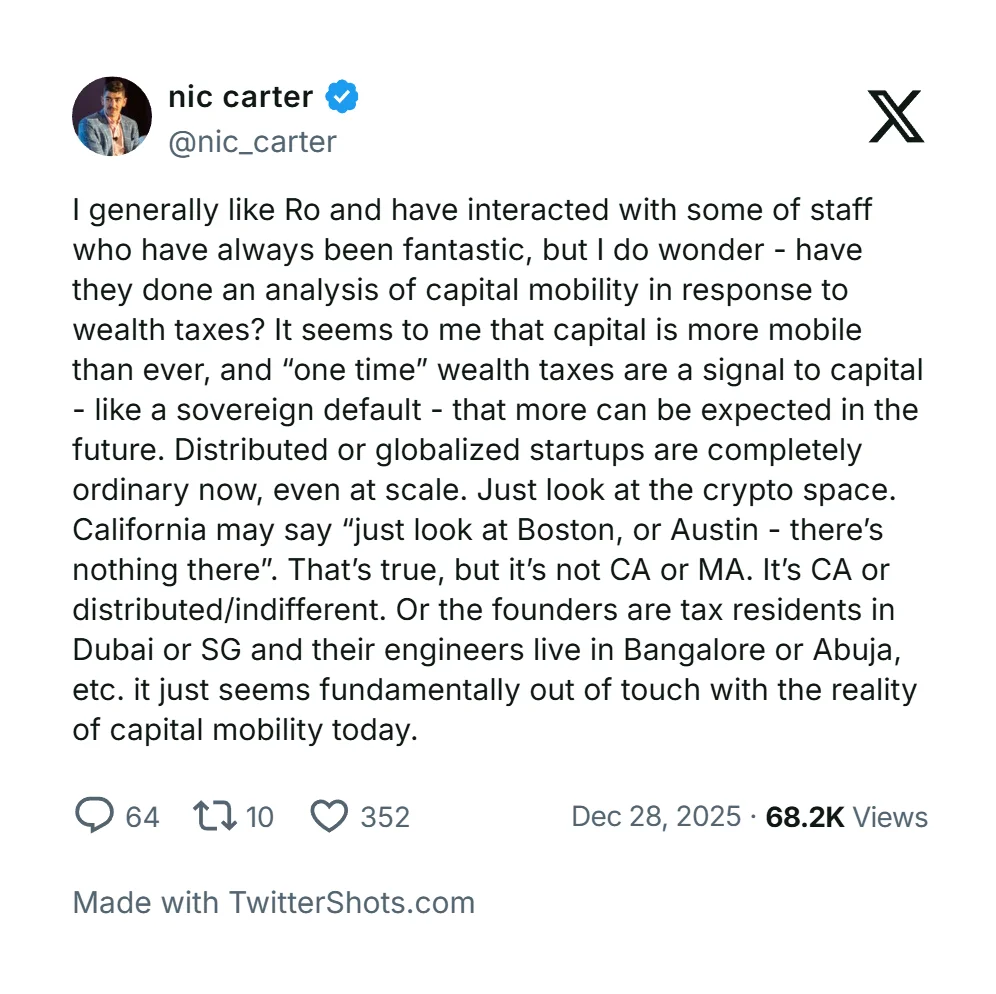
The backlash extends beyond crypto-native firms. Venture capital figures and technology executives have framed the proposal as a signal problem, suggesting it undermines confidence in California as a stable base for capital formation. Nic Carter of Castle Island Ventures likened the policy risk to a form of economic self-sabotage, questioning whether lawmakers have fully accounted for how mobile capital has become in a globalized, digital economy. Historical examples are frequently cited, including European wealth taxes that coincided with capital outflows, reinforcing fears that California could see a similar erosion of its tax base if high-net-worth individuals relocate to lower-tax jurisdictions.
Supporters of the initiative, led by SEIU-UHW, counter that the tax is designed to address chronic funding gaps in healthcare, education, and food assistance, with 90% of projected revenue earmarked for healthcare alone. Backers argue that California’s wealthiest residents have benefited disproportionately from the state’s infrastructure and talent pool, and that a modest share of extreme wealth should be redirected toward public services, especially amid federal funding constraints. Some policymakers have defended the proposal as a long-term investment in social stability, which they say ultimately supports innovation and economic growth.
The proposal’s path forward remains uncertain. It must first clear a significant signature threshold to qualify for the 2026 ballot, after which it could face legal challenges over constitutionality, valuation methodology, and enforcement. Meanwhile, the debate has already introduced new uncertainty into market sentiment, as investors track how policy risk might affect crypto price dynamics, company valuations, and the broader coin market cap tied to California-based firms. For now, the wealth tax proposal stands as a high-stakes test of how far states can go in taxing concentrated wealth without triggering the very capital flight they seek to prevent.
This article has been refined and enhanced by ChatGPT.


