




 USD
USD
Citadel’s Push for SEC Oversight Sparks Fierce DeFi Backlash as Uniswap Founder Calls Out Regulatory Influence

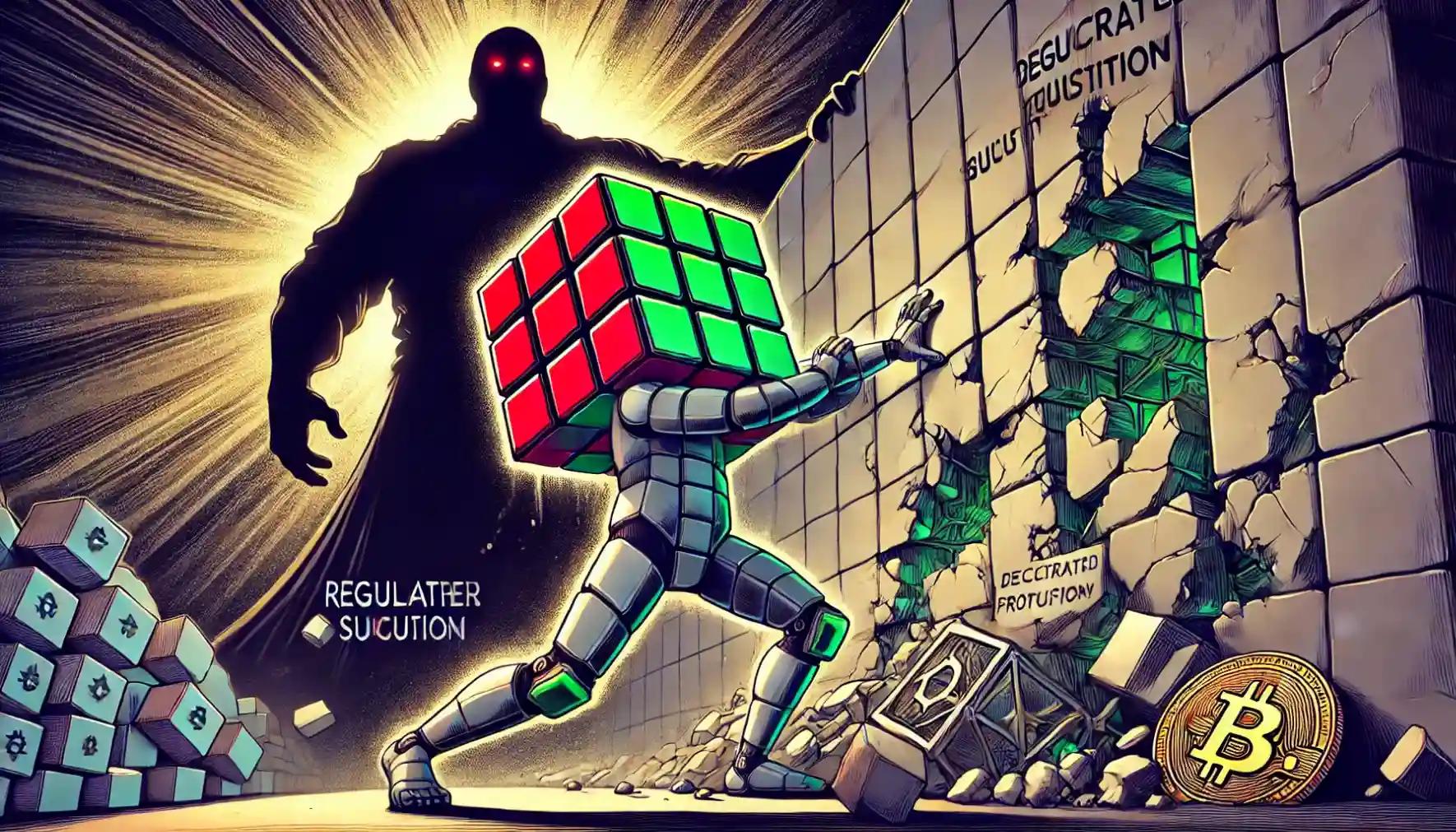
Growing Industry Tension as Citadel’s SEC Letter Challenges the Core Premise of Decentralized Finance
TL;DR
- Citadel urged the SEC to treat certain DeFi protocols like traditional exchanges, triggering strong industry outrage.
- Uniswap founder Hayden Adams accused Ken Griffin’s firm of steering regulators toward rules that could redefine developer liability.
- The controversy raises fears of sweeping compliance burdens that could reshape DeFi’s structure, governance, and long-term viability.
Citadel’s move to challenge the autonomy of decentralized finance landed with a heavy thud across the crypto sector on December 4, 2025, after the firm submitted a formal letter to U.S. regulators arguing that several DeFi systems operate similarly to centralized exchanges or broker-dealers and should therefore face comparable regulatory scrutiny. Coverage of the letter emphasized that Citadel wasn’t merely asking the SEC to monitor isolated misconduct — it was urging the agency to treat entire categories of decentralized protocols as regulated financial venues, opening the door to broad rulemaking that could fundamentally alter how DeFi is built, deployed, and maintained.
Hayden Adams, the founder of Uniswap, publicly blasted the development, asserting that Citadel’s founder Ken Griffin is influencing U.S. policymakers in ways that would reclassify DeFi developers as de facto operators of financial infrastructure. His remarks framed the letter as a targeted campaign capable of redefining the legal exposure of smart-contract authors by shifting the regulatory lens from protocol usage toward software creation itself. The portrayal suggests that if regulators embrace this narrative, developers who never custody user assets and do not control day-to-day operations could nonetheless be treated like centralized exchange administrators, with all accompanying licensing, reporting, and compliance obligations.
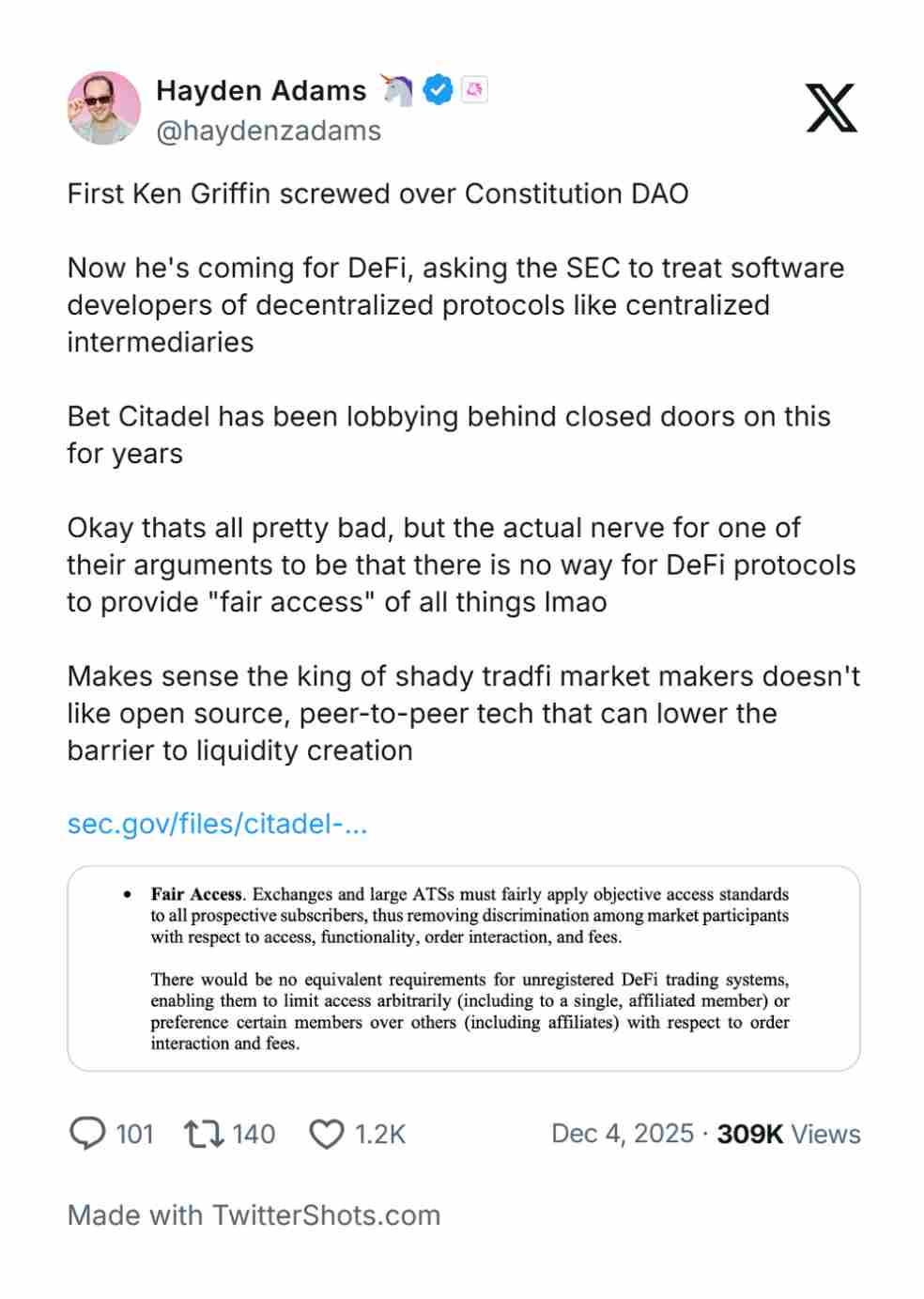
Industry reaction turned sharply critical, as analysts noted that the implications stretch far beyond Uniswap or Citadel. The tension reflects a broader existential clash: whether decentralized software should be governed like traditional financial institutions simply because its outcomes resemble market functions. A regulatory pivot toward Citadel’s framing would force major protocols to contend with operational burdens they were never architected to handle, potentially requiring compliance-ready entities, legally managed front-ends, or more conservative protocol design choices. The risk of consolidation looms large, with only the most well-capitalized or institutionally aligned projects able to absorb the requirements, leaving smaller teams unable to operate under the expanded obligations.
Adams’ argument taps into a deep anxiety within the DeFi ecosystem: once code authorship becomes equated with operational control, the permissionless and open-source culture that drove the sector’s growth could face unprecedented constraints. Observers warned that such a shift may discourage new developers, push innovation offshore, or bifurcate DeFi into compliance-forward hybrids and fringe, fully decentralized enclaves. Citadel’s position also highlights a long-brewing divide between traditional market makers seeking regulatory clarity and crypto builders determined to preserve decentralization as a functional, not symbolic, principle.
Coverage of the story underscored the symbolic weight of the moment, noting how Citadel’s request arrives during a period of heightened scrutiny around financial market infrastructure and the role automated protocols play in liquidity, trading, and asset routing. The framing of DeFi as structurally comparable to an exchange challenges long-held assumptions about on-chain autonomy, code permanence, and distributed governance. As policymakers weigh the arguments, the sector braces for potential regulatory interpretations that could redefine who bears responsibility when decentralized systems perform market-like functions at global scale.
This article has been refined and enhanced by ChatGPT.


