




 USD
USD
Citi Lifts Bitcoin Target to $113,000 and Ether Forecast to $3,028


ETF recovery and easier financial conditions underpin Citi’s new 12-month crypto outlook
TL;DR
- Citi raised its 12-month Bitcoin target to $113,000 and its Ether target to $3,028 on October 1, 2026.
- Recovering crypto ETF flows, stronger market activity and improving macro conditions were central to the upgrades.
- Bitcoin received the larger implied upside, while Ether remained capped near a key technical resistance area.
Trade smarter on Jupiter, Solana’s leading DEX built for fast execution and deep liquidity.
Swap tokens at competitive rates, route across multiple liquidity sources automatically, and access perpetuals, DCA, and advanced trading tools — all in one place!
Citi raised its 12-month Bitcoin and Ether forecasts on October 1, 2026, citing stronger crypto-market activity, renewed ETF demand and improving macro conditions. The bank lifted its Bitcoin target from $82,000 to $113,000 and its Ether target from $2,240 to $3,028, shifting from more defensive assumptions toward an institutional-recovery scenario.
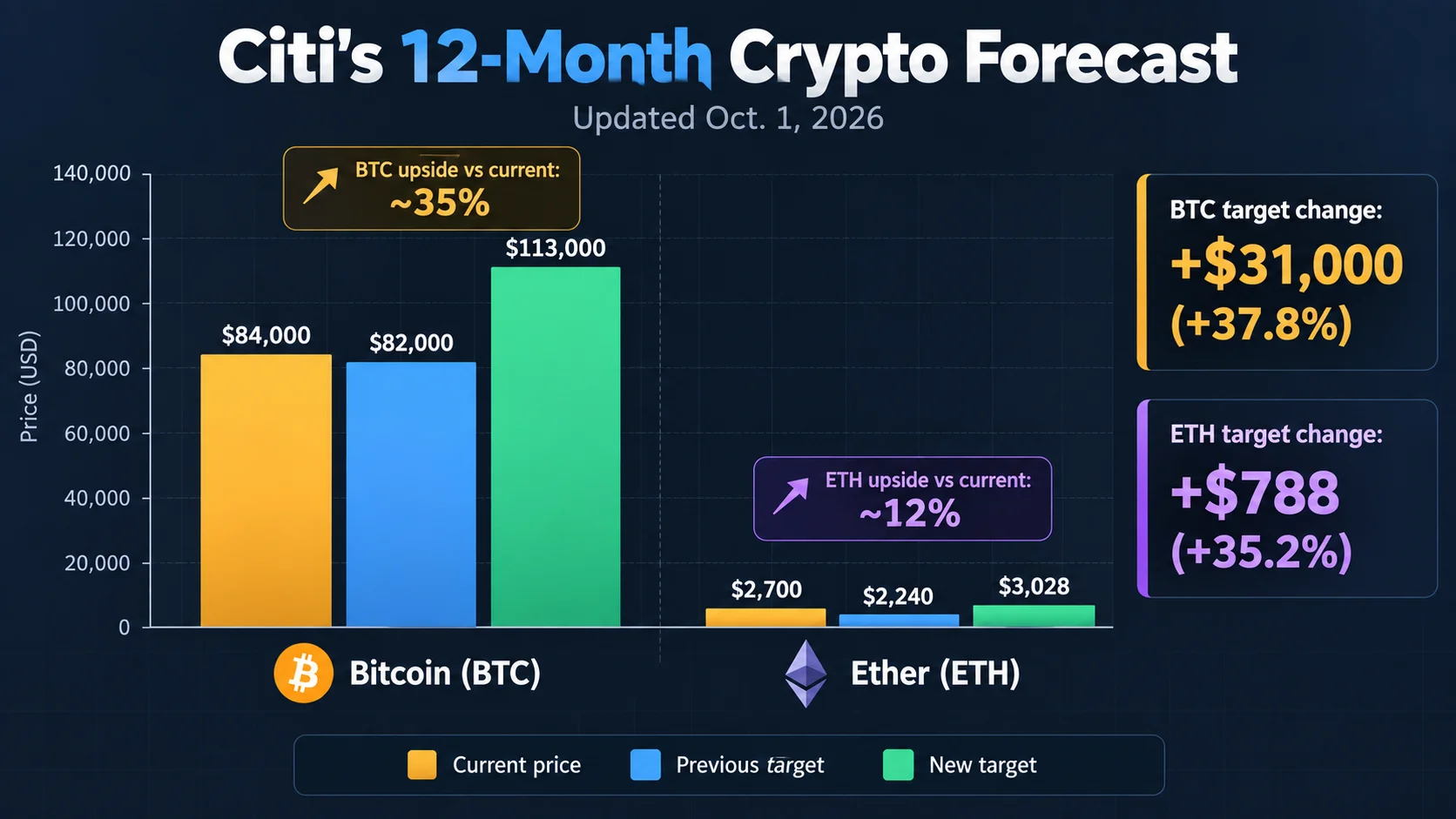
The forecasts came from a Wednesday research note. Bitcoin was trading near $84,000 and Ether near $2,700 when the forecast coverage appeared, putting Citi’s targets about 35% above the prevailing Bitcoin price and roughly 12% above the Ether price.
Bitcoin’s implied gain from its prevailing market price was therefore more than twice Ether’s. Citi’s framework placed greater weight on the maturity of Bitcoin’s spot ETF channel, which gives advisers and brokerages an established regulated route for increasing exposure.
Bitcoin ETF Flows Reverse Midyear Weakness
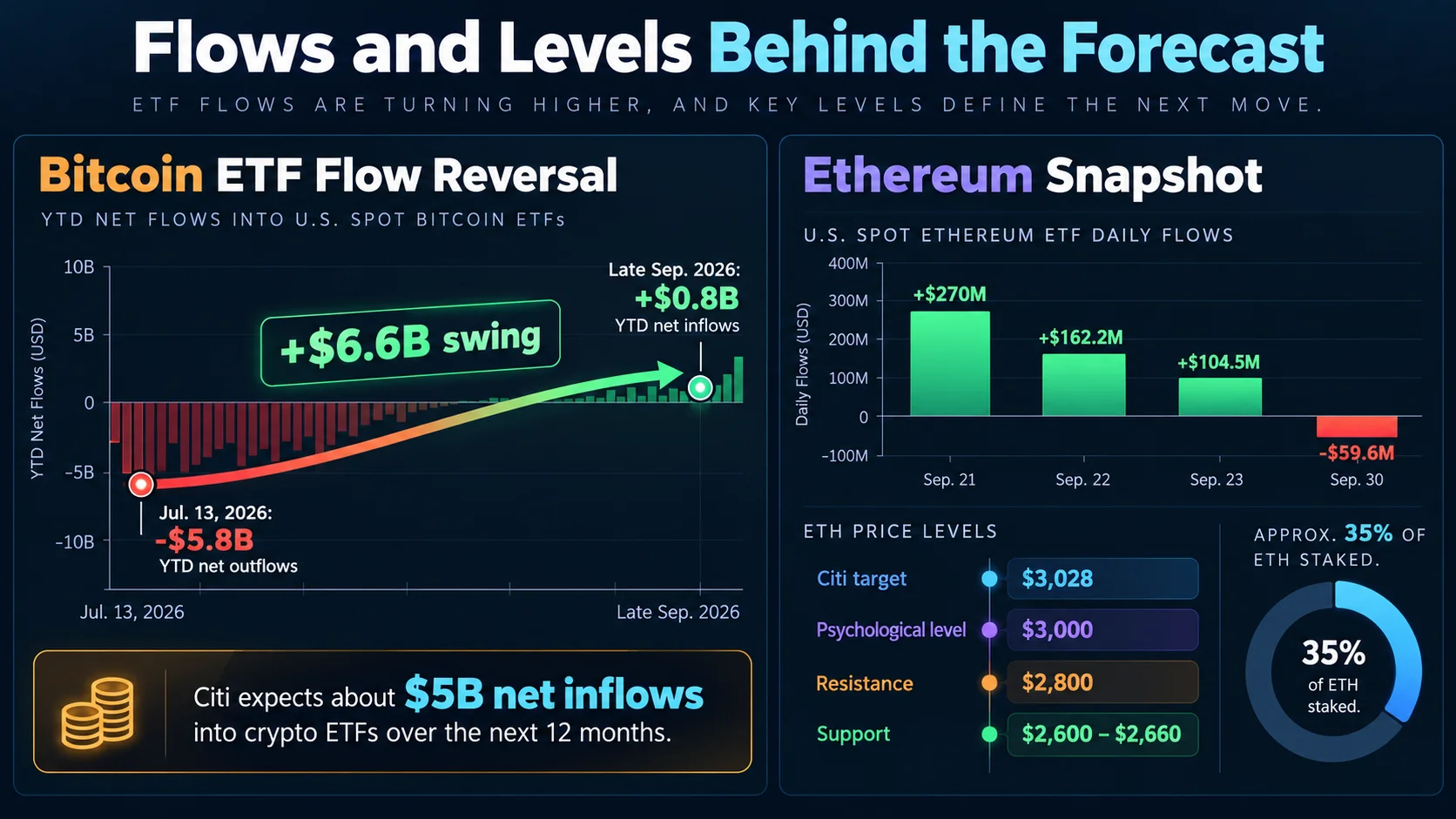
Citi expects approximately $5 billion of net inflows into products such as crypto ETFs over the next 12 months. The bank’s framework assumes advisers and brokerages will increase allocations gradually rather than making one large portfolio shift, leaving the forecast dependent on a steady pipeline of institutional buying.
U.S. spot Bitcoin ETFs had recorded $5.8 billion of year-to-date net outflows by July 13. By late September, the 2026 total had swung to approximately $800 million of net inflows, an improvement of more than $6.6 billion from the July deficit.
That reversal became an important component of Citi’s higher Bitcoin forecast because ETF demand can absorb available supply without requiring retail investors to provide the entire increase in buying.
Citi also pointed to U.S. Treasury purchases of longer-dated bonds as a source of renewed momentum across risk assets. Easier financial conditions can reduce the relative attraction of cash while increasing investors’ willingness to hold volatile assets such as crypto.
Bitcoin gained more than 10% between the Senate’s September 15 failure to advance the Clarity Act and the end of the month. The stalled legislation left a major part of the U.S. crypto market-structure framework unresolved, though Citi assessed that later Securities and Exchange Commission rule announcements softened the market reaction.
The bank’s forecast therefore assumes ETF access and administrative regulatory progress can continue supporting demand while congressional uncertainty persists. The targets remain dependent on changing ETF flows, liquidity, policy developments and macro conditions rather than functioning as fixed estimates of value.
Ether Faces $2,800 Resistance Despite Stronger Forecast
Ether’s higher Citi target came as the asset repeatedly failed to hold above the $2,800 area during the previous week. An earlier breakout attempt reached roughly $2,804 before reversing, leaving ETH between support around 2,600-2,660 and resistance near $2,800.
A sustained break through that ceiling would put the psychologically important $3,000 level back into play, with Citi’s forecast sitting in roughly the same technical zone. Strong ETF demand had already accompanied an earlier attempt above resistance but was not enough to keep ETH there.
Institutional demand remained substantial but became less consistent toward the end of September.
The first three sessions together produced approximately $536.7 million of inflows. Farside Investors recorded the later September 30 outflow, showing that institutional demand remained supportive but volatile.
Ethereum also had a supply-side factor beneath the price setup, with approximately 35% of all ETH staked. That reduces the amount of liquid ETH available for trading and could amplify the impact of renewed demand if institutional buying accelerates.
Citi’s revised outlook leaves the two assets with different near-term setups. Bitcoin’s forecast relies heavily on the durability of recovering ETF flows, continued adviser allocations and supportive bond-market conditions. Ether received a substantial forecast upgrade but remained constrained by the $2,800 technical ceiling and less consistent ETF flows.
This article has been refined and enhanced by ChatGPT.


