




 USD
USD
Crypto Engagement Slides on X and YouTube as Algorithm Disputes and Retail Fatigue Hit Social Platforms


Algorithm Tweaks, Bot Noise, and a Sharp Drop in Retail Attention Converge Across X and YouTube
TL;DR
- Crypto creators are reporting reduced visibility on X amid algorithm changes, bot overload, and disputes over how content is ranked and surfaced.
- Crypto YouTube viewership has fallen to its lowest level since early 2021, signaling deep retail disengagement.
- Analysts and creators increasingly view the trend as a broader market fatigue issue rather than a single-platform problem.
We’ve launched the all-new COIN360 Perp DEX, built for traders who move fast!
Trade 130+ assets with up to 100× leverage, enjoy instant order placement and low-slippage swaps, and earn USDC passive yield while climbing the leaderboard. Your trades deserve more than speed — they deserve mastery.
Crypto-focused creators and analysts are raising alarms over a noticeable collapse in social media engagement, as disputes around algorithmic visibility on X intersect with a steep decline in crypto YouTube viewership. Reports published in mid-January 2026 describe a landscape where crypto content is harder to find, retail interest appears exhausted, and platforms are struggling to balance noise, bots, and relevance at scale.
Tension around X’s recommendation system intensified after users reported seeing far less crypto-related content in their feeds, replaced by politics, general-interest posts, and engagement-driven material. Several long-time community members said the shift marked a sharp break from earlier years when topic-based networks reliably surfaced posts from within crypto circles. One market participant described crypto now accounting for roughly 10% of their feed, arguing that the platform’s once-cohesive topical communities had effectively dissolved.
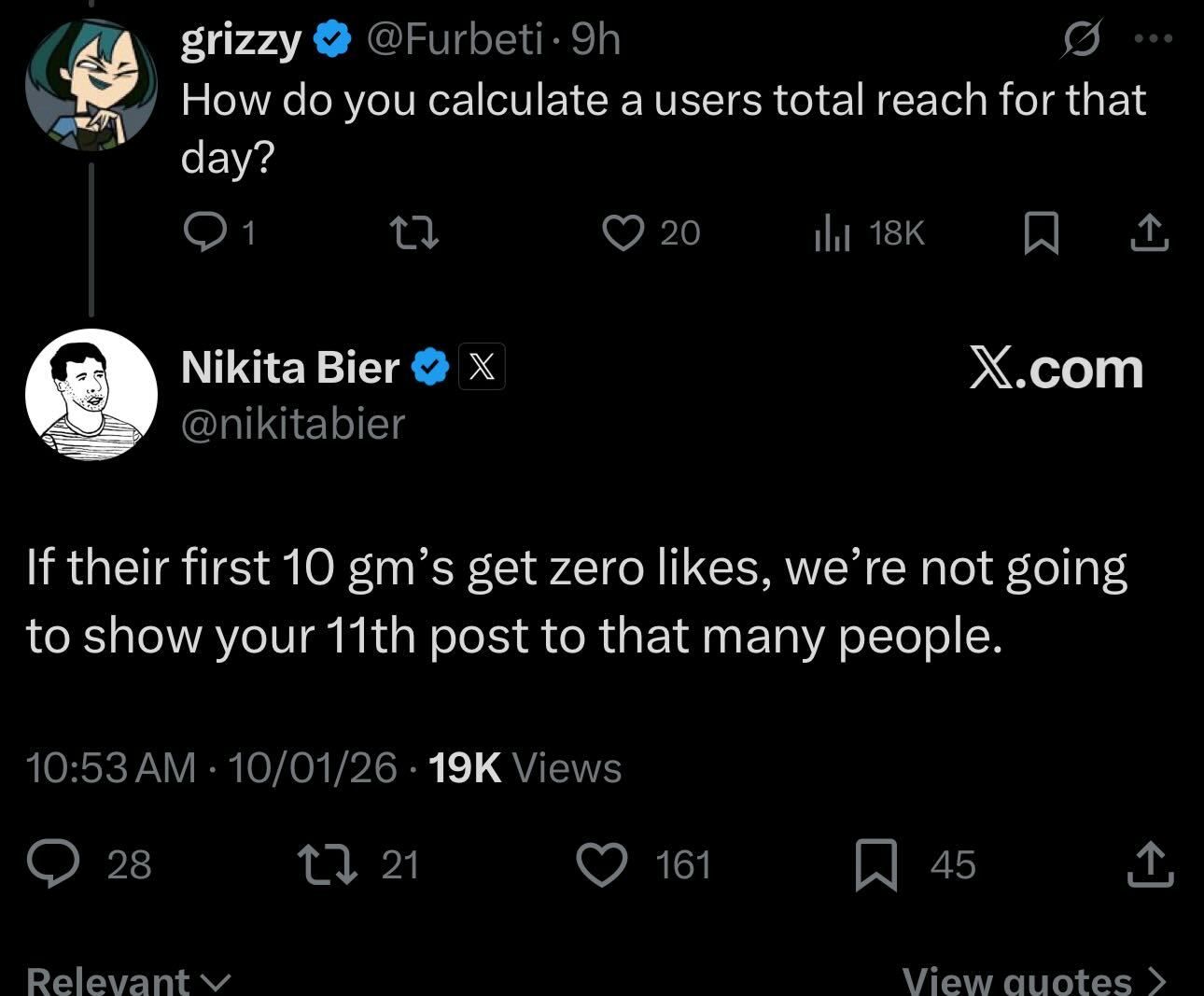
The debate escalated after X’s head of product, Nikita Bier, addressed the complaints in a series of posts that were later deleted. Bier argued that the platform’s feed mechanics are constrained by scale, noting that users are shown only about 20 to 30 posts per day on average, making it mathematically impossible to surface everything from every followed account. He also warned that repetitive, low-value engagement such as short greeting replies can reduce reach and that quoting certain posts may influence recommendation patterns for as long as three to six months. His assertion that “Crypto Twitter is dying from suicide, not from the algorithm” triggered immediate backlash, with critics accusing the platform of quietly suppressing legitimate discourse and incentivizing creators to post less.
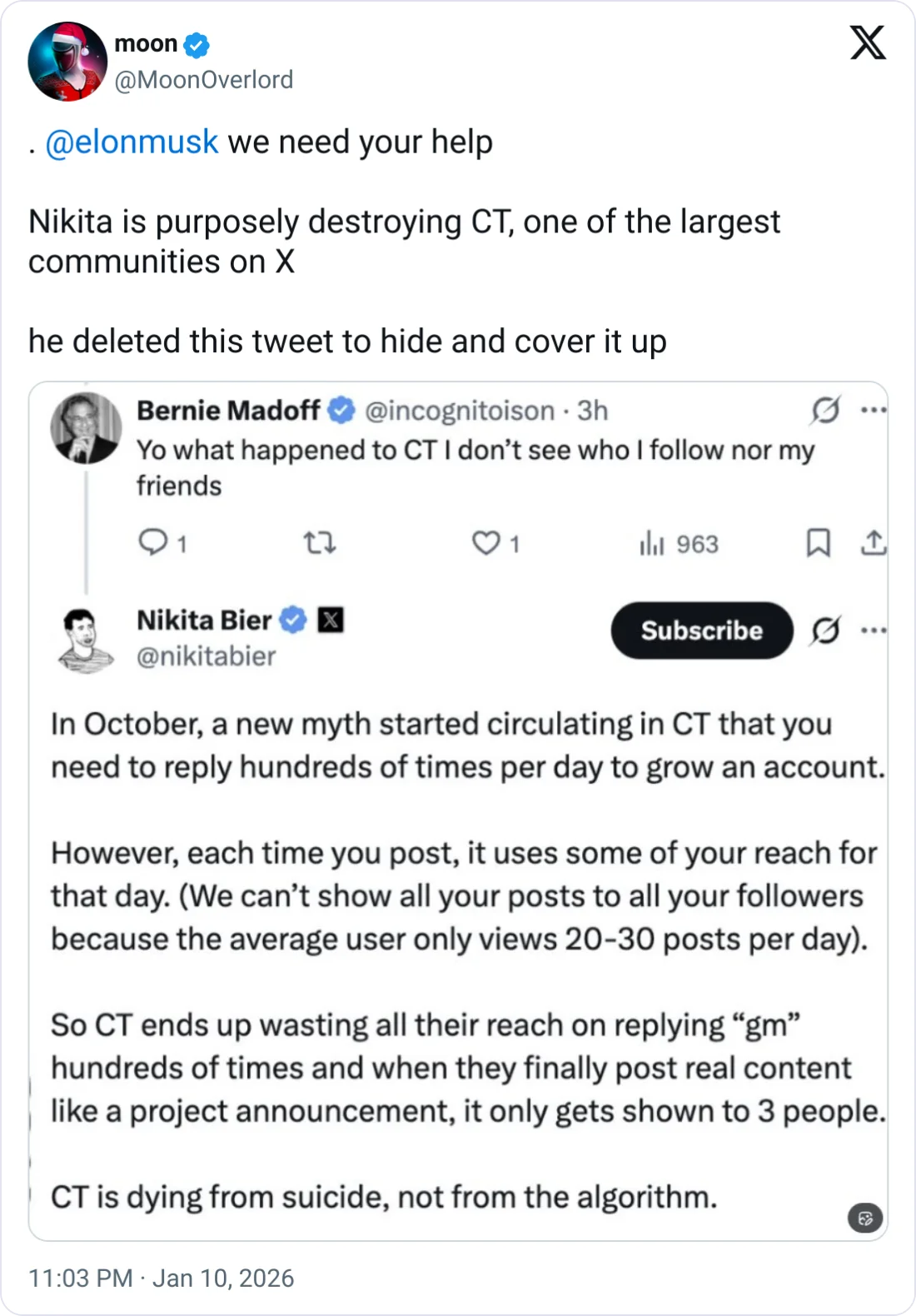
Concerns were further amplified by allegations of conflicts of interest tied to Bier’s advisory role within the crypto sector, though supporters pushed back, arguing that X’s broader priorities extend well beyond digital assets. Some creators countered suppression claims by pointing to individual posts reaching tens of thousands of views, suggesting that critical or investigative content can still break through. Others framed the issue as less about censorship and more about signal overload.
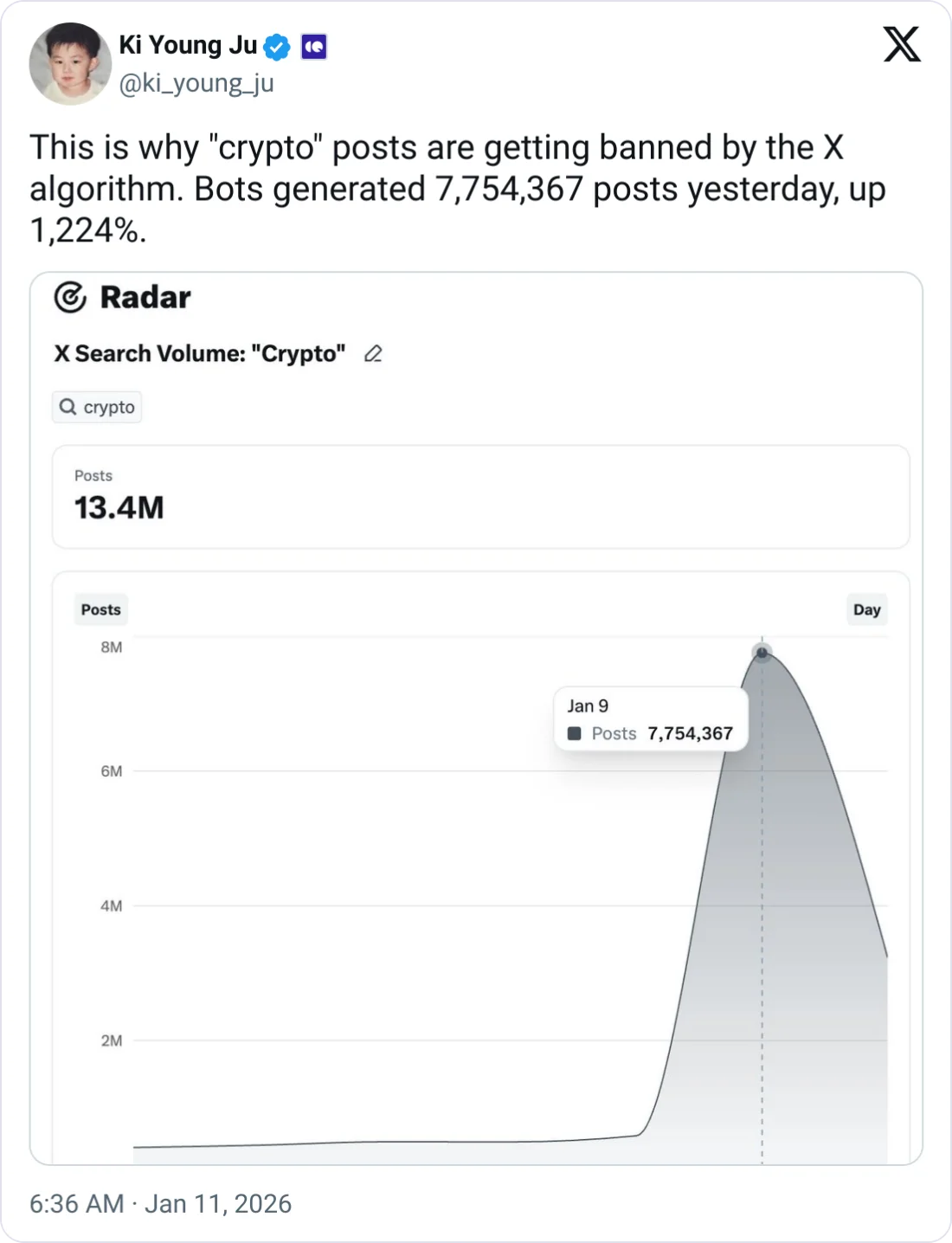
Data cited by industry figures points to a dramatic rise in automated activity complicating the picture. CryptoQuant founder Ki Young Ju reported more than 7.7 million crypto-labeled bot posts appearing in a single day, representing a 1,224% surge. According to Ju, paid verification failed to deter spam, allowing bots to flood the platform and forcing algorithmic defenses that may inadvertently penalize genuine users. He argued that the inability to reliably distinguish humans from bots has become a structural problem affecting visibility across the board.
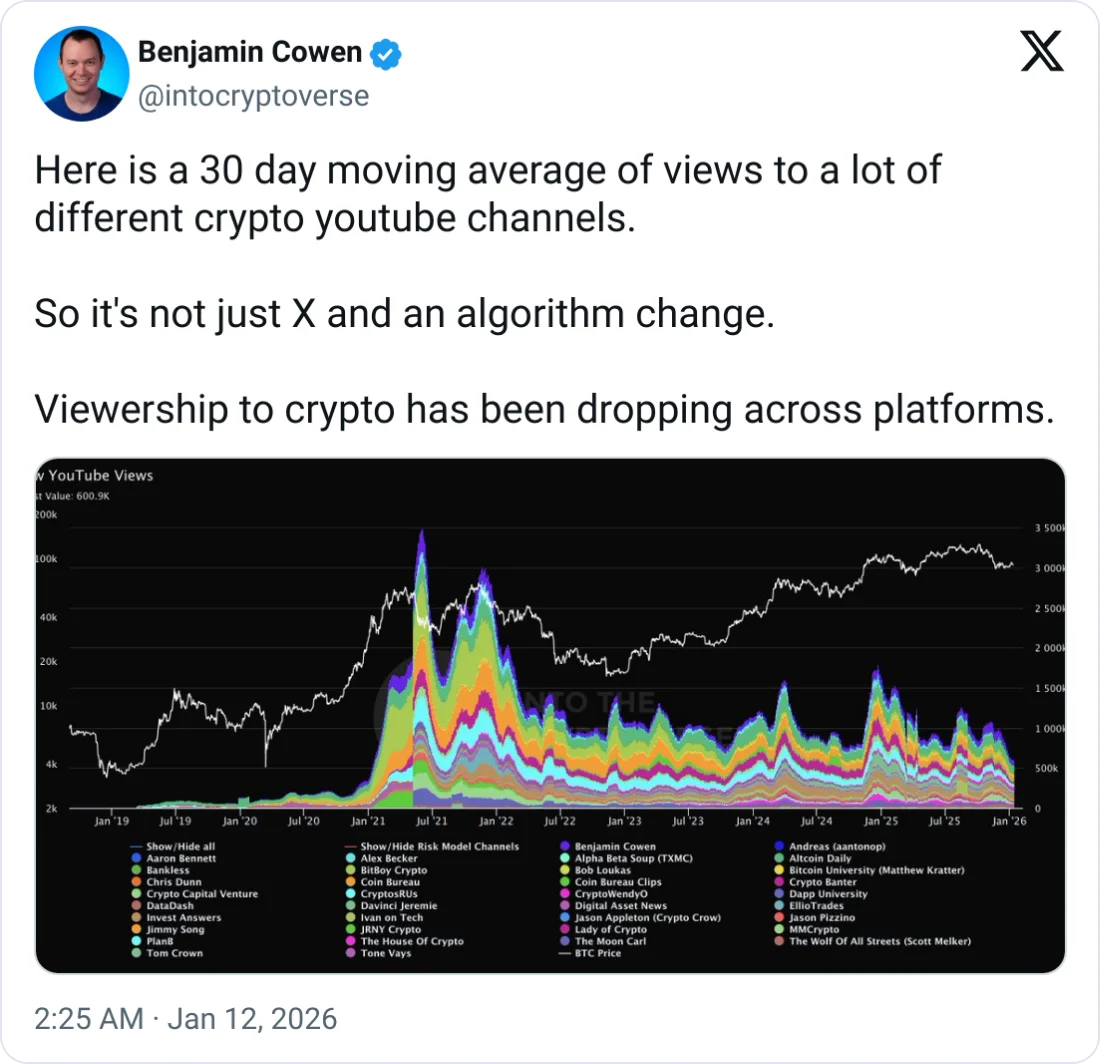
Parallel trends are playing out on YouTube, where crypto content viewership has dropped to levels last seen in early 2021. View data tracked over recent months shows a sustained decline rather than a short-term dip, reinforcing the view that retail interest has materially weakened. Analysts such as Benjamin Cowen highlighted 30-day moving averages across multiple channels that reveal a broad-based contraction in attention, mirroring engagement losses seen on X.
Creators have openly acknowledged the shift. YouTuber Tom Crown described the collapse as platform-wide and accelerating since October, while Bitcoin investor Polaris XBT characterized current engagement as consistent with bear market social interest. Several commentators attributed the pullback to audience exhaustion after years of scams, failed projects, and repeated losses, arguing that retail participants are simply tuning out.
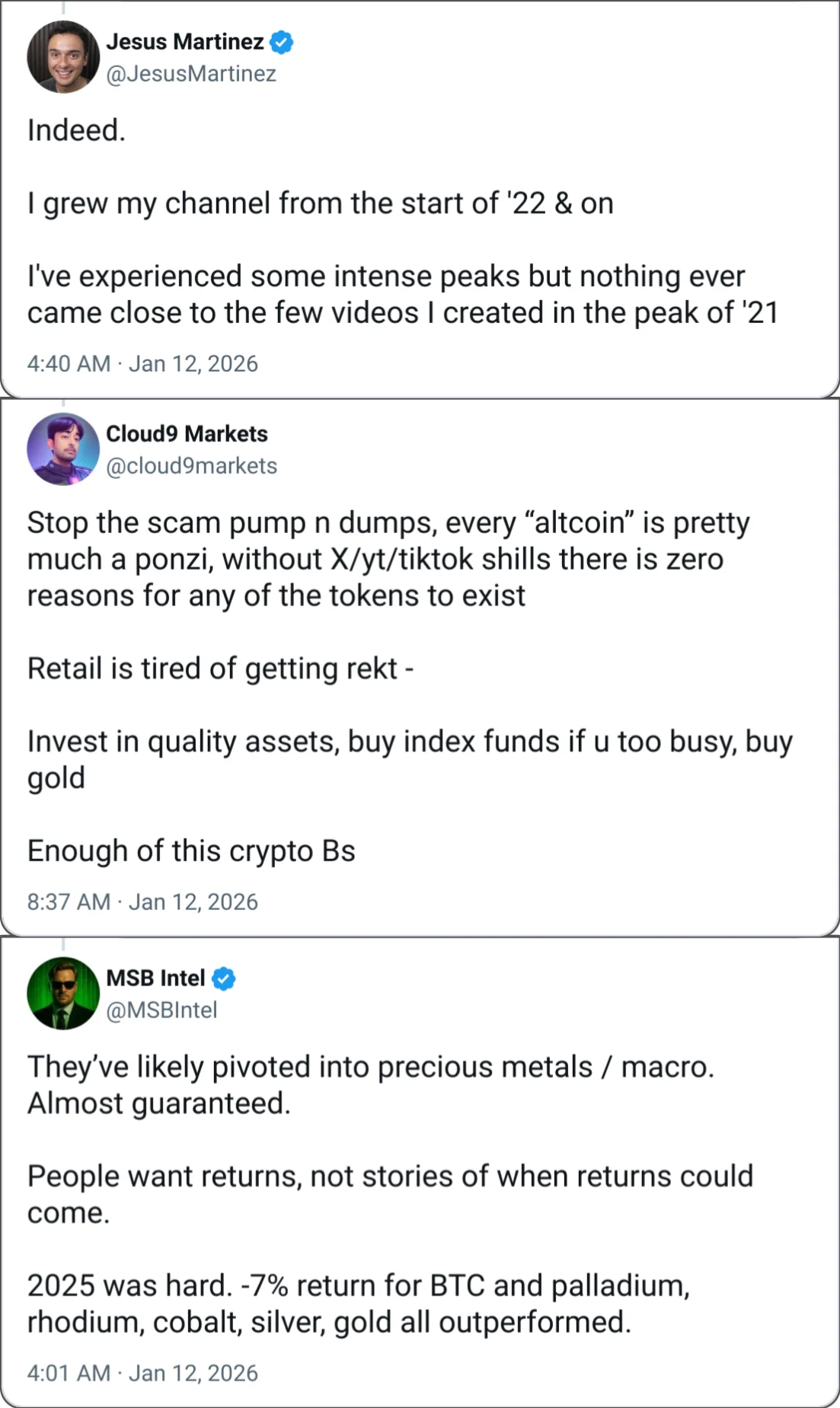
Market context appears to reinforce that narrative. Observers have noted that institutions are increasingly dominating trading activity while retail participation fades, a pattern reflected in both price performance and social metrics. Broader asset trends, including underwhelming returns for Bitcoin relative to certain commodities during 2025, have also weighed on sentiment. Despite the gloom, some analytics suggest early stabilization, with improving sentiment around Bitcoin even as interest in Ethereum remains fragmented. Analysts continue to point to key price thresholds as potential inflection points for retail re-engagement, but for now, the data underscores a crypto discourse ecosystem under strain from both technical and psychological fatigue.
This article has been refined and enhanced by ChatGPT.


