




 USD
USD
Crypto Treasury Losses Mount as Strategy, BitMine Report Billions in Unrealized Declines Amid Bitcoin, Ethereum Selloff

Public Crypto Treasuries Sink Below Cost as Bitcoin Slides Toward $60,000 and Ethereum Breaks $2,000
TL;DR
- Public crypto treasury firms reported more than $25 billion in combined unrealized losses as of Feb. 5–6, 2026.
- Strategy disclosed $9.2 billion in Bitcoin paper losses while BitMine reported up to $8.4 billion tied to Ethereum.
- Executives said insolvency risk remains remote unless extreme price scenarios persist for years.
We’ve launched the all-new COIN360 Perp DEX, built for traders who move fast!
Trade 130+ assets with up to 100× leverage, enjoy instant order placement and low-slippage swaps, and earn USDC passive yield while climbing the leaderboard. Your trades deserve more than speed — they deserve mastery.
Publicly listed crypto treasury firms disclosed deepening unrealized losses across Bitcoin and Ethereum holdings as sharp declines in crypto price dragged balance sheets below cost basis during the first week of February. Data compiled across multiple reports published between Feb. 5 and Feb. 6, 2026 showed aggregate paper losses exceeding $25 billion among companies whose primary strategy centers on accumulating digital assets rather than operating crypto infrastructure. The downturn coincided with steep weekly declines across major assets tracked by the crypto price index and followed heavy selling pressure across the broader coin market cap.
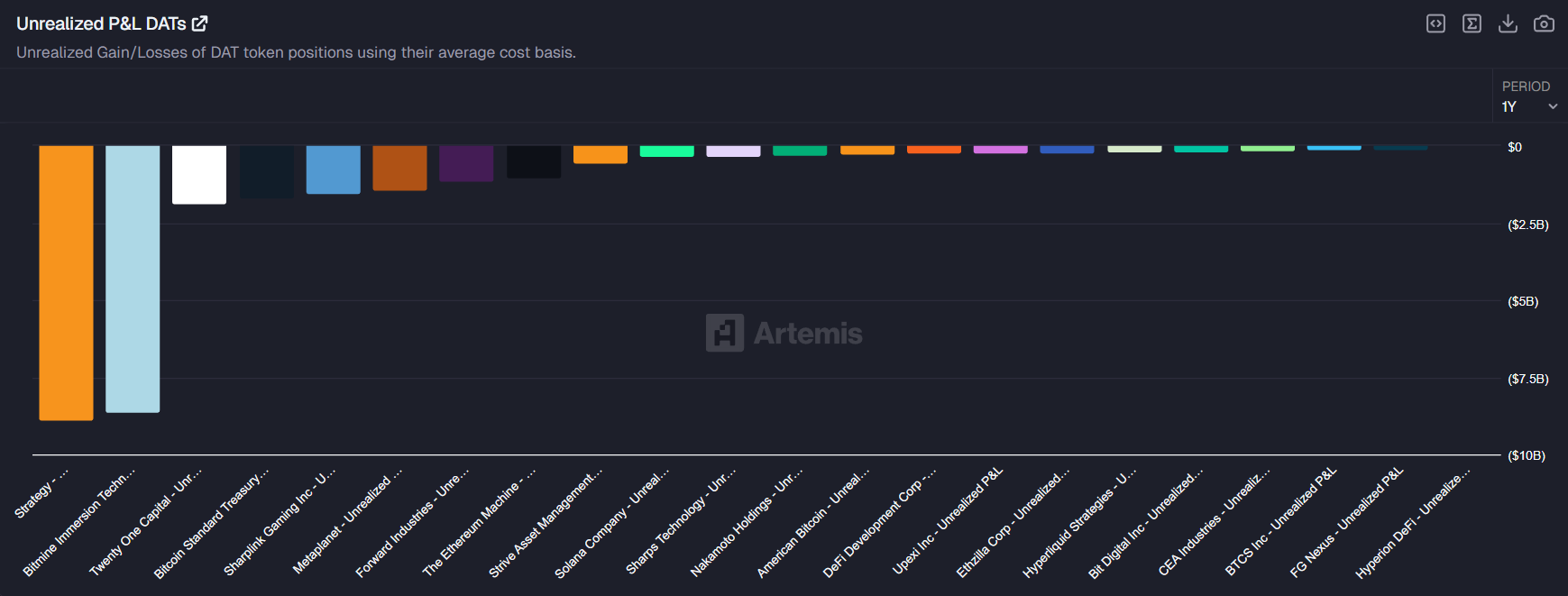
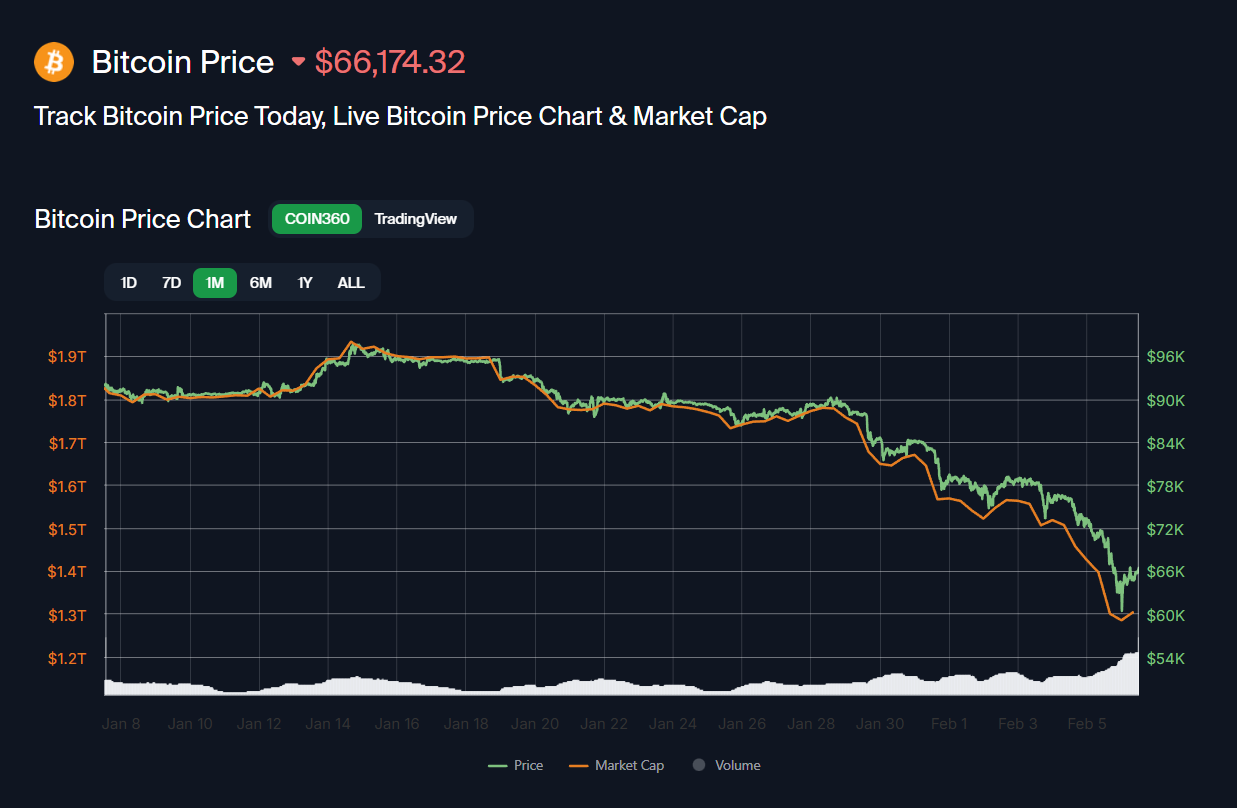
Strategy reported the largest single paper loss among publicly traded crypto treasuries, with approximately $9.2 billion in unrealized losses tied to its Bitcoin holdings as of Feb. 5. The figure came after Bitcoin fell about 24% over seven days and roughly 13% in a 24-hour period, dropping to the $60,000 level at the time referenced in the reports. Strategy disclosed on Feb. 3 that it purchased 855 Bitcoin for $75.3 million at an average price of $87,974, bringing total holdings to 713,502 Bitcoin acquired for approximately $54.26 billion at a blended average cost of $76,052.
Market pressure intensified as Strategy’s equity traded below the net asset value of its Bitcoin holdings, according to a separate report dated Feb. 6, limiting the company’s ability to raise capital without dilution. However, Strategy executive Phong Le said the company would only face existential risk if Bitcoin were to crash to roughly $8,000 and remain at that level for multiple years, adding that current price levels did not threaten immediate insolvency.
BitMine Immersion Technologies reported the second-largest unrealized losses among crypto treasury firms, tied primarily to Ethereum. One report dated Feb. 5 said BitMine was sitting on approximately $8.4 billion in paper losses after Ethereum dropped below $2,000, triggering an 8% decline in the company’s shares. Previously, a disclosure published Feb. 3 stated BitMine had expanded its Ethereum holdings to 4.285 million tokens, representing about 3.55% of circulating supply, while reporting $6.6 billion in unrealized losses as prices remained under pressure.
BitMine chairman Tom Lee rejected criticism that the firm’s losses signaled structural weakness, saying drawdowns were “a feature, not a bug” of an Ethereum treasury strategy during market downturns. Lee said critics labeling the company “exit liquidity” misunderstood how long-duration exposure was intended to perform across full market cycles. The company reported total crypto and cash holdings of roughly $10.7 billion prior to the latest selloff, according to figures cited in the reports.
Losses extended beyond Bitcoin and Ethereum-focused firms, with treasury companies holding Solana, Hyperliquid, and BNB also posting sizable unrealized declines. Data referenced in the reports showed more than $1 billion in paper losses at a Solana-focused treasury firm and over $100 million combined among companies holding Hyperliquid and BNB. Analysts quoted in the coverage said the downturn highlighted risks inherent in leveraged treasury models as falling crypto price and shrinking equity premiums constrained financing options across the sector.
This article has been refined and enhanced by ChatGPT.


