


 USD

DeFi Vault Deposits Top $10B as Regulators Scrutinize Lending Risks

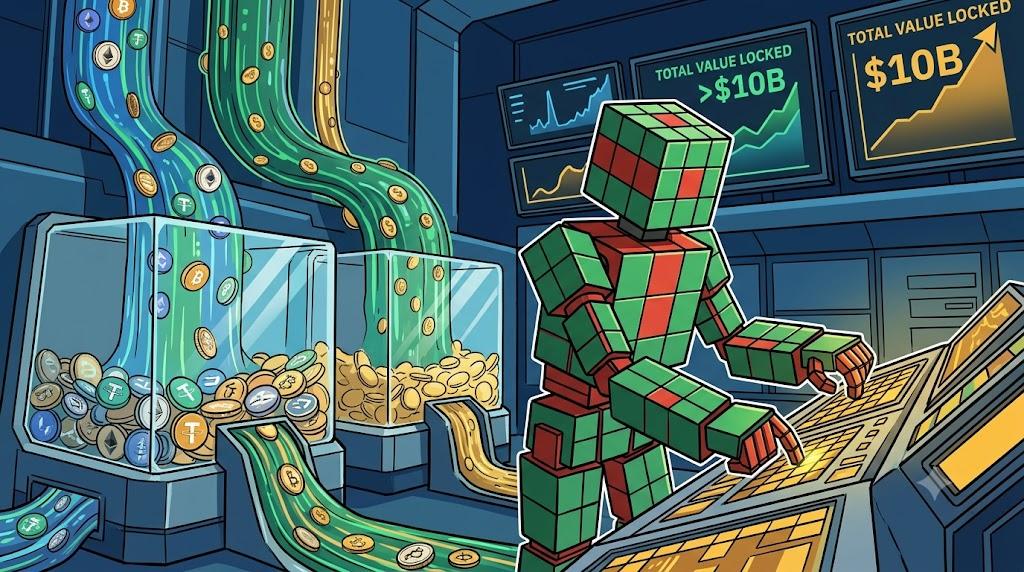
Curator-Managed Strategies Draw SEC and European Scrutiny
TL;DR
- Crypto lending vault deposits have risen roughly 150% as investors put more digital assets into managed DeFi strategies.
- Vault curators control lending strategies and risk limits, while depositors face collateral, liquidity, liquidation and smart-contract risks.
- U.S. and European regulators are examining oversight as S&P Global Ratings introduces a dedicated vault risk framework.
Trade smarter on Jupiter, Solana’s leading DEX built for fast execution and deep liquidity.
Swap tokens at competitive rates, route across multiple liquidity sources automatically, and access perpetuals, DCA, and advanced trading tools — all in one place!
Crypto lending vaults have attracted more than $10 billion in deposits, up from approximately $4 billion at the beginning of 2025, as investors increasingly use decentralized finance platforms to earn returns on stablecoins and other digital assets. The roughly 150% expansion has put greater attention on the managers controlling those strategies. The Financial Times reported the latest developments on October 19 as U.S. and European regulators examined how existing financial rules apply to the structures.
How Crypto Lending Vaults Work
Crypto lending vaults operate through smart contracts and are typically overseen by specialized managers known as curators. Curators select lending markets and strategies, establish collateral requirements, adjust risk parameters, allocate deposited funds and collect fees. Their role is similar to that of an investment manager. Investors can deposit assets such as USDC or USDT and receive tokens representing their interests in a vault, with returns generally generated from interest paid by borrowers as well as, in some strategies, additional incentives or more complex exposures.
Returns typically range from 3% to 10%, while riskier strategies can generate 20% or more. Those higher yields can come with exposure to illiquid tokens, crypto-backed stablecoins and tokenized private credit. Depositors can take losses if collateral falls in value or becomes difficult to sell. Automatic liquidations can intensify market declines, while hacks, coding errors and flawed pricing mechanisms create additional vulnerabilities. Public smart contracts provide transparency, but investors can still focus on headline yields without fully understanding the underlying exposure.
Fintech companies, digital asset treasury businesses and hedge funds are among the main depositors. Established crypto companies are also integrating decentralized lending infrastructure. Coinbase has expanded its onchain lending services using Morpho and separately introduced fixed-rate loans with different borrowing arrangements. Institutional participation has also extended to Flare and bitcoin-backed lender Two Prime.
SEC and European Regulators Examine Vault Oversight
Regulatory attention is increasingly focused on whether curators perform functions resembling traditional investment managers. SEC Commissioner Hester Peirce warned in a July statement that certain crypto activities may fall under existing securities laws regardless of the technology involved. Her comments did not establish that all lending vaults are securities products. Separately, the U.S. Securities and Exchange Commission has raised questions about vaults holding securities.
European regulators have proposed oversight of intermediaries that provide access to DeFi. European authorities have also identified risks involving collateral chains, liquidity and cascading liquidations, particularly when protocols depend on the same assets or interconnected borrowing positions. The Elixir stablecoin collapse exposed financial connections involving multiple DeFi platforms, while earlier market liquidations demonstrated how falling crypto prices can force leveraged positions to close quickly.
S&P Global Adds Digital Asset Vault Risk Assessments
S&P Global Ratings launched a dedicated assessment framework for digital asset lending vaults on October 4. Its methodology examines six areas: portfolio credit quality, liquidity mismatch, curator risk, blockchain risk, protocol risk, and vault security and governance.
S&P Global Ratings said the assessments are not conventional credit ratings and do not evaluate advertised yields. The framework comes as demand grows for standardized information about risks in managed DeFi structures. Institutional interest is also extending across other crypto lending markets, including the broader Sky ecosystem.
This article has been refined and enhanced by ChatGPT.


