




 USD
USD
IMF Says El Salvador Bitcoin Growth Came From Private Donations

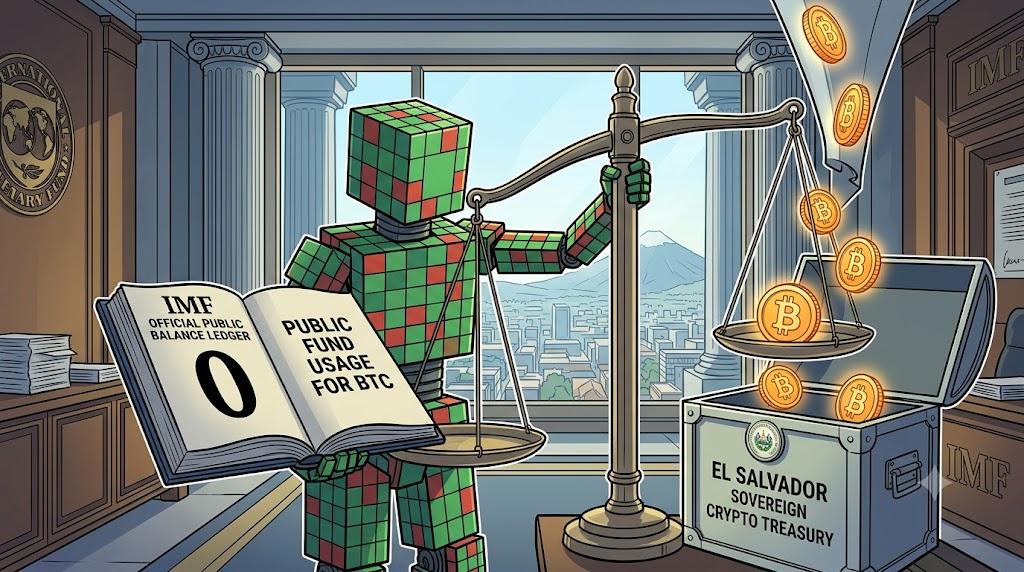
Public funds were not used for documented accumulation after the IMF’s first program review
TL;DR
- The IMF said El Salvador used no public funds to accumulate bitcoin after its first program review, with documented additions coming from private donations.
- El Salvador’s official bitcoin holdings continued rising while its IMF program called for the public-sector balance to remain unchanged.
- IMF staff also reached an agreement on further program reviews as El Salvador reduced government control of the Chivo wallet.
Trade smarter on Jupiter, Solana’s leading DEX built for fast execution and deep liquidity.
Swap tokens at competitive rates, route across multiple liquidity sources automatically, and access perpetuals, DCA, and advanced trading tools — all in one place!
The International Monetary Fund said El Salvador has not used public funds to accumulate bitcoin since its first Extended Fund Facility review in June 2025, citing documentation from Salvadoran authorities showing that subsequent additions reflected private donations. The finding explains how the country’s official bitcoin balance continued increasing even though the IMF-supported program called for the public sector’s holdings to remain unchanged.
The IMF said the documentation showed bitcoin added after the review came from private donations. It also said, “No further accumulation beyond documented donations is expected.” The IMF statement did not identify the donors or say how much each contributed, and it did not provide an aggregate amount for bitcoin accumulated through those donations.
El Salvador’s official tracker had risen to 7,764.37 BTC by the time of the latest disclosure. The balance had increased substantially after a large addition in November 2025, followed by continued receipts of one BTC a day.
Earlier that year, President Nayib Bukele’s government added 8 BTC shortly after a May 2025 IMF announcement concerning restrictions on further government bitcoin accumulation. The country’s Bitcoin Office said at the time that the addition raised El Salvador’s holdings to 6,190.18 BTC.
Months later, El Salvador disclosed a 1,090 BTC addition worth about $100 million. That transaction was the country’s largest single-day acquisition at the time and raised total holdings to 7,474 BTC.
President Nayib Bukele had already signaled that the country intended to continue its bitcoin strategy. Speaking in March 2025, Bukele said bitcoin “purchases would not stop.”
Bitcoin policy remains tied to El Salvador’s IMF program
El Salvador became the first country to make bitcoin legal tender in 2021, but the framework was subsequently narrowed under its IMF agreement. Private-sector acceptance became voluntary, taxes were required to be paid in U.S. dollars, and public-sector bitcoin purchases were restricted.
The IMF’s latest disclosure came as IMF staff and Salvadoran authorities reached a staff-level agreement on the combined second and third reviews of the country’s 40-month Extended Fund Facility. Subject to approval by the IMF Executive Board and completion of agreed prior actions, the reviews would make about $140 million available to El Salvador.
El Salvador and IMF staff also agreed on measures to strengthen the legal and supervisory framework for crypto assets and improve oversight of bitcoin held by the public sector. The IMF said the country is working to improve transparency around bitcoin stored across various wallets while strengthening governance and risk management for public-sector crypto-asset holdings.
Those measures follow an earlier IMF position that the government’s bitcoin holdings should remain unchanged under the program. The latest documentation distinguishes growth in the published bitcoin balance from purchases financed with public money, with the IMF attributing the documented post-review additions to private donations.
Government reduces its role in the Chivo wallet
El Salvador has also substantially reduced direct government participation in the Chivo crypto wallet. Majority ownership and operational control have been transferred to a private operator, while the government retained a minority stake and responsibility for custody of customer assets.
The IMF explicitly did not identify the private operator. The restructuring is occurring alongside the broader legal, supervisory and public-sector oversight measures agreed between El Salvador and IMF staff.
FAQ
Why did El Salvador’s bitcoin balance keep increasing?
The IMF said documented additions after its first review came from private donations rather than public funds.
What happened to the Chivo wallet?
Majority ownership and operational control moved to a private operator while the government retained a minority stake.
What did El Salvador agree to with the IMF?
It agreed to stronger crypto supervision, public-sector bitcoin oversight, governance and risk-management measures.
What happens after the staff-level IMF agreement?
Executive Board approval and completion of agreed prior actions are required before the associated financing becomes available.
This article has been refined and enhanced by ChatGPT.


