


 USD

Grayscale Pledges $1 Million to Zcash as ZEC Price Falls Below $1,000

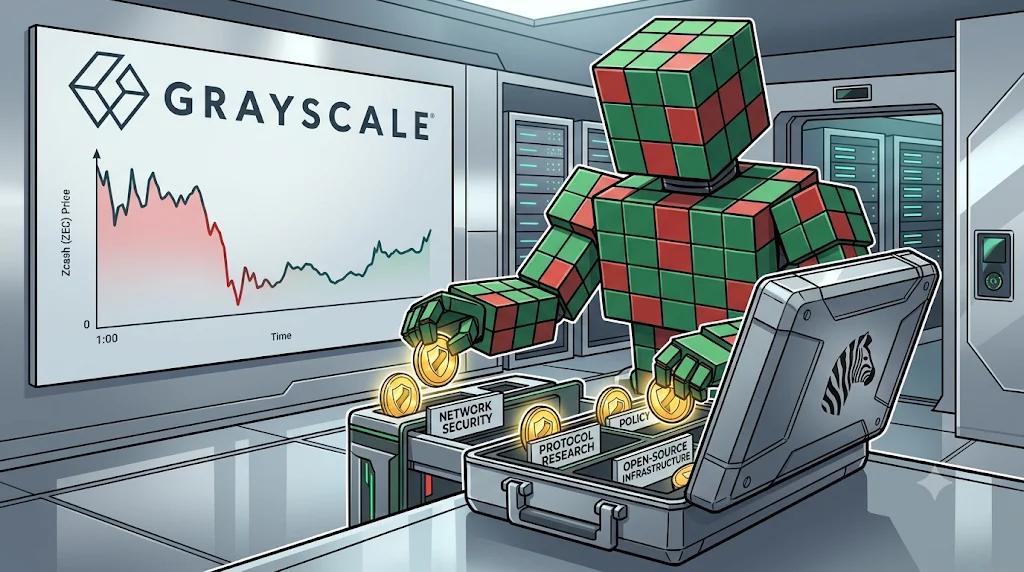
Asset manager launches privacy campaign, funds Zcash development and expands support for its ZCSH investment product
TL;DR
- Grayscale committed $1 million to the Zcash ecosystem, including an initial $400,000 distributed equally among four organizations.
- The firm launched Zcash Invest and a national advertising campaign while pledging to reinvest sponsor fees from its ZCSH fund.
- The ZEC price briefly fell below $1,000 on November 10, 2026, extending its recent decline despite substantial gains earlier in the year.
Trade smarter on Jupiter, Solana’s leading DEX built for fast execution and deep liquidity.
Swap tokens at competitive rates, route across multiple liquidity sources automatically, and access perpetuals, DCA, and advanced trading tools — all in one place!
Grayscale announced a $1 million commitment to the Zcash ecosystem on November 10, 2026, alongside a new investor education platform and national advertising campaign, even as the ZEC price briefly slipped below $1,000. The asset manager has already distributed an initial $400,000 to organizations supporting Zcash development, privacy research and policy advocacy. The initiative also includes plans to redirect fees from its Zcash investment product toward network development, marketing and education.
Grayscale Awards Initial Grants to Four Zcash Organizations
Grayscale has awarded $100,000 each to the Zcash Foundation, Pretty Good Policy for Zcash, Shielded Labs and Project Tachyon. The recipients work across different areas of the Zcash ecosystem, from open-source development and financial privacy research to policymaker education and improvements to the network's technical infrastructure.
The Zcash Foundation supports open-source development and research into financial privacy, while Pretty Good Policy for Zcash focuses on educating policymakers about privacy-related issues. Shielded Labs, a Swiss-based organization, researches and develops Zcash network technology. Project Tachyon, a protocol initiative led by a Zcash co-founder, is working to help wallets update faster and process more private transactions.
Steve Vanourny, Grayscale's head of index, said, "We believe Zcash will help define the next era of crypto."
Vanourny connected the growing demand for financial privacy to the expansion of blockchain-based economic activity and advances in artificial intelligence. He also identified quantum computing as a future technological challenge facing the sector.
Zcash Invest Launches With Nationwide Advertising Campaign
Grayscale also introduced Zcash Invest, an educational platform aimed at investors and financial advisers. The initiative includes a dedicated website, social media presence and educational resources explaining Zcash's privacy technology and the firm's Zcash investment product, which holds ZEC and trades under the ticker ZCSH.
The launch coincided with a national advertising campaign titled "Zcash: The Next Era of Crypto." The campaign began with a front-page newspaper wrap promoting Zcash and a full-page interior advertisement highlighting ZCSH in The Wall Street Journal. Its imagery features a zebra-striped design associated with the Zcash community.
Grayscale plans to extend the campaign across print publications, outdoor advertising, digital platforms, streaming services and social media. Events and educational materials will also form part of the initiative.
"Financial privacy is becoming essential as more economic activity moves onchain and AI makes it easier to analyze," Vanourny said.
The campaign emphasizes Zcash's ability to support both transparent and shielded transactions. Shielded transfers use cryptographic proofs to validate payments while concealing details such as sender and recipient addresses and transaction amounts. Grayscale's privacy argument also points to the potential for AI-driven analysis to connect activity on public blockchains with real-world identities.
ZCSH Fee Reinvestment Supports Network Development
Grayscale intends to reinvest 100% of the sponsor fees it receives from the Zcash ETF for up to 12 months following the effectiveness of its registration statement. The money will support fund-related activities, Zcash development, marketing and education. Grayscale will make the contributions from its own funds after collecting the fees. The arrangement is voluntary, meaning the asset manager can modify or discontinue the commitment.
ZCSH began trading on NYSE Arca on August 25, following its initial private-placement launch in 2017 and its debut on the over-the-counter market in 2021. The product gives investors indirect exposure to ZEC through brokerage accounts without requiring them to purchase, hold or safeguard cryptocurrency themselves.
Despite being marketed as an ETF, the product is not registered under the Investment Company Act of 1940, which regulates conventional mutual funds and exchange-traded funds. Grayscale subsequently split ZCSH shares to reduce their individual price and make the product more accessible to investors.
Competition for Zcash investment products is also expanding. The Winklevoss twins are developing another Zcash ETF, while Europe's first Zcash exchange-traded product has already launched.
ZEC Price Drops Despite Grayscale's Ecosystem Commitment
The ZEC price declined sharply on November 10 despite Grayscale's announcement. Market snapshots published that day showed the privacy cryptocurrency trading above $1,000 after briefly falling beneath that level.
The intraday low reached $999.57, the lowest ZEC price recorded since early September. The cryptocurrency had fallen approximately 19% over the preceding 30 days and was trading well below its October highs above $1,500. Nevertheless, ZEC remained about 75% higher than a year earlier and had more than doubled since the beginning of 2026.
Perpetual futures open interest stood at approximately $2.3 billion. Zcash had previously experienced another sharp price decline after leveraged positions accumulated during its earlier rally.
The latest downturn also followed security-related developments on the Zcash network. A critical vulnerability in Orchard, a system used to hold and transfer ZEC privately, had contributed to an earlier price decline of approximately 50%.
Developers addressed the vulnerability through the Ironwood network upgrade on July 28, introducing a replacement shielded pool and limiting withdrawals from Orchard to amounts that could be verified as previously deposited. The changes were designed to restrict the potential movement of counterfeit coins associated with the vulnerability.
This article has been refined and enhanced by ChatGPT.


