




 USD
USD
How Crypto Traders Use Leverage and Short Selling in 2026

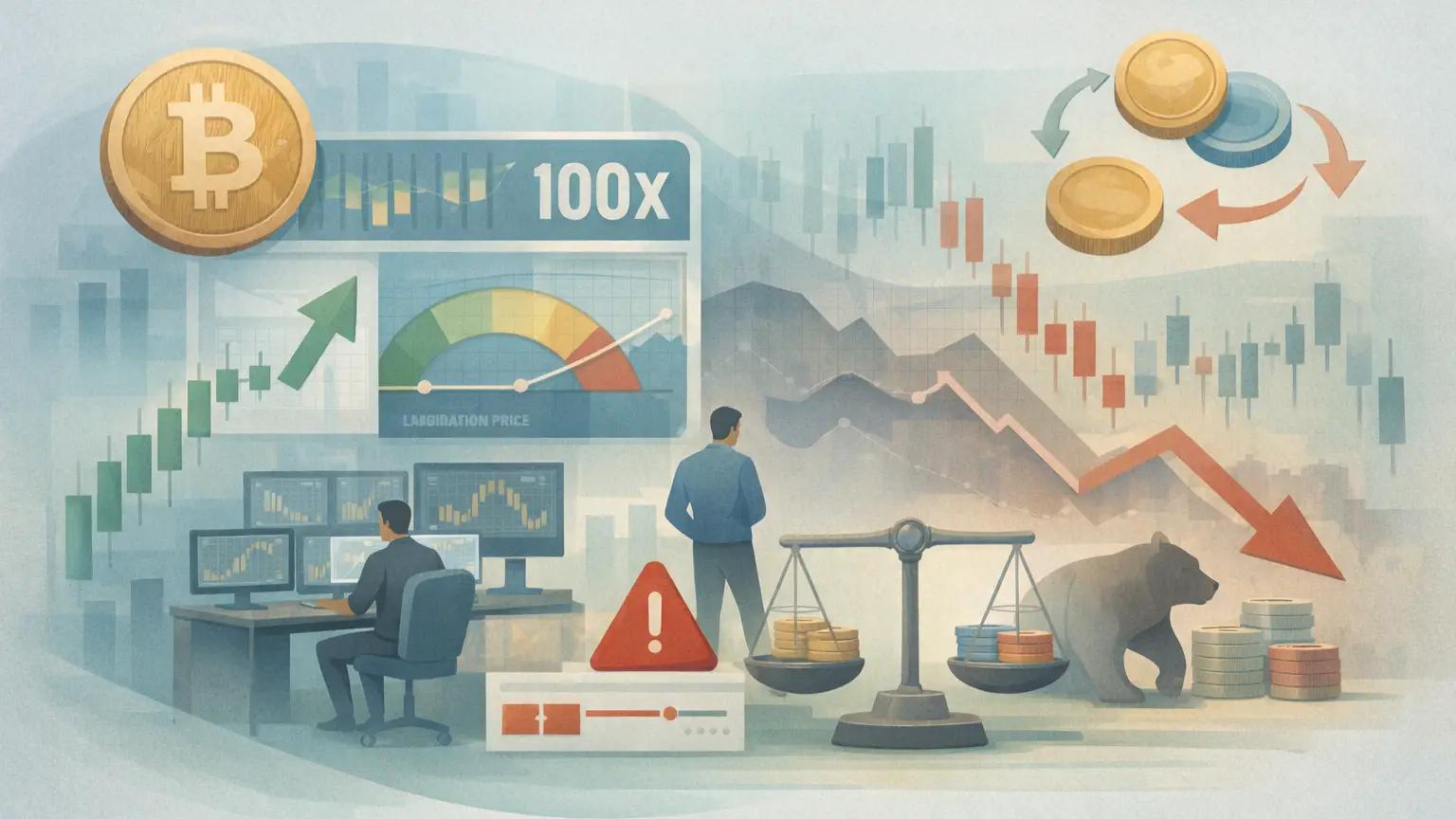
Key Takeaways
- Crypto derivatives trading has matured significantly, with daily volumes across major platforms exceeding $100B in 2026
- Perpetual contracts remain the dominant instrument for leveraged trading and short selling
- Leverage up to 100x is available on most derivatives exchanges, though experienced traders typically use far less
- Short selling through perpetual contracts doesn’t require borrowing the underlying asset
- Risk management tools like stop-loss orders and real-time margin tracking have become standard across platforms
The Shift Toward Derivatives in Crypto
Spot trading — buying and holding crypto — is what most people start with. But over the past few years, derivatives have taken over in terms of volume. By some estimates, crypto derivatives now account for over 70% of total market trading activity.
The reason is straightforward: derivatives let traders do things spot markets can’t. Go short when prices fall. Use leverage to control larger positions with less capital. Hedge existing holdings without selling them. These aren’t exotic strategies — they’re basic tools in any mature financial market, and crypto has caught up.
How Perpetual Contracts Work
The most popular crypto derivative is the perpetual contract. Unlike traditional futures, perpetuals don’t expire. A trader can open a position and hold it indefinitely, as long as they maintain sufficient margin.
To keep the contract price anchored to the spot market, exchanges use a mechanism called funding rates — periodic payments exchanged between long and short holders. When longs outnumber shorts, longs pay shorts, and vice versa. For day traders, funding is barely noticeable. For positions held over multiple days, it becomes part of the cost calculation.
Leverage: How Traders Use It in Practice
Most derivatives platforms offer up to 100x leverage. The math is simple: $1,000 at 10x controls a $10,000 position. A 2% price move becomes a 20% gain or loss on margin.
But 100x is a ceiling, not a recommendation. Data from multiple exchanges shows that the majority of profitable traders use leverage between 5x and 20x. Higher leverage narrows the distance to liquidation, and in a volatile market like crypto, that margin for error matters.
Modern platforms mitigate some of this risk with built-in tools: liquidation price displayed upfront, stop-loss and take-profit on the order form, real-time margin monitoring. Platforms like Margex, Bybit, and Binance Futures all include these as standard.
Short Selling Crypto: How It Actually Works
In traditional finance, short selling requires borrowing shares, selling them, and buying them back at a lower price. In crypto, perpetual contracts skip the borrowing step entirely. You open a short position directly — pick the pair, choose your leverage, execute.
The ability to short has practical implications beyond speculation. Miners use short positions to lock in revenue when they expect price declines. Portfolio managers hedge long exposure during uncertain macro periods. And directional traders profit from downturns that would otherwise leave them sidelined.
BTC dropped over 60% from its November 2021 all-time high to the June 2022 low. Traders limited to spot could only watch. Those with access to short positions on derivatives platforms had the opposite experience.
Several platforms make the process straightforward. On Margex, for instance, traders can go short on bitcoin directly from the trading interface with leverage options from 1x to 100x.
What to Look for in a Derivatives Platform
Not all derivatives platforms are built the same. A few factors matter more than others when choosing where to trade:
- Fee transparency — flat maker/taker models are easier to plan around than complex tier systems
- Liquidation engine — how the platform handles cascading liquidations during volatile moves
- Interface speed — when seconds count, a cluttered dashboard is a liability
- Risk management tools — stop-loss, take-profit, and margin alerts should be built in, not afterthoughts
- Demo mode — the ability to test execution without real capital is underrated
Larger platforms like Bybit and Binance Futures offer deep liquidity and extensive feature sets. Smaller, focused platforms like Margex trade breadth for simplicity — fewer features, cleaner interface, faster onboarding. The right choice depends on whether a trader values ecosystem depth or execution clarity.
Bottom Line
Leverage and short selling are no longer niche strategies in crypto. They’re standard tools used by traders across the market, from retail scalpers to institutional hedgers. Perpetual contracts made both accessible without the complexity of traditional futures or the borrowing mechanics of conventional short selling.
The infrastructure is there. The question for any trader is which platform fits their workflow — and the best way to figure that out is to try a demo account before committing real capital.
FAQ
What is a perpetual contract?
A derivative that tracks the price of an underlying asset (like BTC) without an expiry date. Traders can hold positions indefinitely as long as they maintain margin.
How does short selling work in crypto?
On derivatives platforms, you open a short position on a perpetual contract. If the price drops, you profit. No need to borrow the actual cryptocurrency.
Is 100x leverage a good idea?
For most traders, no. Higher leverage means tighter liquidation thresholds. Most experienced traders use 5–20x depending on conditions.
What are funding rates?
Periodic payments between long and short holders on perpetual contracts. They keep the contract price aligned with spot.
What’s the difference between spot and derivatives trading?
Spot means buying and owning the actual asset. Derivatives let you trade price movements without owning the asset, with the ability to use leverage and go short.
Can I practice without real money?
Yes. Most major derivatives platforms, including Margex, offer demo trading modes with simulated funds.


