


 USD

Nvidia CEO Jensen Huang Resigns as Bitcoin Hits 12-Week Low, AI Stocks Slide


Colette Kress takes interim control amid espionage allegations, market volatility and criticism from tech and crypto leaders
TL;DR
- Nvidia co-founder Jensen Huang resigned as CEO, president and board member following reports of extramarital affairs and an investigation involving alleged Chinese intelligence ties. CFO Colette Kress became interim CEO.
- Nvidia shares plunged before recovering some losses, while Bitcoin fell to a nearly 12-week low and more than $750 million in crypto positions were liquidated.
- Binance founder Changpeng Zhao, Elon Musk and other technology executives expressed support for Huang, while concerns emerged over Nvidia's leadership and open-source AI commitments.
Trade smarter on Jupiter, Solana’s leading DEX built for fast execution and deep liquidity.
Swap tokens at competitive rates, route across multiple liquidity sources automatically, and access perpetuals, DCA, and advanced trading tools — all in one place!
Nvidia co-founder Jensen Huang resigned as the chipmaker's president, CEO and board member, effective immediately, following reports of extramarital affairs and allegations involving a suspected Chinese intelligence asset.
The leadership shake-up, announced Thursday, November 12, 2026, sent Nvidia shares sharply lower and coincided with a broader selloff in artificial intelligence stocks and cryptocurrencies. Bitcoin price dropped to $71,200, its lowest level in nearly 12 weeks, while Nvidia appointed Executive Vice President and Chief Financial Officer Colette Kress as interim CEO.
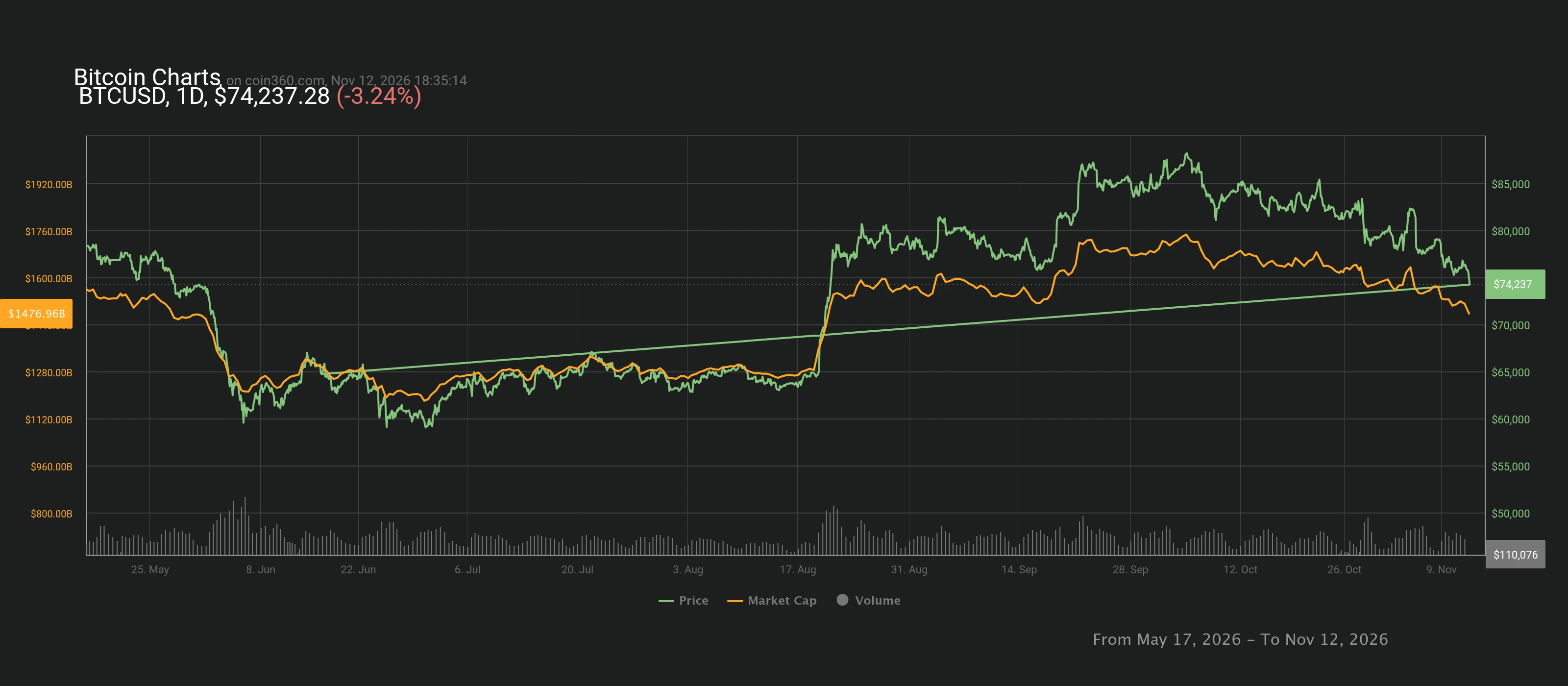
The departure ended Huang's 33-year tenure leading Nvidia, which had become a central company in the global AI industry. Nvidia's directors accepted his resignation on November 11, with Kress retaining her finance responsibilities during the transition. The company began searching for a permanent successor while its board continued an independent investigation into a reported foreign intelligence effort targeting Huang.
Nvidia Leadership Change Follows Affairs and Foreign Intelligence Allegations
Nvidia's leadership crisis developed after allegations surfaced about Huang's relationship with Alice Huang, also known as Huang Le, a former executive at Megaspeed, a Singapore-based cloud computing provider and Nvidia customer. U.S. intelligence officials reportedly assessed Alice Huang as a Chinese intelligence asset, although Beijing denied the accusation. Nvidia opened an independent investigation on November 8, overseen by independent directors and outside counsel, after reports suggested Huang had been targeted by a foreign intelligence effort.
Huang acknowledged being unfaithful to his wife in a message to employees that Sunday. Nvidia's board said it had no reason to believe corporate secrets or national security had been compromised, and the investigation remained ongoing. Singaporean authorities said they lacked sufficient evidence to establish that Alice Huang had committed a crime. The allegations have not established that Huang knowingly provided information to a foreign government.
The controversy expanded when The New York Times reported that Huang had also been involved in a relationship with Kimberly Powell, Nvidia's vice president of health care, who reported directly to him. Nvidia declined to comment on that allegation, while Powell did not respond to the newspaper.
Reports also stated that the Commerce Department, led by Secretary Howard Lutnick, had previously halted an investigation into Megaspeed and referred it to the Department of Justice. Lutnick had reportedly been warned about Huang's relationship with Alice Huang. The department was also reportedly nearing completion of a rule aimed at limiting China's remote access to GPU clusters.
Nvidia's board placed technology entrepreneur Harvey C. Jones, a director since 1993, in the newly created role of board chair. Kress, who joined Nvidia in September 2013 after finance positions at Cisco and Microsoft, took charge while directors considered internal and external candidates for permanent CEO. The board expected operations, customer commitments and the product roadmap to continue without interruption. Nvidia also maintained its scheduled November 17 announcement of fiscal 2027 third-quarter results and earnings call.
Market Analysts and Crypto Leaders Question Nvidia's Leadership Decision
Market participants offered differing assessments of Nvidia's leadership crisis, with some seeing the sharp share-price decline as an opportunity and others warning that Huang's departure could disrupt the company's influence across the artificial intelligence industry.
Daniela Hathorn, senior market analyst at Capital.com, attributed the stock's partial recovery to investors buying after the selloff. "The recovery looks partly driven by bargain hunting after an aggressive selloff, with some investors seemingly betting that Nvidia's competitive advantages, strong AI demand and established customer relationships will survive a leadership transition," she said.
Joe Saluzzi, partner and co-head of equity trading at Themis Trading, raised concerns about Nvidia's role in financing smaller AI infrastructure companies. "Nvidia has been called the 'Bank of AI'. If they have to take a step back because of what's going on, will that cut off funding to smaller companies that need it? That's an open question," Saluzzi said, highlighting potential consequences beyond the chipmaker's own operations.
Financial commentator The Kobeissi Letter was more critical of the company's board. Before Huang's departure, it had urged directors to consult shareholders, citing the absence of an obvious successor and research into the costs of removing successful executives. Following the resignation, it described the decision as "the most costly mistake of the AI Revolution."
Former DWS executive and corporate-governance critic Desiree Fixler similarly questioned whether directors had fulfilled their fiduciary obligations, arguing that shareholder interests should take priority over the public controversy.
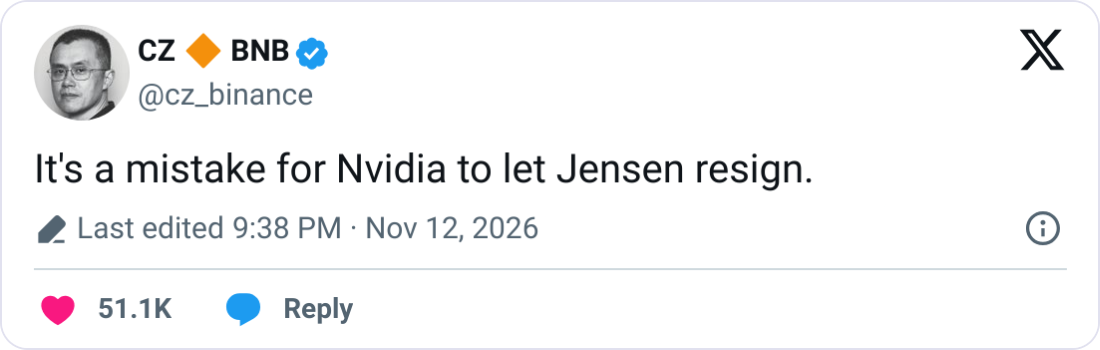
Crypto industry executives echoed those concerns. Binance co-founder Changpeng Zhao wrote on X, "It's a mistake for Nvidia to let Jensen resign."
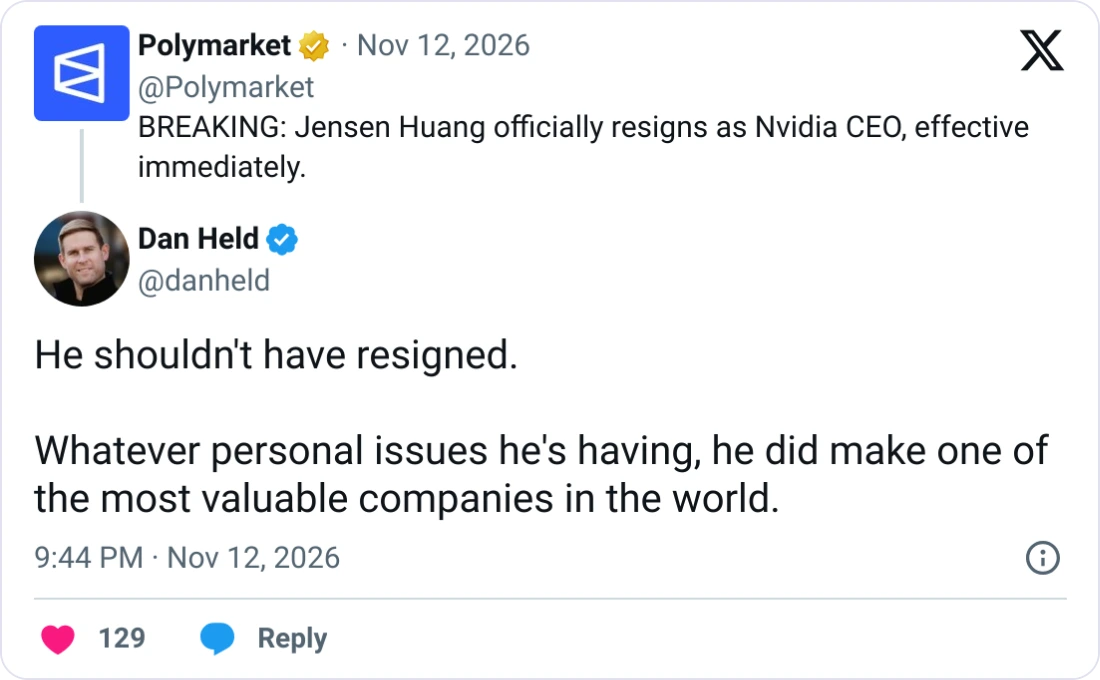
Bitcoin entrepreneur and former Kraken executive Dan Held agreed, stating, "He shouldn't have resigned," while arguing that Huang's personal conduct should be considered alongside his record of building Nvidia.
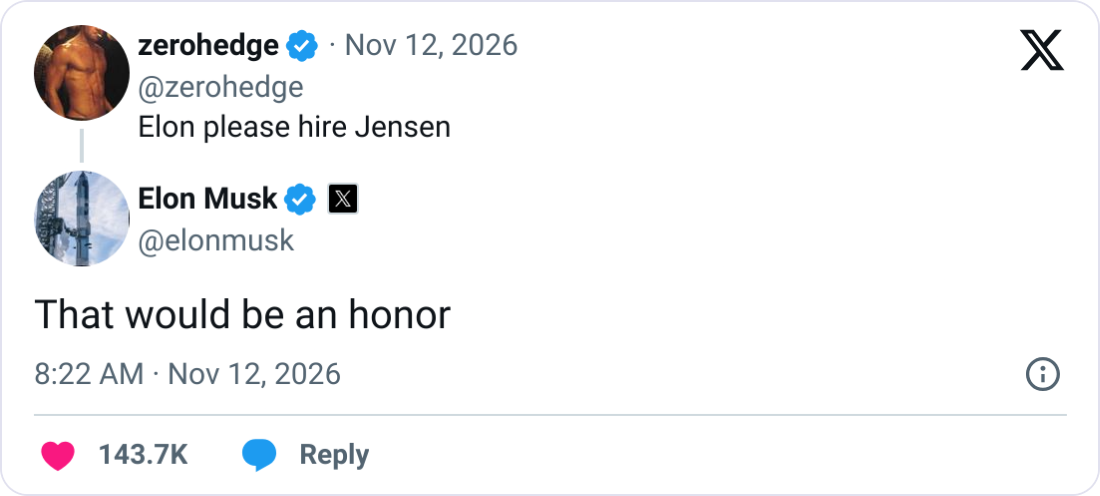
Tesla and SpaceX CEO Elon Musk also expressed support, responding "That would be an honor" when asked about potentially hiring Huang.
Nvidia Shares Rebound From Sharp Losses as AI Stocks Remain Under Pressure
Nvidia shares suffered a steep selloff following Huang's departure, although investors bought shares after the initial decline. Reuters reported that the stock fell as much as 14.3% during Thursday's session before reducing its losses to 5.4%. The selling spread across AI infrastructure companies, semiconductor manufacturers and technology markets overseas, although some Nvidia competitors gained ground.
This article has been refined and enhanced by ChatGPT.


