




 USD
USD
Kevin Warsh Fed filing reveals crypto-linked holdings and vast wealth

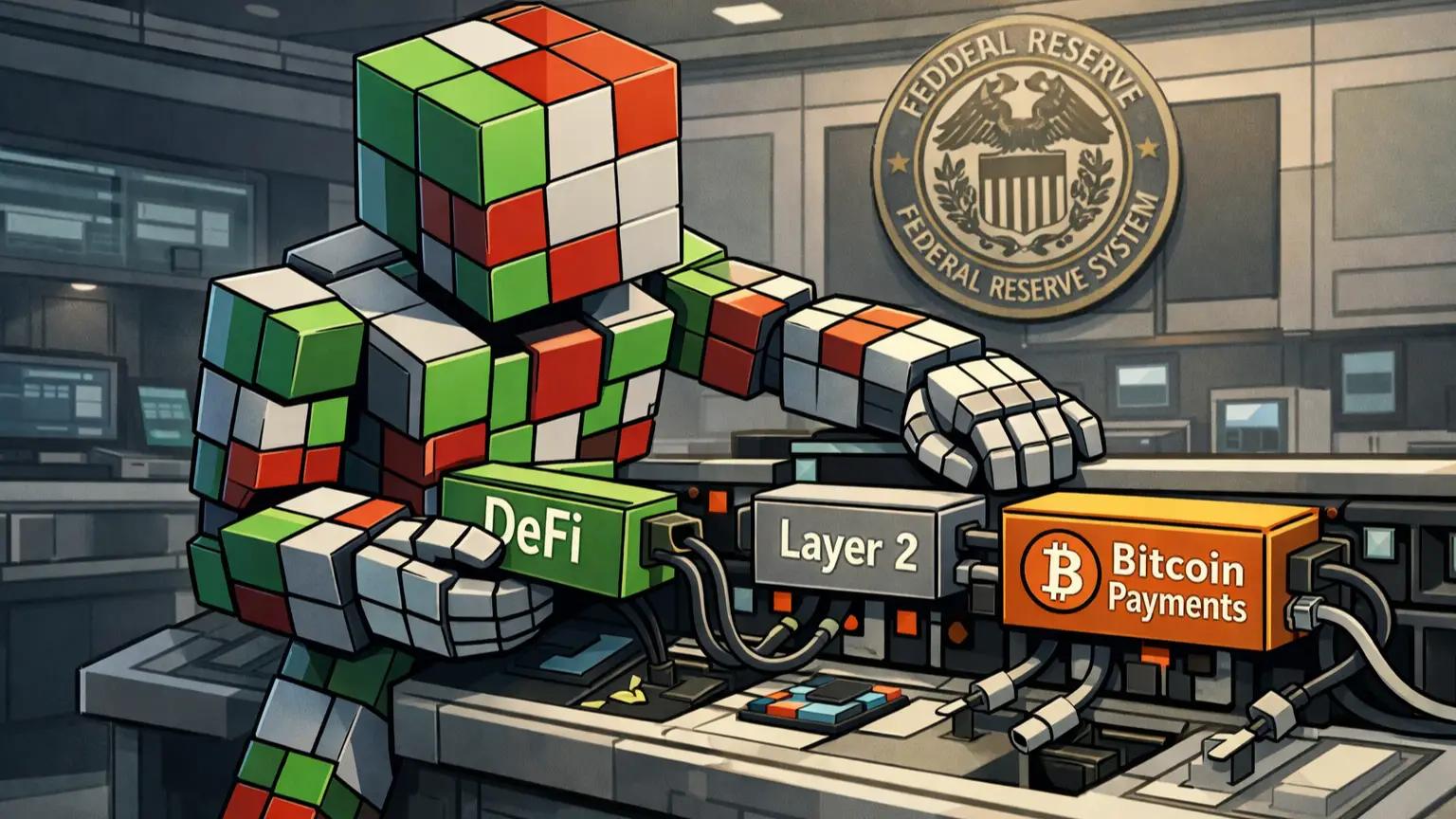
Disclosure details set up ethics scrutiny before Senate hearing
TL;DR
- Kevin Warsh’s financial disclosure released on April 14, 2026 showed assets worth well over $100 million ahead of his April 21 hearing.
- The filing listed crypto-linked investments across DeFi, blockchain networks, Bitcoin infrastructure and Web3 companies, while Warsh pledged to divest conflicting assets if confirmed.
- The disclosure also highlighted large opaque private fund holdings, outside income from major investment firms, and political opposition tied to the nomination process.
We’ve launched the all-new COIN360 Perp DEX, built for traders who move fast!
Trade 130+ assets with up to 100× leverage, enjoy instant order placement and low-slippage swaps, and earn USDC passive yield while climbing the leaderboard. Your trades deserve more than speed — they deserve mastery.
Kevin Warsh’s financial disclosure released on April 14, 2026 showed the Federal Reserve chair nominee and his household held assets worth well over $100 million, including crypto-linked investments, ahead of a Senate confirmation hearing scheduled for April 21, 2026. The filing also showed Warsh pledged to divest assets that conflict with Federal Reserve ethics rules if confirmed, while lawmakers prepared to examine his wealth, private fund holdings and exposure to digital asset businesses.
The disclosure was described as a 69-page filing and offered a detailed look at the finances of Warsh, the former Federal Reserve governor nominated by President Donald Trump to lead the U.S. central bank. One review of the filing said the combined assets held by Warsh and his wife amounted to at least $192 million, a level that would make him the wealthiest Fed chair in modern history if confirmed.
Warsh’s portfolio included two positions in Juggernaut Fund LP, each valued at more than $50 million, along with about two dozen holdings in THSDFS LLC, some listed at up to $5 million. The filing said the underlying assets in the Juggernaut positions were withheld because of “pre-existing confidentiality agreements,” and Warsh stated, “I will divest this asset if confirmed.”
Heather Jones, the Office of Government Ethics senior counsel who signed off on the disclosure, said, “once the filer divests these assets, he will be in compliance” with the Ethics in Government Act. The filing said Federal Reserve ethics rules adopted in 2022 bar officials and their immediate families from owning bank stocks and crypto-related assets, among other restrictions, and described those rules as more stringent than standards applied across the rest of government because they are set by the Federal Open Market Committee.
Warsh’s liabilities were modest compared with the household asset base. They included a mortgage from 2015 of up to $5 million from JPMorgan Chase at 2.75%, a revolving line of credit of up to $5 million from PNC Bank at around 6%, and $1,950,000 in capital commitments to THSDFS LLC, one of the interests he pledged to divest.
Crypto exposure stretched across DeFi, networks and Bitcoin infrastructure
The filing review said Warsh disclosed numerous crypto investments, although many of the identifiable positions were reported without dollar values, which indicated each was worth less than $1,000 individually. Most of the crypto and blockchain-linked exposure appeared to sit through DCM Investments 10 LLC, using vehicles identified as Abstract Holdings, AVF I, AVF II, AVF III, and AVGF I and II.
The disclosure said Warsh had previously invested in Bitwise Asset Management, the firm behind one of the spot Bitcoin ETFs, but said that position did not appear on the current filing. It also argued the issue was less the size of the crypto positions than the breadth of the exposure, because the holdings touched sectors that overlap with policy areas the Federal Reserve could influence, including stablecoin regulation, bank crypto custody guidance, tokenized deposits, tokenized securities and central bank digital currency research.
According to the document, divestment may be straightforward for liquid holdings but more complicated for illiquid venture interests, special-purpose vehicles and private fund stakes. It also said federal ethics rules generally require a one-year cooling-off period for matters directly affecting recent financial interests, raising the prospect that recusal questions could persist even after asset sales.
Outside income, private structures and political pushback
The disclosure also showed Warsh earned $10.2 million in consulting fees from Stanley Druckenmiller’s investment office. Another review of the filing said Warsh also received $1.55 million from GoldenTree Asset Management, $750,000 from Cerberus Capital Management and another $750,000 in honoraria from Brevan Howard, while his speaking fees in the first half of 2025 alone exceeded $780,000 and included payments from TPG, Warburg Pincus, State Street, Eli Lilly and Centerview Partners.
The filing described dozens of smaller assets with no stated values, many tied to crypto and artificial intelligence. Named examples included Cafe X, described as a robotic coffee bar platform; Cionic, described as a “bionic movement-enhancing wearable clothing” firm; Blast, described as a “yield-generating Ethereum layer two”; and Contraline, described as a “reversible male contraceptive solution.” The household wealth profile also reflected Jane Lauder’s family connection to the Estée Lauder empire, and one account cited a Forbes estimate placing her net worth at around $1.9 billion.
Kathryn Judge, a professor at Columbia Law School, said, “Warsh is wealthy and well connected” and that “the disclosure is a snapshot into how wealth and connections build greater wealth and connections.” She added, “perhaps most striking were the many arrangements that were not fully disclosed because of pre-existing confidentiality agreements,” and said that if those disclosures did not answer all questions, “the Senate can and should use the hearings to get the information it needs to make that determination.”
Mark Spindel, chief investment officer at Potomac River Capital, said Warsh “has distinguished himself in financial services” and that the filing offered “a comprehensive look at someone who's been ... highly successful in merchandising his intellectual properties.” Spindel also said Warsh “clearly leaned into crypto a bit,” describing that as part of broader changes in the financial system under the Trump administration.
The nomination was already drawing political resistance before the hearing. Republican Senator Thom Tillis, a member of the Senate Banking Committee, vowed to block confirmation until the Department of Justice investigation related to Jerome Powell’s oversight of renovations to the Fed’s Washington headquarters is concluded. A federal judge later quashed DOJ subpoenas, finding the probe was a thinly disguised effort to pressure Powell to lower interest rates or resign, though the department planned to appeal.
Senator Elizabeth Warren, the ranking Democrat on the Senate Banking Committee, said on April 14 that “there should be no hearing or vote in the Senate on Kevin Warsh's nomination while the President continues his attempt to take over the Fed,” adding that “it would be a mistake for the Senate to confirm a Trump sock puppet to run America's central bank.” Powell has said he would continue serving on a “pro tem” basis if Warsh is not confirmed in time, and could remain a Fed governor through 2028.
FAQ
What did the filing show?
Warsh disclosed well over $100 million in assets, including crypto-linked holdings.
When is the Senate hearing?
The confirmation hearing is scheduled for April 21, 2026.
What did Warsh say about conflicting assets?
“I will divest this asset if confirmed.”
Why are some holdings still unclear?
Some underlying assets were withheld because of “pre-existing confidentiality agreements.”
This article has been refined and enhanced by ChatGPT.


