




 USD
USD
Lighter’s LIT Airdrop, Coinbase Listing, and Early Market Strains Mark One of Crypto’s Most Watched Token Launches


From a Top-10 Airdrop to Heavy Trading Volumes, Lighter’s LIT Debut Draws Attention Amid Price Discovery and Withdrawal Disruptions
TL;DR
- Lighter distributed $675 million worth of LIT in one of the largest airdrops in crypto history, with most recipients holding rather than selling.
- LIT traded between roughly $2.30 and $4.04 in early sessions as open interest climbed to about $1.4 billion and volumes surged.
- Operational issues emerged shortly after launch, with users reporting withdrawal disruptions while the team remained publicly silent.
We’ve just launched the all-new COIN360 Perp DEX, built for traders who move fast!
Trade 130+ assets with up to 100× leverage, enjoy instant order placement and low-slippage swaps, and earn USDC passive yield while climbing the leaderboard. Your trades deserve more than speed — they deserve mastery.
Lighter’s long-anticipated token launch pushed the decentralized perpetual futures exchange into the center of market attention, combining one of the largest airdrops ever recorded with rapid price discovery, heavy derivatives activity, and early operational stress. The Ethereum-based platform, featured in our Top crypto perp DEXs list, introduced its Lighter Infrastructure Token, or LIT, as the economic backbone of its zero-fee, zk-powered perps exchange, framing the asset as a mechanism designed to align incentives between traders, infrastructure providers, and long-term protocol growth.
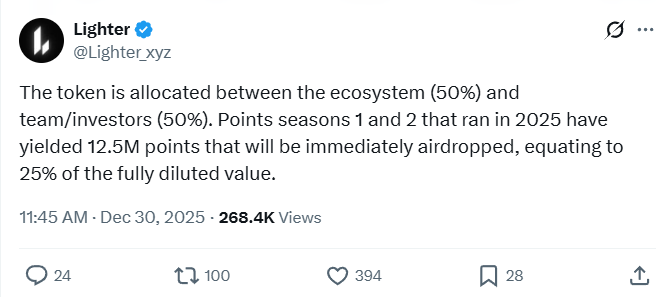
The token generation event came with a clearly defined supply structure. Half of the total LIT supply was allocated to the ecosystem, while the remaining 50% was reserved for the team and investors. Within the ecosystem portion, 25% of total supply was distributed immediately through an airdrop to participants in Lighter’s first two points seasons of 2025, with the rest earmarked for future incentive programs and strategic partnerships. Insider allocations were split between the team at 26% and investors at 24%, both subject to a one-year lockup followed by three years of linear vesting, a structure intended to temper immediate sell pressure but one that still leaves longer-term dilution on the horizon.
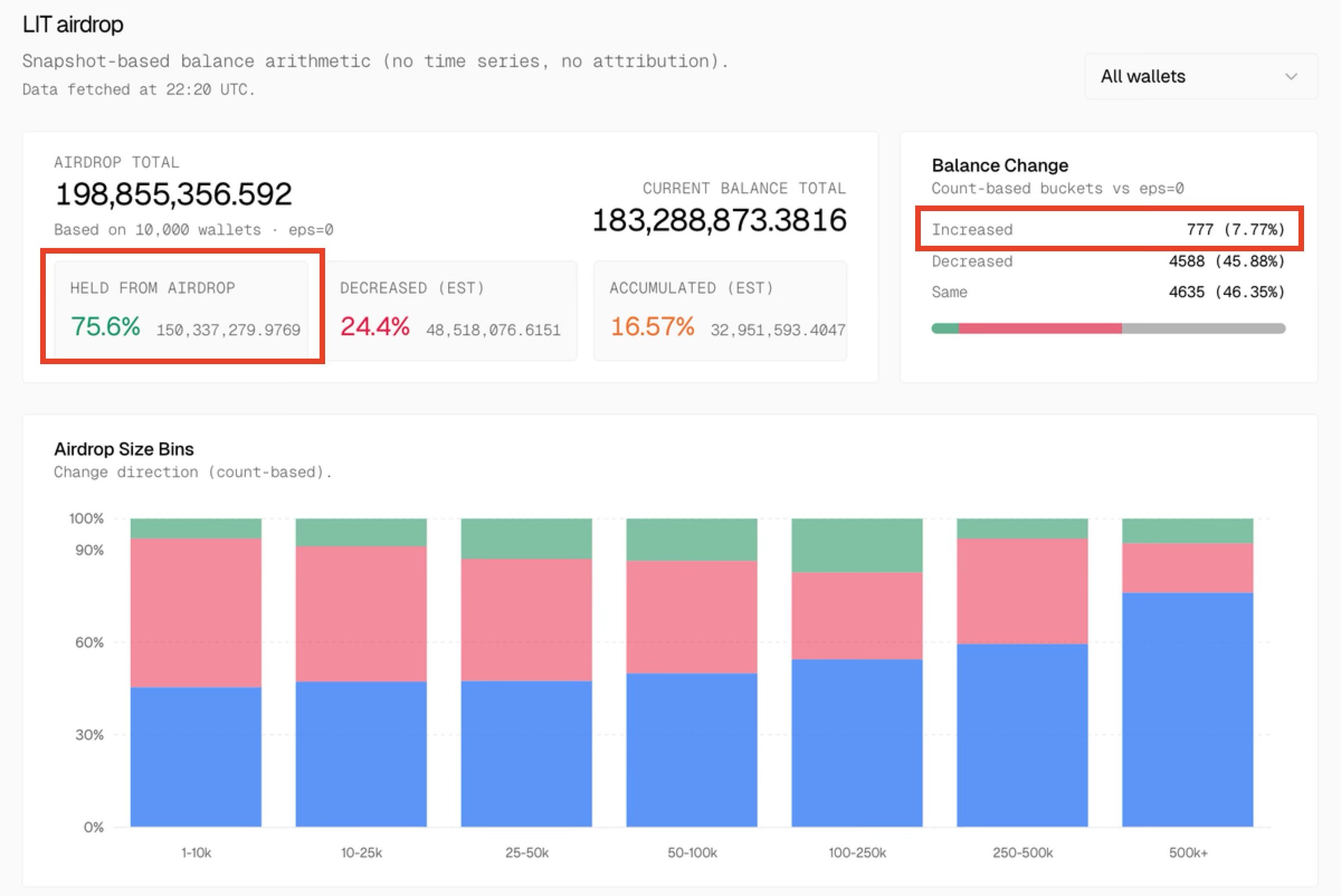
The scale of the airdrop set Lighter apart. Roughly $675 million worth of LIT was distributed to early users, ranking the event as the 10th largest airdrop by U.S. dollar value in crypto history. Blockchain analysis shared publicly indicated that only about $30 million worth of tokens were withdrawn from the platform shortly after distribution, suggesting restrained early selling. Data also showed that around three-quarters of recipients continued to hold their allocations days after launch, while a smaller share, about 7%, added to their positions on the open market. Compared with historical precedents, the Lighter airdrop surpassed the $671 million distribution by 1inch and sat just below LooksRare’s $712 million event from 2022, while remaining far smaller than Uniswap’s $6.43 billion airdrop in 2020.
Trading activity intensified quickly once the LIT-USDC pair went live. Early transactions saw the token change hands near $2.34 before momentum carried prices toward the $3 level as liquidity expanded beyond Lighter’s native venue. A brief rally pushed LIT to a post-launch high near $4.04, followed by a pullback as the market absorbed new supply. Analysts tracking flows pointed to active whale participation, with larger holders stepping in to counter sell pressure and technical levels around $3.12 emerging as a near-term reference point. The move unfolded as LIT gained exposure on major venues, including a listing of the LIGHTER-USD pair on Coinbase in supported regions, a development that broadened access and visibility at a moment when several other perpetual DEX tokens were underperforming.
Shortly after its early highs of $4.04, LIT entered a notable post-airdrop correction phase, with prices reversing sharply as the market digested the large token distribution. Following the peak, LIT slid to roughly $2.62 — a drop of about 22% from its earlier post-launch levels — marking its lowest traded price since debut as selling pressure mounted from both airdrop recipients and leveraged traders. Trading volume surged amid the volatility, reporting more than $13.4 million over 24 hours, nearly triple the previous day’s activity, underscoring that the move was driven by short-term positioning rather than broad long-term accumulation.
Beyond spot price action, derivatives metrics underscored the scale of interest surrounding the launch. Open interest across Lighter’s perpetual markets climbed to roughly $1.4 billion within days, while 24-hour trading volume reached about $3.6 billion, signaling sustained speculative engagement rather than a brief airdrop-driven spike. These figures placed Lighter among the more active venues in the sector during the period and fed into broader discussions around how new token launches can influence the crypto price index and short-term crypto price dynamics across derivatives markets, even as the project’s coin market cap fluctuated with early volatility.
Operational challenges surfaced alongside the market enthusiasm. Users began reporting withdrawal disruptions shortly after the LIT rollout, particularly when attempting to move funds back to Ethereum’s main network. Error messages and on-chain activity became the primary means of tracking fund status, as no immediate public explanation was provided.
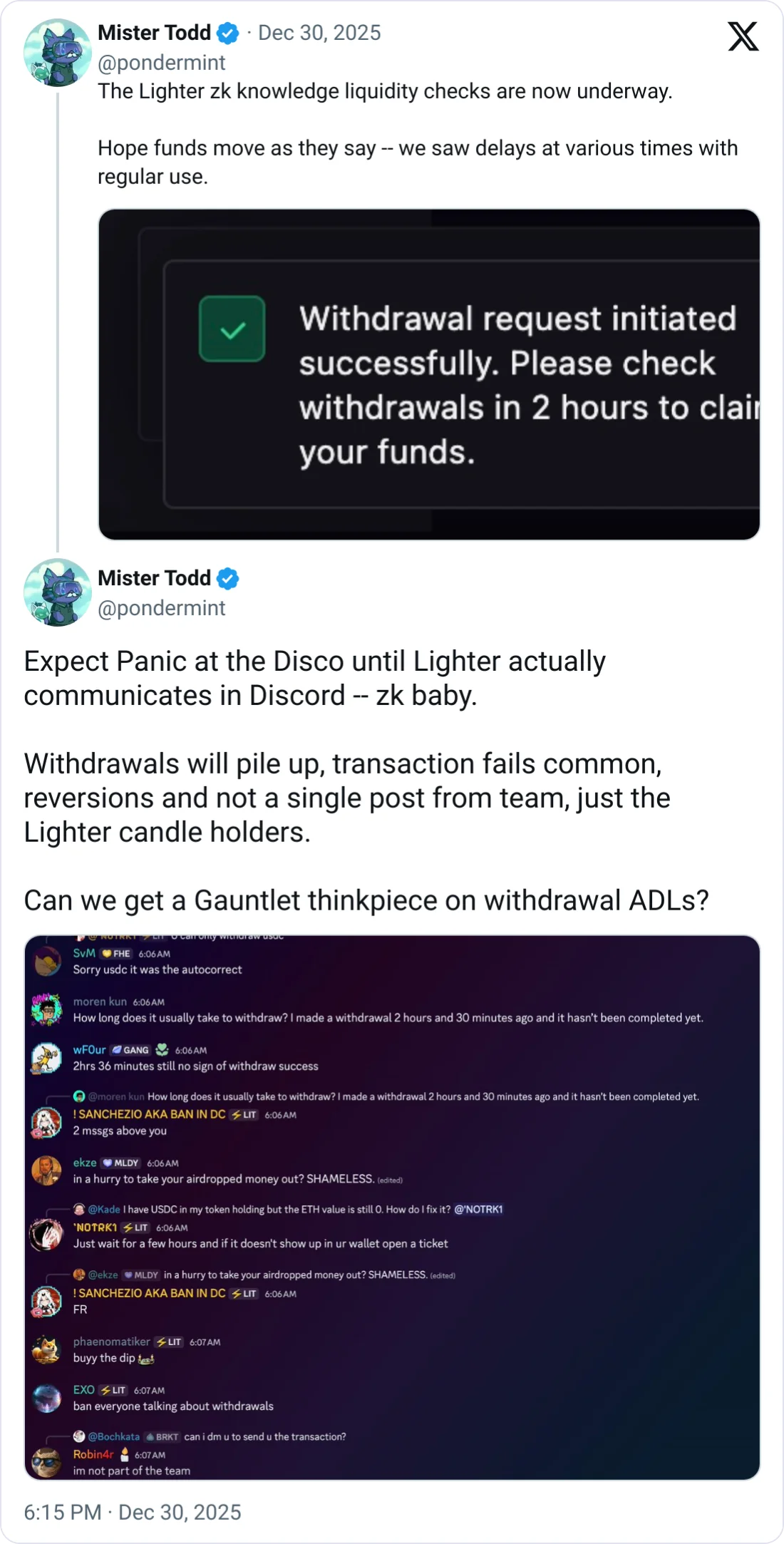
The lack of communication drew attention given the sensitivity of Layer 2 withdrawals, which rely on sequencers and provers and can quickly erode confidence if delays are not clearly explained. As of the latest reports tied to the launch window, the team had not issued a formal statement outlining the cause of the disruptions, whether withdrawals were being queued or restricted at the protocol level, or when normal functionality would be restored.
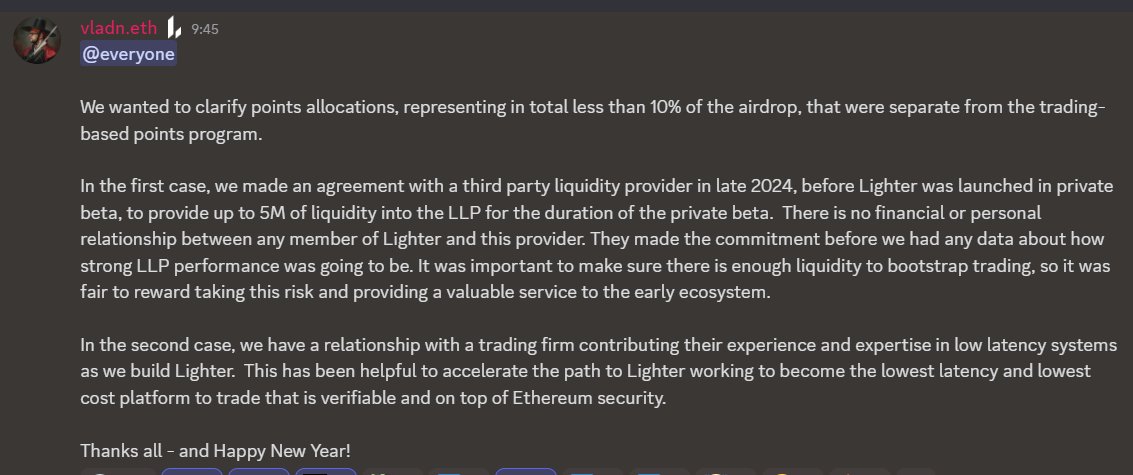
Amid the price swings and distribution debates, Lighter’s CEO Vladimir Novakovski took to Discord to address circulating claims that internal sales had occurred during the airdrop period, a narrative that had contributed to renewed volatility and an 8.5% slide in LIT over a 24-hour window as prices dipped toward roughly $2.43. Novakovski clarified that the wallets at the center of speculation were linked not to private sales by insiders, but to a pre-existing agreement with a third-party liquidity provider engaged in 2024 to support trading depth during the platform’s private beta phase, stressing that there was no personal or financial relationship between team members and the counterparty.
This article has been refined and enhanced by ChatGPT.


