


 USD

Morgan Stanley Tokenizes U.S. Stocks and Treasuries Through DTCC Service

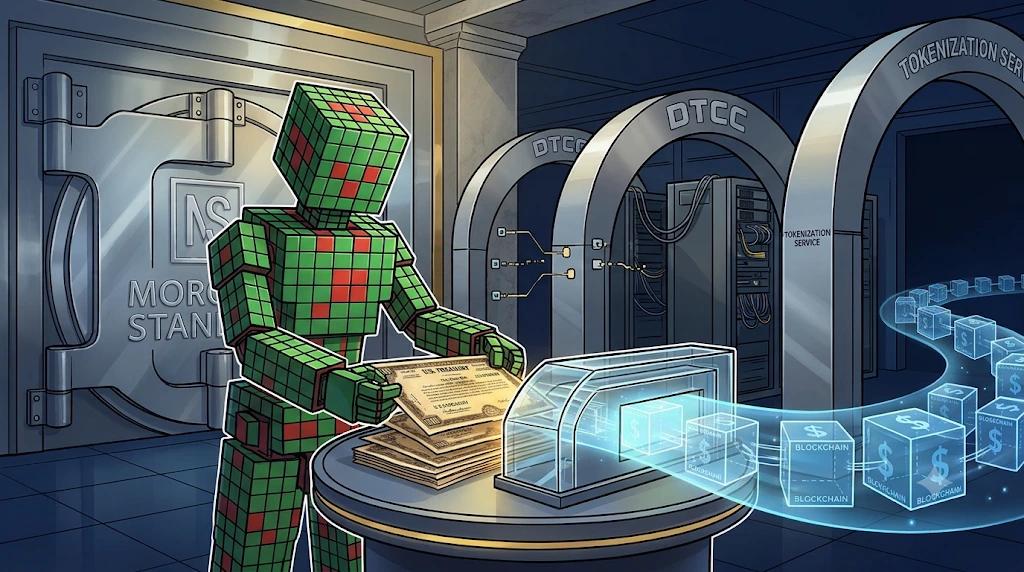
Wall Street's New Blockchain Infrastructure Goes Live With 20 Major Financial Institutions
TL;DR
- Morgan Stanley has become one of the first banks to tokenize U.S. equities and Treasuries through DTCC's newly launched tokenization service.
- The service allows financial institutions to convert traditional securities into blockchain-based tokens while preserving existing ownership rights and investor protections.
- The rollout brings together major Wall Street institutions, including JPMorgan, Citi, Bank of America, and UBS, as Morgan Stanley separately prepares to support tokenized equity trading.
Trade smarter on Jupiter, Solana’s leading DEX built for fast execution and deep liquidity.
Swap tokens at competitive rates, route across multiple liquidity sources automatically, and access perpetuals, DCA, and advanced trading tools — all in one place!
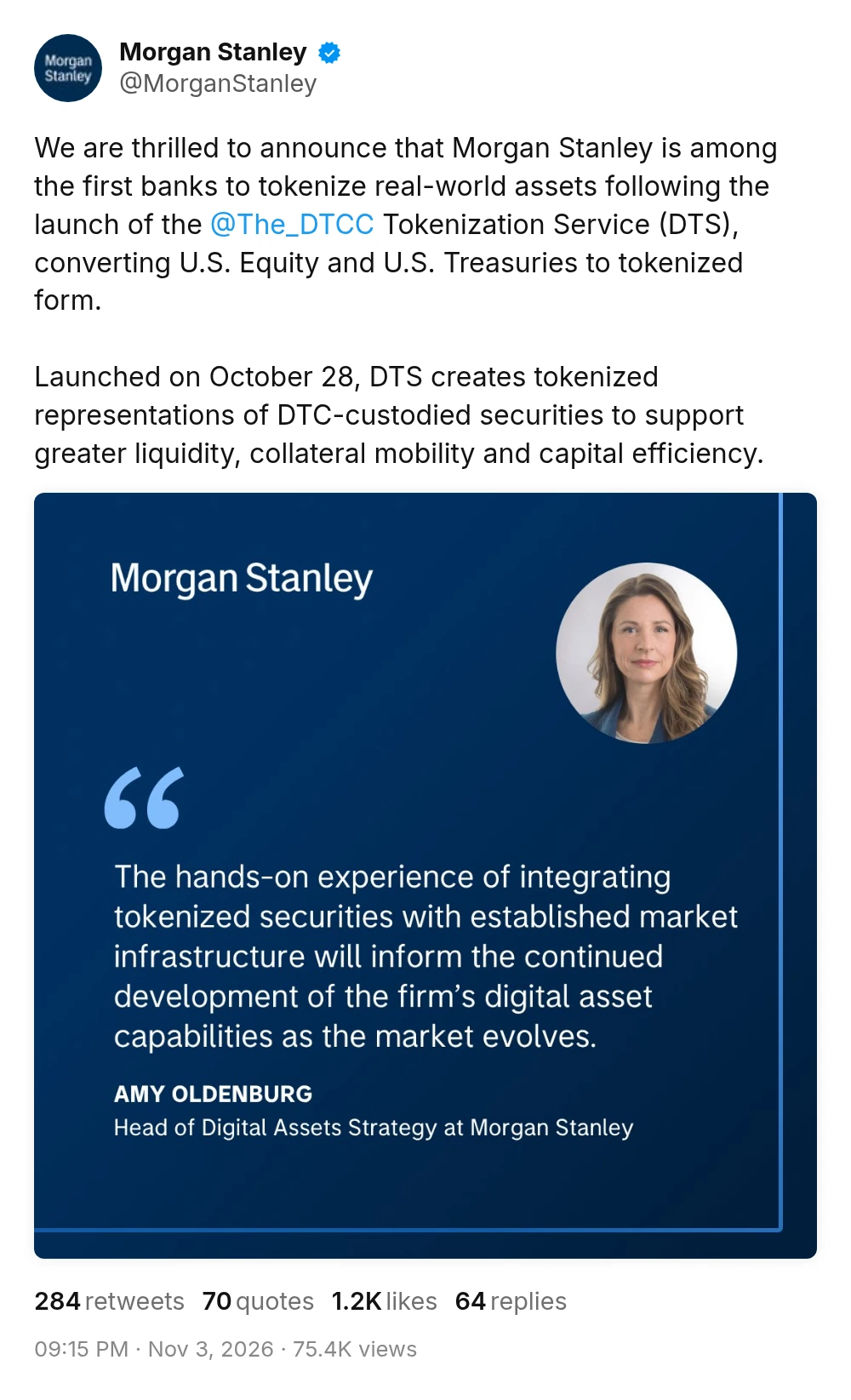
Morgan Stanley has begun tokenizing U.S. equities and Treasury securities through the Depository Trust & Clearing Corporation's (DTCC) new tokenization service, becoming one of the first major banks to use the infrastructure following its October 28, 2026, launch. The bank confirmed the development in a public announcement, marking a step in its efforts to integrate blockchain-based securities with established financial market systems.
The service is operated by the Depository Trust Company (DTC), DTCC's depository subsidiary and a core component of U.S. financial market infrastructure. DTC holds more than $114 trillion in assets under custody, providing an established framework for financial institutions to tokenize securities already held within the traditional financial system.
How DTCC's Tokenization Service Works
The DTCC Tokenization Service allows eligible financial institutions to convert securities held at DTC into blockchain-based representations, described as digital twins, and convert them back into traditional form. Participating firms can transfer the tokenized securities to digital wallets of their choice while maintaining a link to the assets recorded within DTC's existing infrastructure.
According to DTCC, the tokenized assets retain the same ownership rights, investor protections, and economic entitlements as their traditional counterparts. The infrastructure is designed to help financial institutions move collateral and access liquidity within minutes, connecting blockchain-based transactions with established securities markets.
Amy Oldenburg, Morgan Stanley's head of digital assets strategy, said the bank's participation would contribute to its broader digital asset development.
"The hands-on experience of integrating tokenized securities with established market infrastructure will inform the continued development of the firm's digital asset capabilities as the market evolves," Oldenburg said.
The service initially supports the Canton Network and DTCC's private Besu network, with additional blockchain networks planned for 2027. Its launch follows a regulatory process that included a U.S. Securities and Exchange Commission no-action letter issued to DTC in December 2025. That letter allowed DTC to tokenize securities including Russell 1000 stocks, major index exchange-traded funds, and U.S. Treasuries.
DTCC has also worked with Chainlink on tokenized collateral management as part of its broader efforts to develop blockchain-based financial infrastructure.
Major Wall Street Banks Join DTCC's Blockchain Rollout
DTCC's new service launched with 20 participating institutions, with Morgan Stanley joining other major financial companies that have signed up to access the infrastructure.
The participants include Bank of America, Barclays, BNP Paribas, Citi, Fidelity Investments, JPMorgan, State Street, UBS, and Citadel Securities. DTCC said the service was developed with input from more than 150 firms, reflecting extensive collaboration across traditional financial markets ahead of the launch.
DTCC also plans to onboard additional participants on a rolling basis. The initial group includes banks, investment firms, and market infrastructure participants, allowing institutions with different roles in securities markets to work with the tokenization service.
Morgan Stanley Targets Tokenized Equity Trading in Early 2027
Morgan Stanley's adoption of DTCC's infrastructure comes as the bank separately develops support for tokenized equity trading through its alternative trading system.
The bank expects to introduce that capability in the first quarter of 2027, moving beyond its previous target of the second half of 2026. Oldenburg said in October that Morgan Stanley was building the infrastructure needed to support the initiative.
The two developments cover different aspects of the bank's digital asset operations. Morgan Stanley has already begun using DTC's infrastructure to tokenize existing securities, while its planned alternative trading system functionality would support trading in tokenized equities.
Tokenized Stock Platforms Face Different Regulatory Paths
Other financial market operators are also working on tokenized securities infrastructure. The New York Stock Exchange and its parent, Intercontinental Exchange (ICE), are advancing plans for a tokenized trading platform. Broadridge, Computershare, Equiniti, and Superstate have signed agreements to serve as transfer agents.
Those developments come alongside growing resistance to certain crypto-native tokenized stock initiatives. A total of 59 companies, including Apple, Tesla, SpaceX, Amazon, and Nvidia, have objected to having their shares traded on OKXICE TSV, a proposed tokenized stock trading venue associated with OKX and ICE.
Under the SEC's innovation exemption, those objections prevent the platform from listing third-party tokenized versions of the companies' shares. That restriction concerns the proposed trading venue rather than the DTC service used by Morgan Stanley.
The International Monetary Fund also identified differences between tokenized stocks and conventional equities in an October assessment. The IMF found that tokenized stocks traded primarily outside regular U.S. market hours, while exhibiting greater volatility and lower liquidity than their traditional counterparts.
This article has been refined and enhanced by ChatGPT.


