




 USD
USD
Prediction Markets Post Record $2.7M Weekly Fees as January Volume Nears $11.5B Monthly High

Short-dated contracts drive revenue surge amid $814M daily trading spike
TL;DR
- Prediction markets generated over $2.7 million in weekly fees in mid-January 2026, the highest on record.
- A single day saw $814 million in trading volume, pushing January totals to about $10.5 billion with 11 days remaining.
- Opinion led weekly fees with about $1.5 million, while Kalshi dominated daily volume with more than $535 million.
We’ve launched the all-new COIN360 Perp DEX, built for traders who move fast!
Trade 130+ assets with up to 100× leverage, enjoy instant order placement and low-slippage swaps, and earn USDC passive yield while climbing the leaderboard. Your trades deserve more than speed — they deserve mastery.
Prediction markets recorded their highest-ever weekly revenue in mid-January 2026, generating more than $2.7 million in fees as trading volumes and open interest climbed across major platforms. The milestone was reported on January 20, 2026, and marked the strongest week on record for the sector in terms of fee generation, coinciding with heightened activity across both established and newer venues.
Total trading volume across prediction market platforms surged to more than $814 million on a single Sunday, setting an all-time daily high. That session helped push cumulative January trading volume to roughly $10.5 billion with more than 11 days left in the month, placing activity close to December’s $11.5 billion total and positioning January to challenge the previous monthly record.
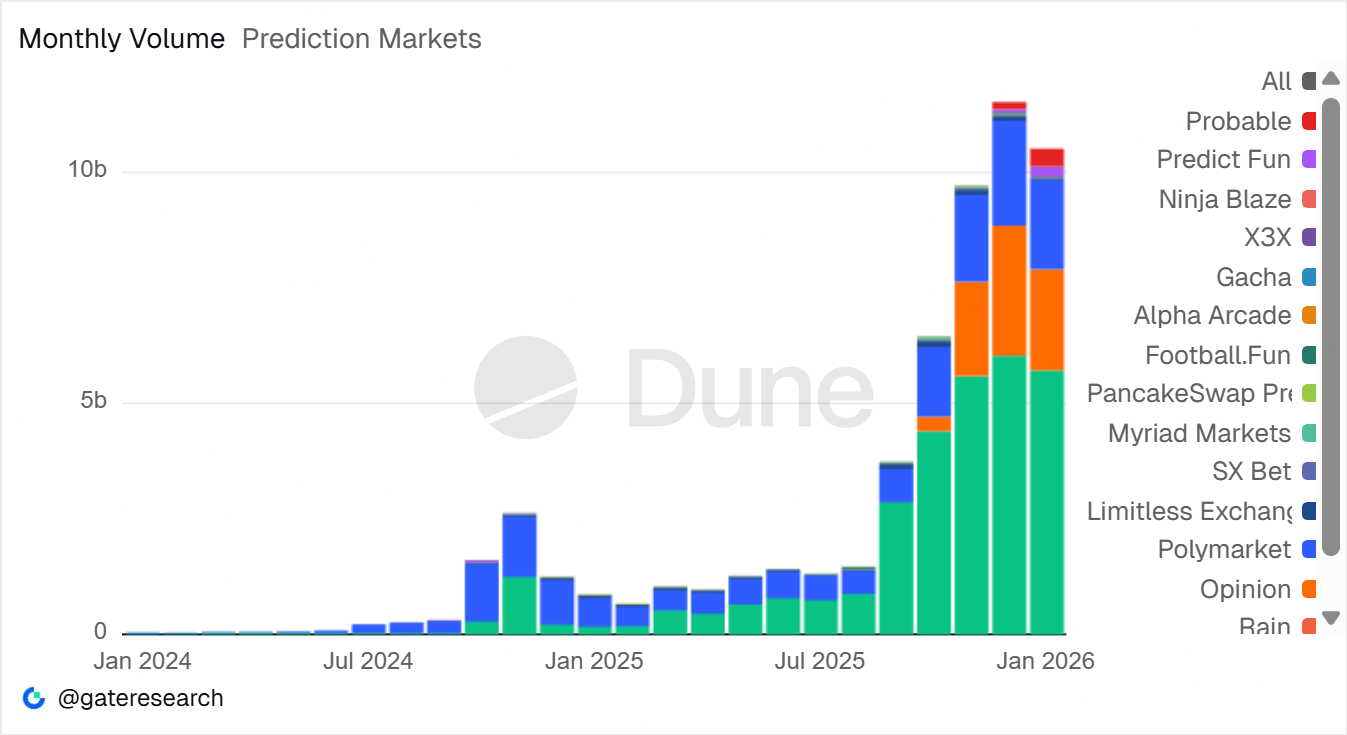
Kalshi accounted for the largest share of daily trading volume during the $814 million session, posting more than $535 million in trades. Polymarket followed with about $127 million in daily volume, while Opinion recorded roughly $84 million. The distribution highlighted diverging roles among platforms, with Kalshi leading in throughput while others gained ground through different market structures.
Fee data showed a different breakdown. Opinion generated approximately 54% of weekly fees, or just over $1.5 million, during the record week. Polymarket produced roughly $787,000 in fees, representing more than 28% of the total, with all of that revenue attributed to its short-dated 15-minute up-and-down markets. Combined platform fees exceeded $2.7 million for the week.

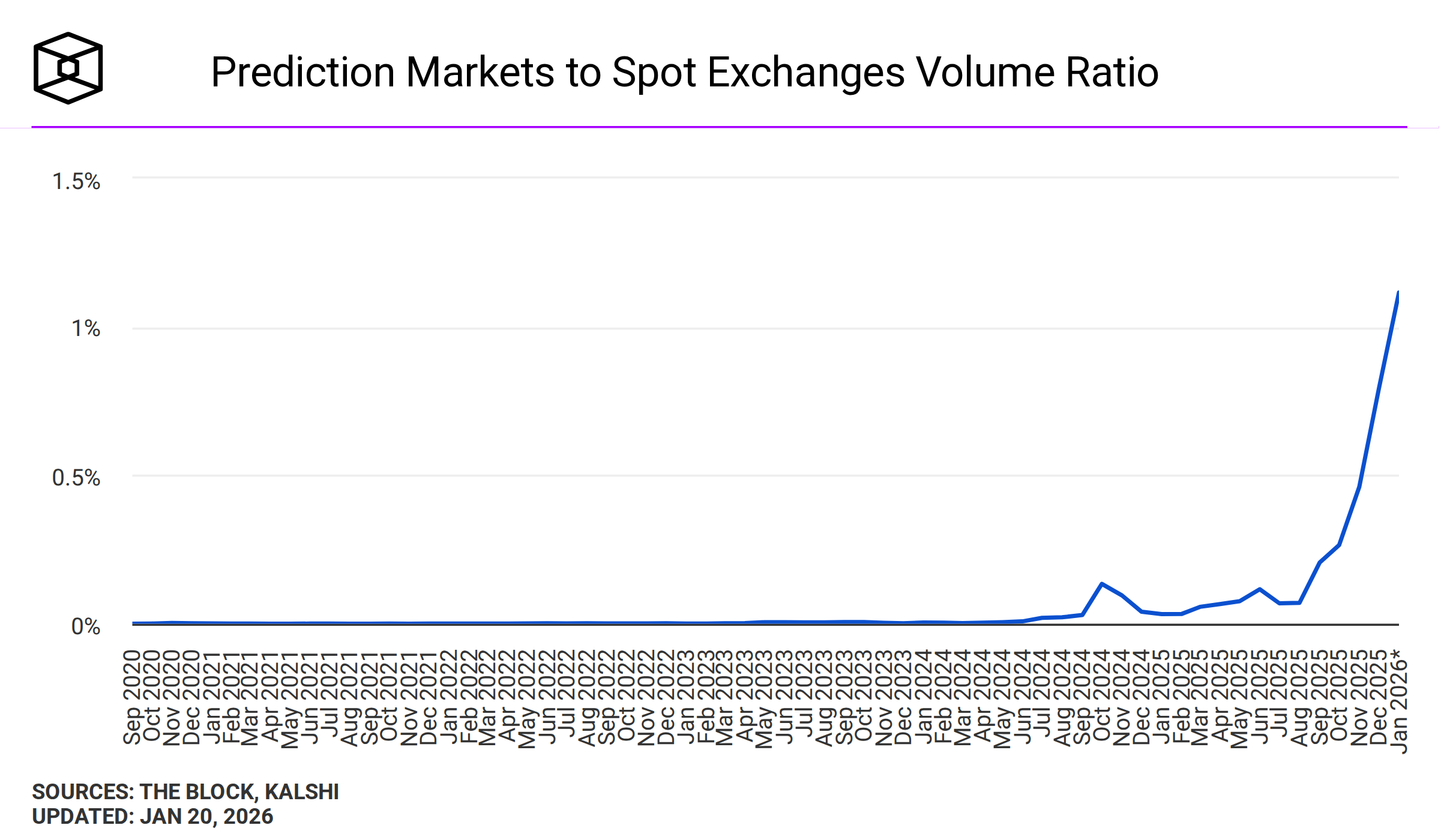
The surge also pushed prediction markets’ share of overall spot crypto trading above 1% for the first time on record, according to data cited by The Block. Previously, the sector accounted for only a fraction of spot exchange activity before crossing the 1% threshold during the same period.
Galaxy Research described the current environment as a turning point for the sector. In a Monday report, the firm said prediction markets have “entered a new phase of mainstream visibility and capital formation,” citing rapid growth at platforms such as Polymarket and Kalshi alongside experimentation by new entrants using alternative market designs.
Despite the growth, Galaxy noted ongoing constraints. The firm said liquidity remains a key limitation across prediction markets even as interest expands among retail traders and crypto-native developers. Competition has intensified as platforms pursue higher engagement through short-dated contracts and event-based products.
Broader institutional interest has also expanded. Coinbase has begun rolling out access to event-based contracts, while banks such as Goldman Sachs have publicly explored prediction markets amid evolving U.S. regulation. The developments occurred alongside the January 2026 volume and fee records reported across the sector.
Prediction markets are facing growing legal and regulatory pushback globally alongside record trading volumes and fees. U.S. regulators secured a ruling on January 20, 2026, allowing Massachusetts to bar Kalshi from offering sports-related prediction contracts to residents without a state gambling license, with the judge noting state oversight powers even as Kalshi argues the U.S. Commodity Futures Trading Commission should pre-empt local laws. In Europe, authorities in Portugal and Hungary have moved to block access to Polymarket, deeming its markets unlicensed gambling, with Portugal issuing a cease-operations order and Hungary suspending the platform’s domain under national gambling statutes.
This article has been refined and enhanced by ChatGPT.


