




 USD
USD
Analyst Links 53 Robinhood Chain Tokens to Alleged $18.43 Million Rug Pull

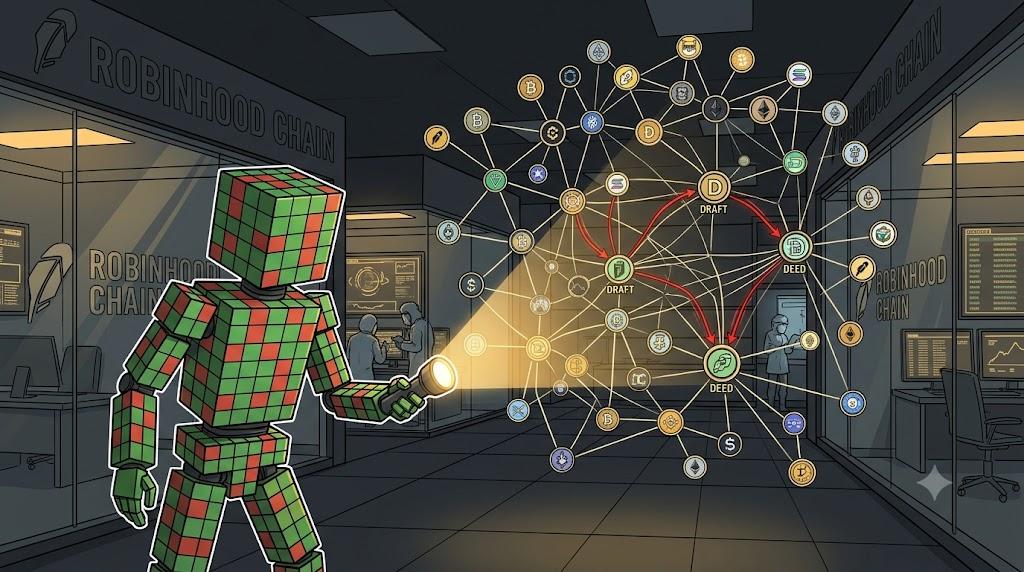
Onchain trail ties repeated memecoin launches to shared wallets, bundled buys and recycled funds
TL;DR
- Onchain analyst Wazz alleged one operation extracted at least $18.43 million across 53 Robinhood Chain memecoin launches.
- Independent transaction checks confirmed recurring concentrated launches and traced one funding path from DRAFT proceeds into DEED wallets.
- The full $18.43 million estimate and attribution of all 53 launches to one operator were not independently replicated.
Trade smarter on Jupiter, Solana’s leading DEX built for fast execution and deep liquidity.
Swap tokens at competitive rates, route across multiple liquidity sources automatically, and access perpetuals, DCA, and advanced trading tools — all in one place!
A pseudonymous onchain analyst known as Wazz alleged that one coordinated operation extracted at least $18.43 million from 53 memecoin launches on Robinhood Chain between July 10 and Sept. 21, 2026. Transaction reviews independently confirmed several patterns identified by Wazz, including concentrated opening purchases and one funding trail linking DRAFT proceeds to DEED-related wallets, but did not independently reproduce the analyst’s full loss estimate or establish that a single operator controlled every launch.
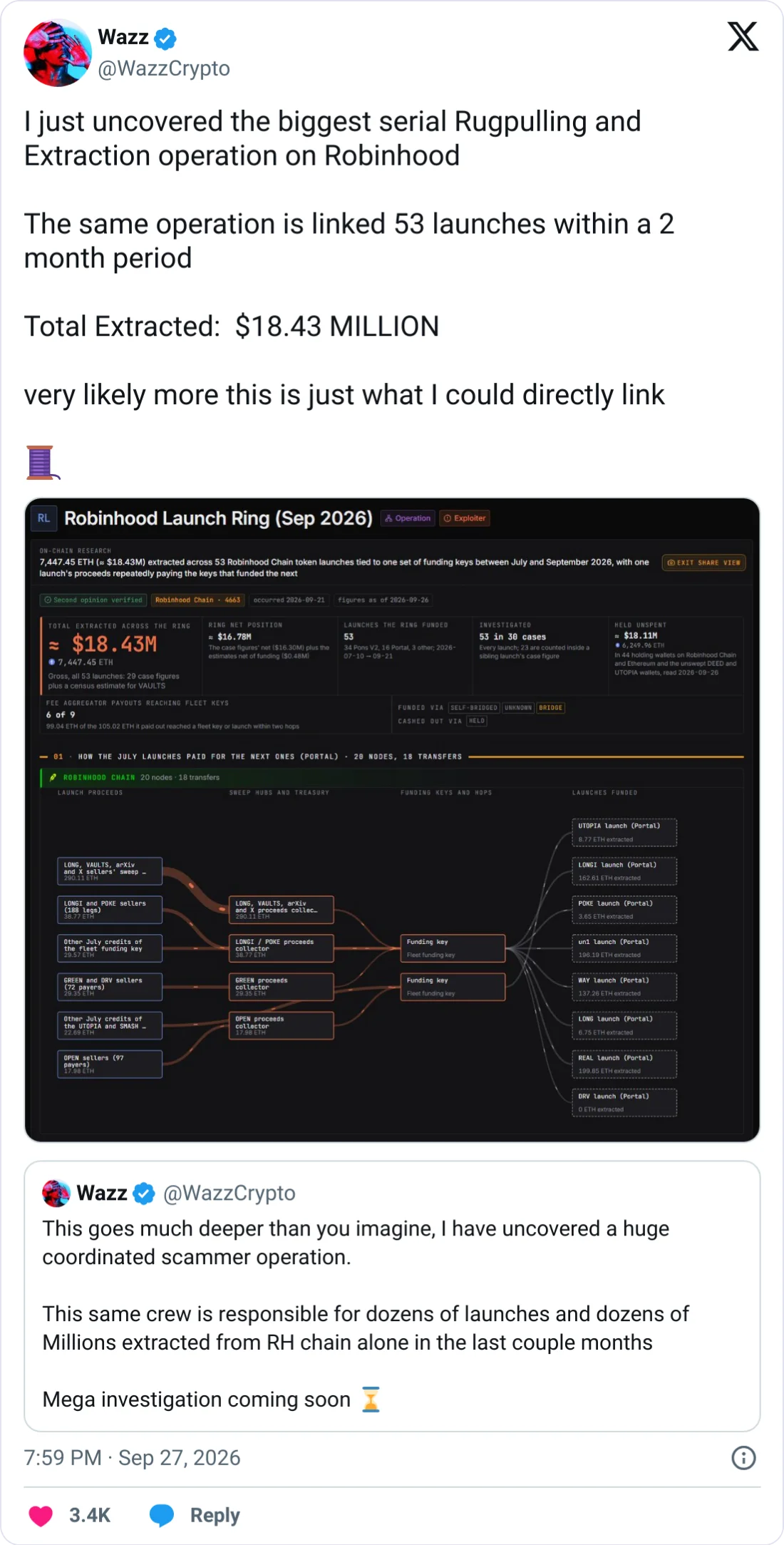
Wazz said nearly every token launch was sniped for at least 70% of its supply, typically through groups of about 70 to 200 wallets. Most launches used Pons V2, a token launchpad on Robinhood Chain. Wazz said 45 launches were linked by tracing payments from one launch’s collection wallet into the funding wallet for another, while four were connected through reused private keys and another four through a shared collector wallet.
“The proceeds of one launch pay the key that funds the next,” Wazz said.
The three largest alleged extractions were CRUMBS, LEGS and PINK.
CRUMBS promoted a system that would “turn eligible receipts into stock-token rewards from the companies you already shop with.” Wazz also identified at least two other serial token deployers but said they could not be connected to the same group. Most suspected proceeds remained in ETH, and Wazz calculated dollar values using ETH’s value around the time each launch or sale occurred.
Pons V2 exemptions preceded concentrated opening buys
Pons V2 sells tokens through a bonding curve and applies a 99% “snipe tax” to purchases during the first seconds after launch, with that tax falling to zero after about five seconds. Creators can exempt up to 32 addresses, including for “a team bundling its opening buys across several wallets.”
Wazz’s investigation included a table covering 11 launches, 10 of which used Pons V2. Transaction reviews matched all 10 of those Pons V2 launches. Across nine launches from late August onward, creators exempted about 15 to 25 wallets from the tax. One to three blocks later, a single transaction bought tokens simultaneously for those exempt wallets.
Each of those bundled opening transactions emptied the bonding curve and moved the token into a Uniswap v4 pool. Following the buys, the creator and exempt wallets collectively controlled about 82% to 86% of supply.
All nine bundled buys went through the same unverified smart contract, created on Aug. 28, 2026. Wazz said the contract belonged to a commercial bundling tool used by unrelated customers, so use of that contract alone did not establish common control. Of the 53 launches on Wazz’s list, 25 used the contract. The operator of the commercial tool could not be determined.
An earlier EQUITY launch on Aug. 12 showed a similar pattern before that contract existed. The creator exempted 31 wallets, and 21 bought within roughly one second using separate transactions. The creator and participating wallets then held 65.7% of supply.
Wazz also identified three launches each named CRUMBS, PINK and DEED, with each same-name group appearing within roughly one day. The analyst alleged the operator used duplicate names to launch fake versions of highly anticipated tokens before later announcing what was presented as the genuine contract address.
DRAFT funds flowed into DEED-linked wallets
DEED prompted Wazz’s broader investigation, and the DRAFT-to-DEED funding path was independently traced transaction by transaction.
The batch recipients included DEED’s creator, the wallet that paid for its opening purchase and the other 24 wallets exempted from Pons V2’s anti-sniping tax. After the opening buy, the creator and exempt wallets controlled 86% of DEED’s supply.
Wallet 0x9d06 also helped fund another DEED token that day. At 5:53 p.m. ET, it sent 18 ETH to another address, which funded the other DEED token’s opening-purchase wallet less than one minute later.
Selling started almost immediately. Ninety-two wallets funded by 0xf268 received 130.75 ETH from selling DEED into its Uniswap liquidity pool, beginning one second after launch. DEED’s creator separately withdrew 69.06 ETH from Pons’ fee escrow contract.
Those flows totaled about 199.8 ETH, valued at roughly $535,000 at the time. Wazz calculated DEED proceeds at 228.92 ETH using 98 wallets and 67.55 ETH of creator fees. Wazz said subtracting the initial funding reduced that figure to 212.94 ETH.
Funds later moved beyond Robinhood Chain. On Sept. 24, wallet 0x9d06 deposited about 86.5 ETH into a Relay cross-chain bridge contract. Relay delivered about 86.3 ETH to an Ethereum wallet, where it was exchanged for roughly 231,000 DAI. The DAI moved to a new address the next day and remained there as of Sunday, Sept. 27.
Robinhood Chain activity grew alongside memecoin launches
Robinhood Chain publicly launched on July 1, 2026, as an Ethereum Layer 2 built with Arbitrum’s technology stack. The network was positioned around financial services and tokenized real-world assets, while memecoins and stock-linked tokens quickly became major sources of trading activity.
Pons-related activity helped push Robinhood Chain to a record $6 million in fees in a single day earlier in September.
This article has been refined and enhanced by ChatGPT.


