




 USD
USD
U.S. SEC explores narrow exemption for tokenized securities trading while agencies coordinate oversight and Congress delays CLARITY Act

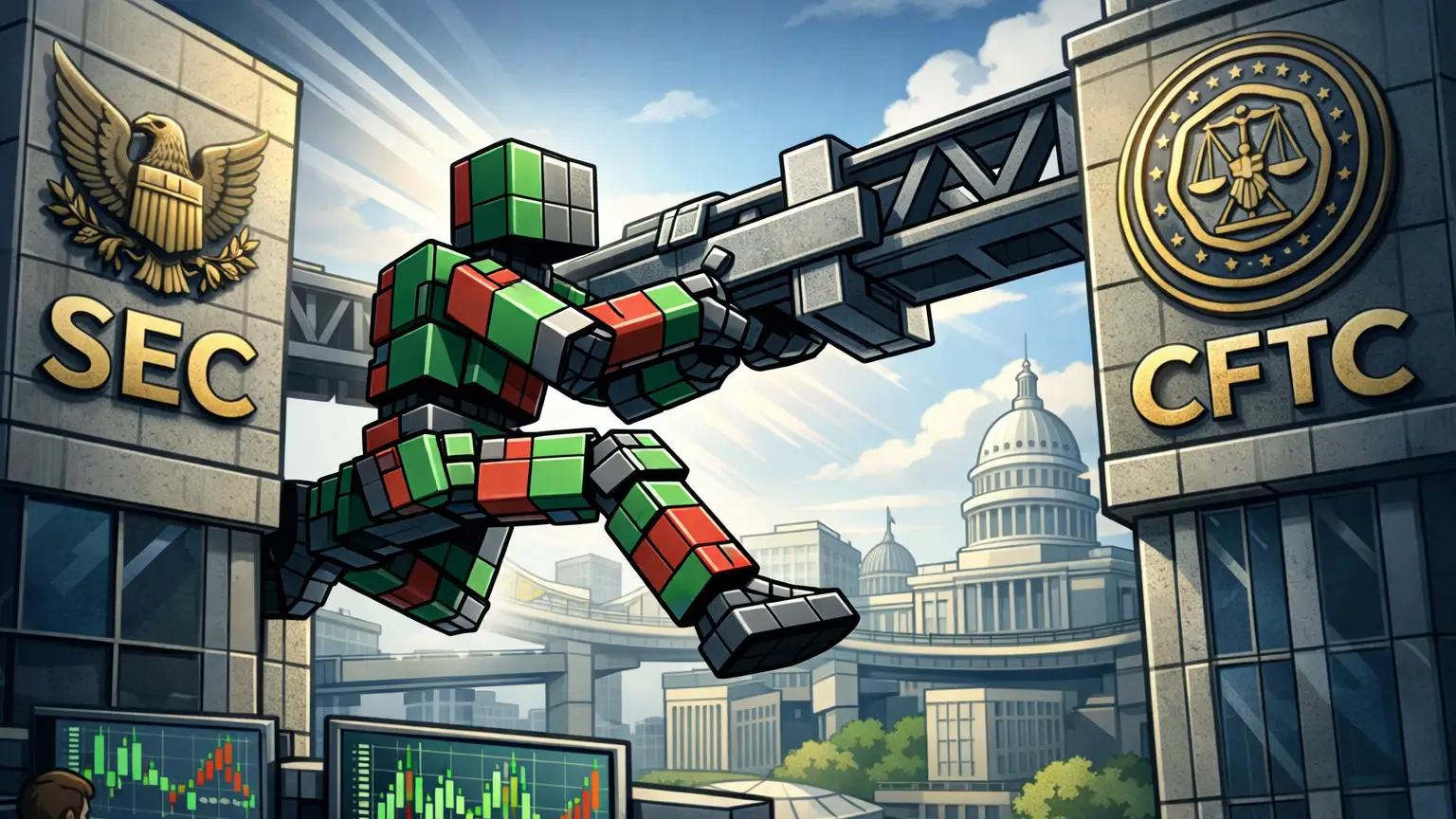
Regulators outline tokenization pilot framework, SEC-CFTC cooperation pact, and legislative delays shaping crypto oversight
TL;DR
- U.S. regulators are drafting a limited SEC exemption allowing controlled trading of tokenized securities while maintaining existing investor protections.
- The SEC and CFTC signed a memorandum of understanding to coordinate digital-asset oversight after years of regulatory conflict.
- Senate Majority Leader John Thune said the CLARITY Act regulating crypto markets is unlikely to pass before April 2026.
We’ve launched the all-new COIN360 Perp DEX, built for traders who move fast!
Trade 130+ assets with up to 100× leverage, enjoy instant order placement and low-slippage swaps, and earn USDC passive yield while climbing the leaderboard. Your trades deserve more than speed — they deserve mastery.
U.S. financial regulators are advancing multiple initiatives aimed at defining oversight of digital assets as federal agencies refine their regulatory approach to blockchain-based financial products and Congress weighs broader legislation governing the sector.
Discussion of tokenized securities regulation emerged during a meeting of the Securities and Exchange Commission’s Investor Advisory Committee held in March 2026, where regulators and market participants debated how blockchain-based versions of traditional financial instruments could operate under U.S. securities law. SEC Commissioner Hester Peirce said the agency is drafting a narrower exemption provision that could permit limited trading of tokenized securities under controlled conditions while preserving investor protections embedded in existing regulations.
Peirce described the effort as part of a broader attempt to balance innovation and oversight while evaluating whether tokenized financial products should receive special treatment under federal securities law. Advisory committee members had previously recommended against granting broad exemptions for tokenized equities, instead urging the SEC to pursue incremental regulatory adjustments through individual rule changes and public consultation.
Tokenized securities refer to traditional assets such as stocks issued or traded on blockchain networks, where ownership records and transaction settlement occur on distributed ledgers rather than centralized clearing infrastructure. Supporters of the technology argue that blockchain-based issuance could enable near-instant settlement rather than traditional clearing cycles that often require one or more days for transactions to finalize.
Advocates also cite several operational benefits associated with tokenization, including reduced operational costs through the removal of intermediaries such as transfer agents and clearing institutions, improved transparency created by immutable blockchain records, the possibility of continuous twenty-four-hour trading outside traditional exchange hours, and broader global investor participation enabled by digital distribution of assets.
Regulators and advisory committee members raised concerns that tokenized equities could create new regulatory challenges tied to custody arrangements, anti-fraud protections, market manipulation risks, disclosure obligations, and oversight of trading platforms facilitating blockchain-based transactions. Committee analysis warned that granting exemptions without careful safeguards could introduce risks to investors unfamiliar with digital asset market structures.
The panel stated that broad exemptions could “introduce new risks that investors do not understand and impose higher costs that outweigh the benefits of tokenization.” SEC Chairman Paul S. Atkins indicated support for a limited pilot approach allowing regulators to study tokenized securities markets under controlled conditions.
Atkins described the concept of an innovation exemption allowing small-scale experiments while regulators gather operational data from blockchain trading environments. The chairman said blockchain-based settlement could “enhance settlement efficiency, reduce settlement risk, and eliminate unnecessary intermediaries.”
Regulators emphasized during discussions that tokenized securities would remain subject to federal securities laws unless a specific exemption were granted. SEC staff are expected to formally examine the proposed exemption framework in future discussions at the agency.
Federal oversight of digital assets also took a structural turn when the SEC and the Commodity Futures Trading Commission signed a memorandum of understanding on March 12, 2026 establishing a framework for cooperation on cryptocurrency regulation and emerging financial technologies.
The agreement created procedures for regular coordination between the two agencies, including staff meetings, information sharing on enforcement investigations, joint economic analysis, and alignment of regulatory approaches affecting digital-asset markets and derivatives trading.
Crypto companies have frequently faced overlapping investigations or inconsistent regulatory guidance when digital assets appeared to fall within both securities and commodities frameworks. The new memorandum sets out protocols for agencies to coordinate enforcement actions, litigation strategies, and regulatory communications when cases involve both jurisdictions.
SEC Chairman Paul Atkins criticized the previous regulatory structure during remarks about the agreement, saying, “For decades, regulatory turf wars, duplicative agency registrations, and different sets of regulations between the SEC and CFTC have stifled innovation and pushed market participants to other jurisdictions.”
Officials said the memorandum could also help align agency interpretations of how digital assets should be classified under federal law, including whether particular crypto products are regulated as securities, commodities, or derivatives instruments.
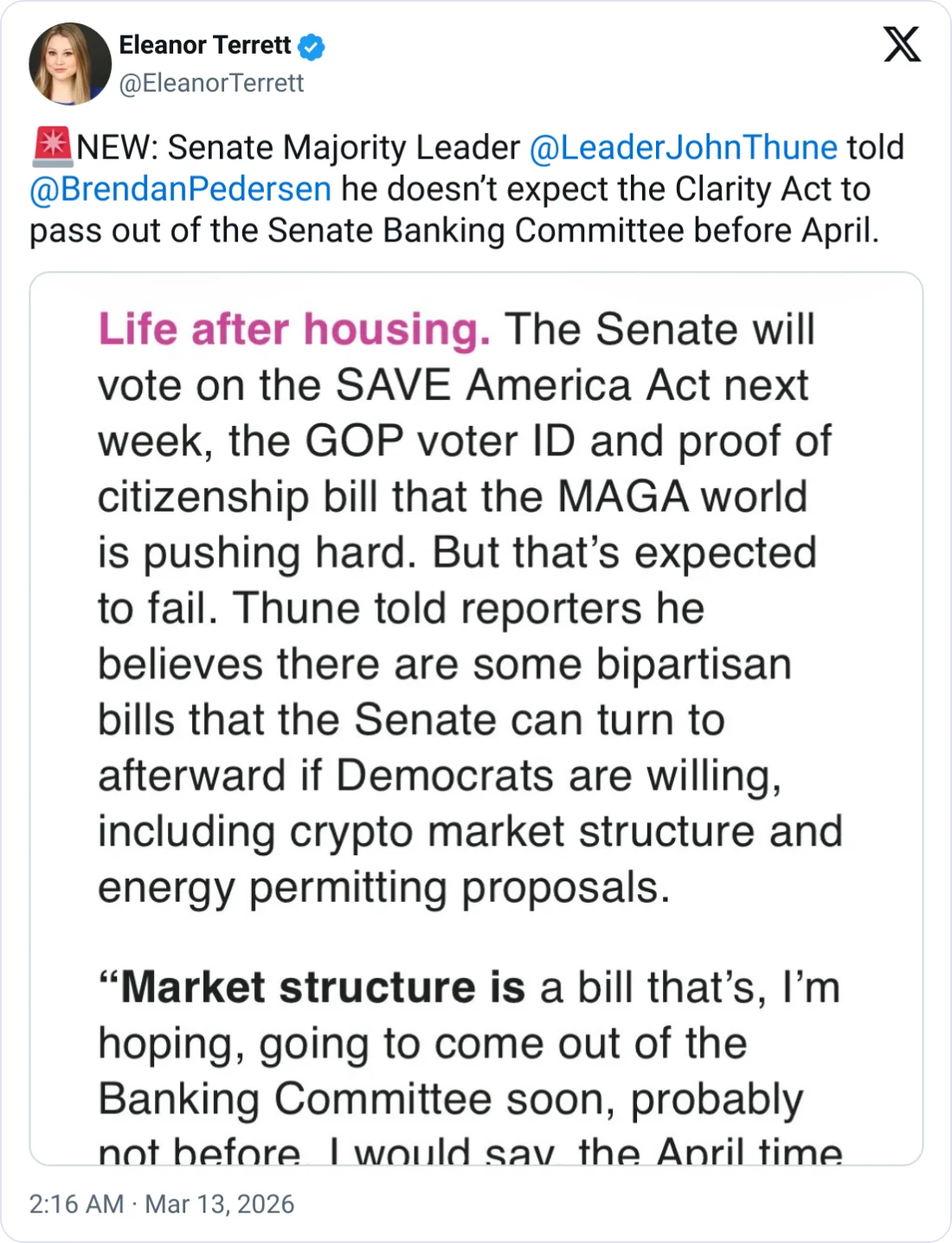
Congressional legislation aimed at clarifying those classifications remains under discussion in Washington. Senate Majority Leader John Thune said the CLARITY Act, a proposed federal law intended to establish a comprehensive regulatory framework for digital assets, is unlikely to pass the Senate Banking Committee before April 2026.
Lawmakers have continued negotiations over several provisions in the legislation, including debates over whether stablecoin issuers should be permitted to offer yield or interest payments on dollar-pegged tokens.
Banking industry representatives argue that allowing stablecoins to generate yield could divert deposits away from traditional financial institutions and weaken bank funding structures. Crypto industry groups contend that reward mechanisms for stablecoins are essential to maintaining competitiveness and supporting innovation in digital financial services.
The bill has already passed the U.S. House of Representatives but faces further negotiations in the Senate as policymakers attempt to reconcile competing regulatory priorities and financial sector concerns.
Legislative progress has also been affected by competing political priorities on Capitol Hill, where lawmakers have focused attention on the SAVE America Act, a voter identification bill requiring proof of citizenship for voter registration and a photo identification requirement for voting.
President Donald Trump and several Republican lawmakers have supported prioritizing that legislation ahead of other measures. Republicans currently hold a 53-47 majority in the Senate, where procedural rules such as the filibuster can affect the progress of major legislation.
This article has been refined and enhanced by ChatGPT.


