




 USD
USD
Stablecoin Supply Tops $310 Billion in 2025 as Growth Accelerates and JPMorgan Caps Long-Term Outlook Below $600 Billion


Record Expansion Highlights Stablecoins’ Role as Crypto Infrastructure, Not Payment Disruptors
TL;DR
- Global stablecoin supply surpassed $310 billion in December 2025, marking a new all-time high after roughly 50% growth over the year.
- Expansion has been driven by crypto-native demand and liquidity needs, while yield-focused stablecoin strategies lost relative momentum.
- JPMorgan projects the market will reach $500–$600 billion by 2028, pushing back on trillion-dollar expectations and mass payment adoption narratives.
We’ve just launched the all-new COIN360 Perp DEX, built for traders who move fast!
Trade 130+ assets with up to 100× leverage, enjoy instant order placement and low-slippage swaps, and earn USDC passive yield while climbing the leaderboard. Your trades deserve more than speed — they deserve mastery.
Stablecoins closed 2025 at an unprecedented scale, with total circulating supply pushing around $310 billion in December, a level that underscores how deeply embedded fiat-pegged tokens have become in the digital asset ecosystem. The milestone reflects one of the strongest annual growth performances in the sector’s history, with on-chain data showing supply expanded by roughly 50% over the course of the year. That pace outstripped growth across most other crypto asset categories and highlighted a clear shift in how capital has been deployed, favoring stability and liquidity over volatility.
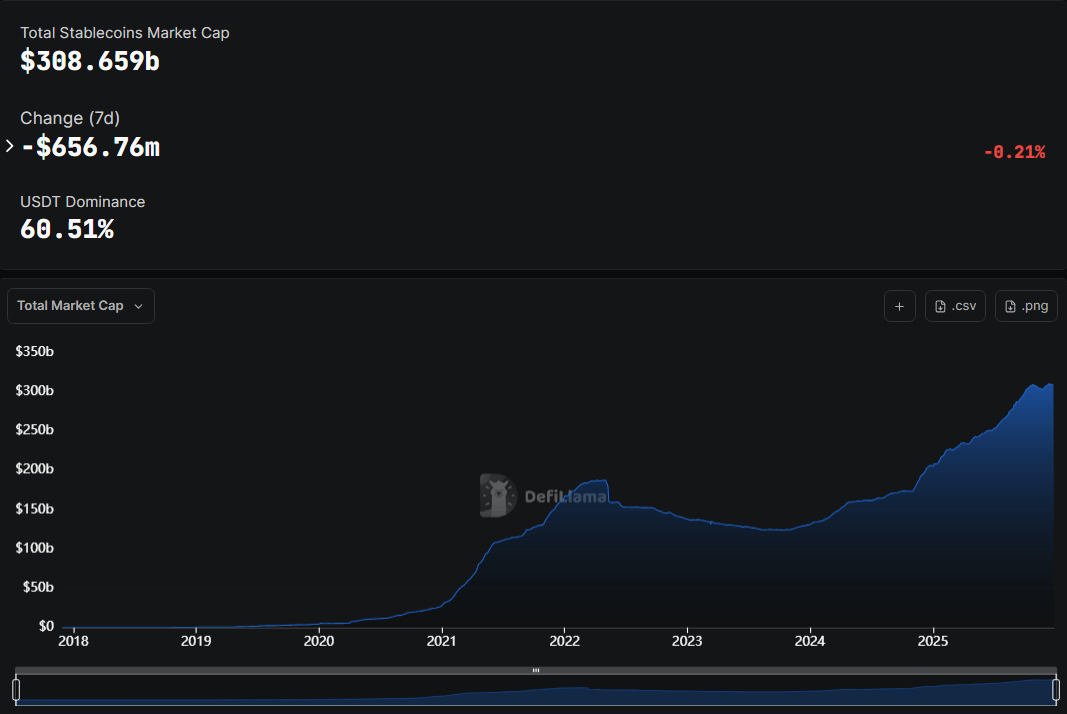
Market data throughout the year showed that the bulk of new issuance remained concentrated in fiat-backed stablecoins, particularly those tied to the U.S. dollar. This concentration reinforced the dominance of a small number of large issuers while also delivering the depth and reliability demanded by traders, exchanges, and decentralized finance protocols. Despite periodic experimentation with alternative models, users consistently gravitated toward simple redemption mechanics and high-liquidity instruments, signaling limited appetite for complexity as the market scaled.
The expansion has not been evenly distributed across all segments. Yield-bearing and algorithmic stablecoin products lost relative ground during the same period, reflecting a broader reassessment of risk. Declining on-chain yields, combined with heightened sensitivity to smart contract and counterparty exposure, prompted many users to treat stablecoins less as income-generating tools and more as cash-like settlement assets. This dynamic became more pronounced during periods of market stress, when stablecoin balances tended to rise even as speculative activity cooled.
Usage patterns in 2025 pointed to stablecoins’ primary function as financial infrastructure rather than consumer-facing payment instruments. Trading liquidity, cross-border transfers, exchange settlement, and collateral management remained the dominant sources of demand. Large-scale merchant adoption and everyday payment use cases, often cited in bullish narratives, showed little evidence of driving the year’s supply growth. Instead, stablecoins continued to serve as the connective tissue between centralized platforms, decentralized protocols, and global users seeking dollar exposure without relying on traditional banking rails.
According to Grayscale's 2026 top 10 crypto investing themes list, the reach of stablecoins is expected to grow following the GENIUS Act.
That reality aligns closely with the outlook published by JPMorgan analysts on December 27, 2025. The bank projected that the stablecoin market would grow to between $500 billion and $600 billion by 2028, a sizable increase from current levels but well short of the trillion-dollar valuations sometimes forecast by industry advocates. Analysts argued that future expansion is likely to mirror the broader cryptocurrency market rather than break out as a standalone payments revolution, emphasizing that most activity remains tied to trading, liquidity management, and crypto-native financial services.
JPMorgan’s assessment also highlighted structural limits to near-term adoption beyond the crypto sector. Regulatory constraints, entrenched fiat payment systems, and the lack of compelling incentives for merchants were cited as factors that would temper expectations for widespread consumer use. From that perspective, stablecoins are increasingly viewed as efficient financial plumbing for digital markets rather than direct competitors to existing payment networks.
This article has been refined and enhanced by ChatGPT.


