




 USD
USD
Thai Investors Sue Tether Over $42.4 Million USDT Freeze

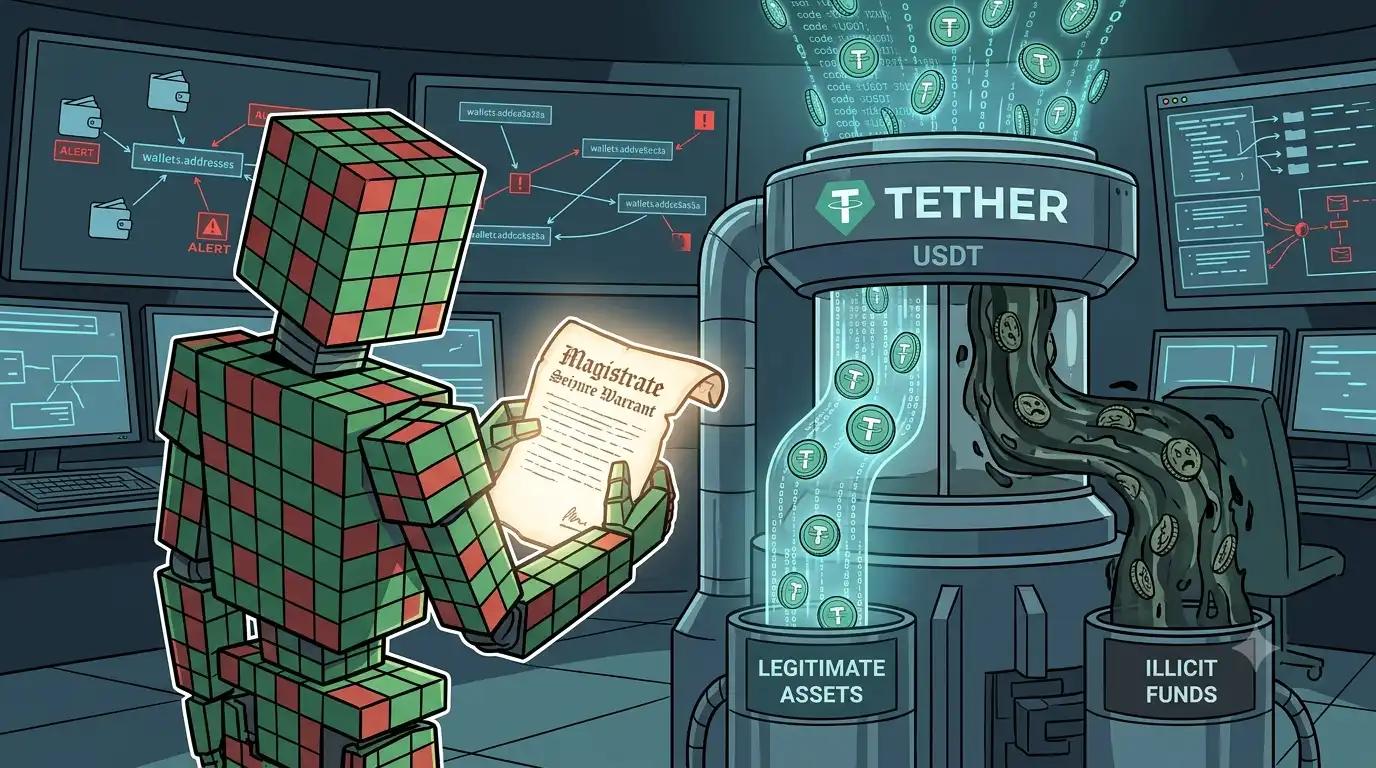
Lawsuit Challenges Blacklisting Before Judicial Seizure Warrant
TL;DR
- Thai investors Nutthawat Rukthammachalern and Natthawat Kasamvilas sued Tether, alleging it froze their USDT before a court authorized the seizure.
- The dispute centers on 10 Ethereum addresses holding $42,417,785.62 and whether Tether had legal authority to blacklist them.
- The plaintiffs seek restoration of the assets, damages and income allegedly earned from reserves backing the frozen tokens.
Trade smarter on Jupiter, Solana’s leading DEX built for fast execution and deep liquidity.
Swap tokens at competitive rates, route across multiple liquidity sources automatically, and access perpetuals, DCA, and advanced trading tools — all in one place!
Thai investors Nutthawat Rukthammachalern and Natthawat Kasamvilas sued Tether on August 31, 2026, in the U.S. District Court for the Southern District of New York, alleging the stablecoin issuer improperly froze $42,417,785.62 in USDT before a judicial seizure warrant existed. The plaintiffs argue that Tether lacked legal authority to blacklist their assets and also challenge the company's ability to unilaterally restrict transfers through its centralized administrative controls.
The case focuses on 10 Ethereum addresses that Tether blacklisted on October 30, 2025, according to the chronology presented by the plaintiffs. A separate account of the events gives the freeze date as October 30, 2026, creating a date conflict in the available information. The earlier date is the one paired with the subsequent warrant chronology, while the conflicting date remains part of the supplied account and has not been independently reconciled.
According to the plaintiffs, Tether acted after an informal request from U.S. Homeland Security Investigations, or HSI, rather than after receiving an immediate court order. They argue that no warrant had been issued when the assets were first immobilized and that they were not given notice until after the freeze had already taken effect.
A magistrate judge in the Eastern District of North Carolina later issued seizure warrant No. 5:26-MJ-1267-JG on February 19, 2026. The warrant was tied to a pig-butchering investment scam investigation in which investigators alleged that wallets covered by the action had received proceeds connected to romance-driven crypto fraud schemes. The Thai plaintiffs deny participating in the alleged scheme.
The North Carolina action covered a wider set of assets that prosecutors said included more than $61 million in USDT linked to wallets associated with investment fraud. Rukthammachalern and Kasamvilas argue that their addresses were swept into that broader enforcement action without individualized evidence establishing that they were personally involved in the underlying fraud.
The central factual dispute is whether the plaintiffs' wallets directly received scam proceeds or merely interacted with addresses that had themselves transacted with wallets connected to illicit activity further along the transaction chain. Pig-butchering schemes in the supplied information involve fraudsters building fake relationships with victims over extended periods before directing them to fraudulent crypto investment platforms, after which investigators may trace funds through dozens of wallets.
Plaintiffs Challenge Tether's Freezing Authority
Rukthammachalern and Kasamvilas also accuse Tether of deceptive USDT marketing, arguing that users are not clearly informed that the issuer can restrict specific balances through administrative controls. The plaintiffs are challenging Tether's unilateral ability to blacklist addresses through a centralized administrative key embedded in USDT's smart-contract structure.
The complaint seeks declaratory relief, an injunction, damages, punitive damages and disgorgement of income Tether allegedly earned from reserves backing the frozen tokens. The plaintiffs also want Tether ordered to remove their addresses from its blacklist and barred from burning or reissuing the disputed USDT while the case remains pending.
Rukthammachalern and Kasamvilas further argue that Tether continued earning income from reserve assets backing their immobilized USDT while they were unable to use the tokens. They are seeking recovery of that income in addition to restoration of the disputed assets.
The New York lawsuit follows an earlier attempt to recover the funds. The plaintiffs filed a separate application in North Carolina on July 31, 2026, seeking return of the assets. Neither that proceeding nor the Southern District of New York case had produced a ruling on ownership of the funds or Tether's liability as of September 2, 2026.
One account characterized the plaintiffs' request as asking the court to determine that Tether's seizure “had no legal basis,” prevent the issuer from destroying the disputed USDT and require restoration of the assets together with earned interest income.
Compliance Obligations Draw Competing View
Austin Campbell, adjunct professor at Columbia Business School, argued that money-transmitting businesses have a “100% obligation to freeze” assets when they suspect illegal activity. Campbell also pointed to Binance founder Changpeng Zhao, or CZ, when discussing the consequences financial intermediaries may face for failing to respond appropriately to suspected illicit transactions.
Campbell questioned the plaintiffs' legal strategy because investigators had linked the wallets to scam proceeds. “Well, this seems insane,” Campbell said, adding that the two men may have put themselves “in the crosshairs of US law enforcement.”
Campbell argued that the plaintiffs should have sued the U.S. government rather than Tether if the freeze resulted from federal law-enforcement instructions. “If the DOJ or HSI shows up and tells a bank to freeze your funds because they are criminal activity, you're not going to have a cause of action against the bank. It will be against the government if they were grossly negligent or lied.”
An unnamed analyst cited in the supplied information took a different view, describing Circle's slower response to freeze requests as a preferable approach. The analyst was not identified by name.
Tether's Broader Enforcement Record
Tether says it has assisted thousands of law-enforcement cases globally, and the lawsuit comes against a broader record of asset freezes carried out with sanctions and enforcement authorities.
This article has been refined and enhanced by ChatGPT.


