




 USD
USD
U.S. Senate Crypto Market Structure Bill Hits Turbulence as Coinbase Pulls Support and Amendments Pile Up


Lawmakers Push Forward on Crypto Framework Despite Delays, Industry Fractures, and Developer Liability Concerns
TL;DR
- Senate crypto market structure bill advances unevenly after Banking Committee delays and Agriculture Committee schedules Jan. 27 markup.
- Roughly 137 amendments, Coinbase’s withdrawal of support, and unresolved developer liability stall momentum.
- Even if passed, years of regulatory rulemaking are expected before any real market impact.
We’ve launched the all-new COIN360 Perp DEX, built for traders who move fast!
Trade 130+ assets with up to 100× leverage, enjoy instant order placement and low-slippage swaps, and earn USDC passive yield while climbing the leaderboard. Your trades deserve more than speed — they deserve mastery.
Momentum around a long-awaited U.S. Senate crypto market structure bill faltered in mid-January 2026 after a planned all-day markup by the Senate Banking Committee was abruptly postponed, exposing deep fractures among lawmakers and industry stakeholders. The legislation, often referred to as the CLARITY Act, is intended to define regulatory oversight for digital assets and clarify the roles of federal agencies, but negotiations unraveled less than a day before the scheduled session, according to lawmakers involved. The delay underscored unresolved disputes over developer liability, regulatory surveillance powers, and the industry’s waning consensus.
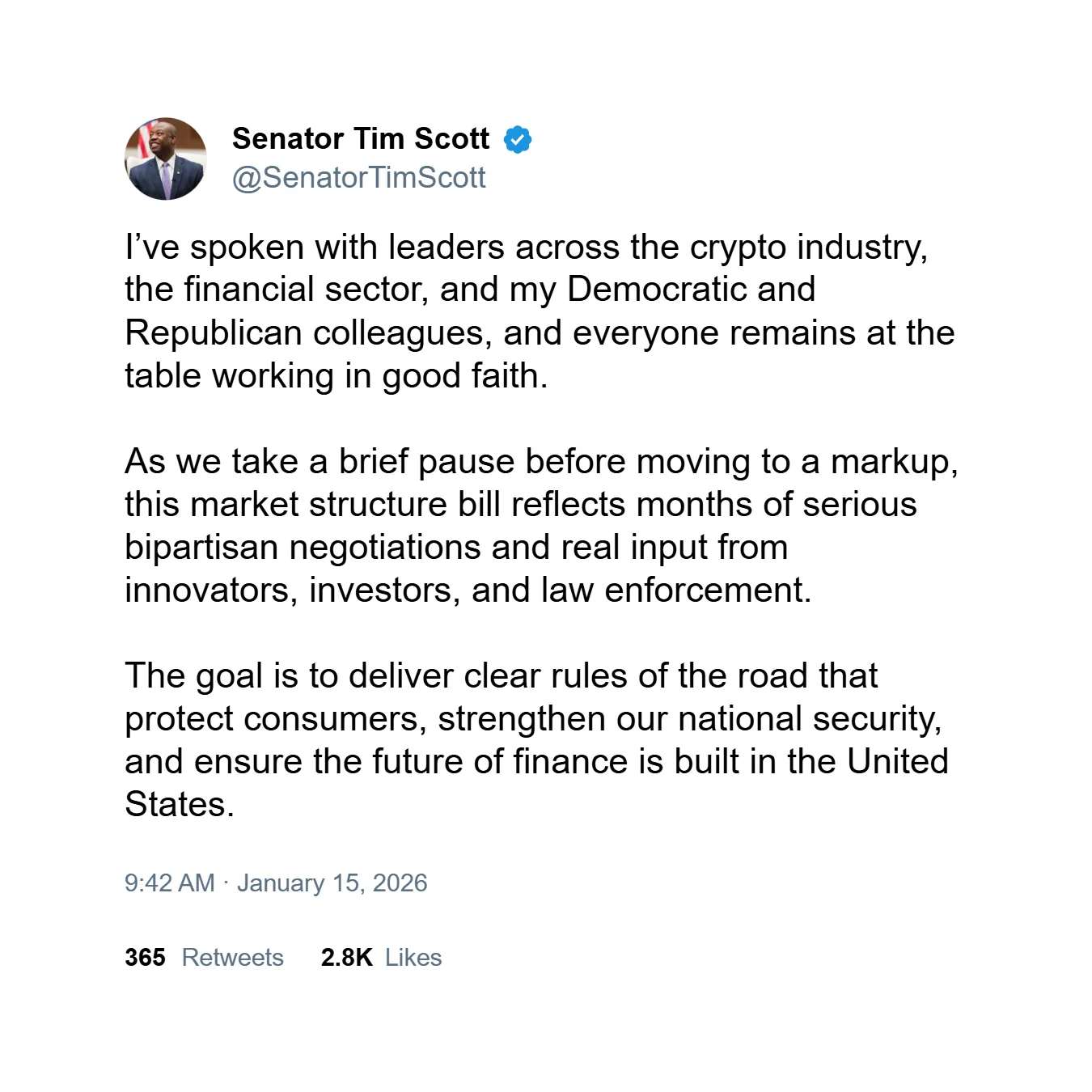
While the Banking Committee stalled, the Senate Agriculture Committee moved ahead on a parallel track, scheduling its own markup for January 27, 2026. Draft bill text is expected to circulate several days before that session. The committee’s role is pivotal, as it oversees the Commodity Futures Trading Commission, which would gain clearer authority over significant portions of spot crypto markets under the proposal. Supporters framed the Agriculture Committee’s progress as a signal the bill remains alive, even as setbacks mounted elsewhere.
One of the clearest signs of internal conflict came from the sheer volume of proposed changes. Senators filed roughly 137 amendments ahead of the delayed Banking Committee markup, a number that highlighted the lack of alignment on core issues. The amendments span jurisdictional boundaries between regulators, stablecoin rules, expanded Treasury Department oversight, and the legal treatment of blockchain developers. Lawmakers privately acknowledged that such a crowded amendment slate made a smooth markup unlikely and increased the risk of prolonged debate.
Industry dynamics shifted sharply after Coinbase threatened to withdraw its support for the bill on January 15, a move that reverberated through Capitol Hill. Coinbase had been a central industry negotiator advocating for compromise language, and its exit was cited by analysts and policy observers as a key factor behind the Banking Committee’s decision to pause. One analyst warned the reversal could derail market structure legislation, arguing the fallout favors traditional banks more than crypto-native firms.
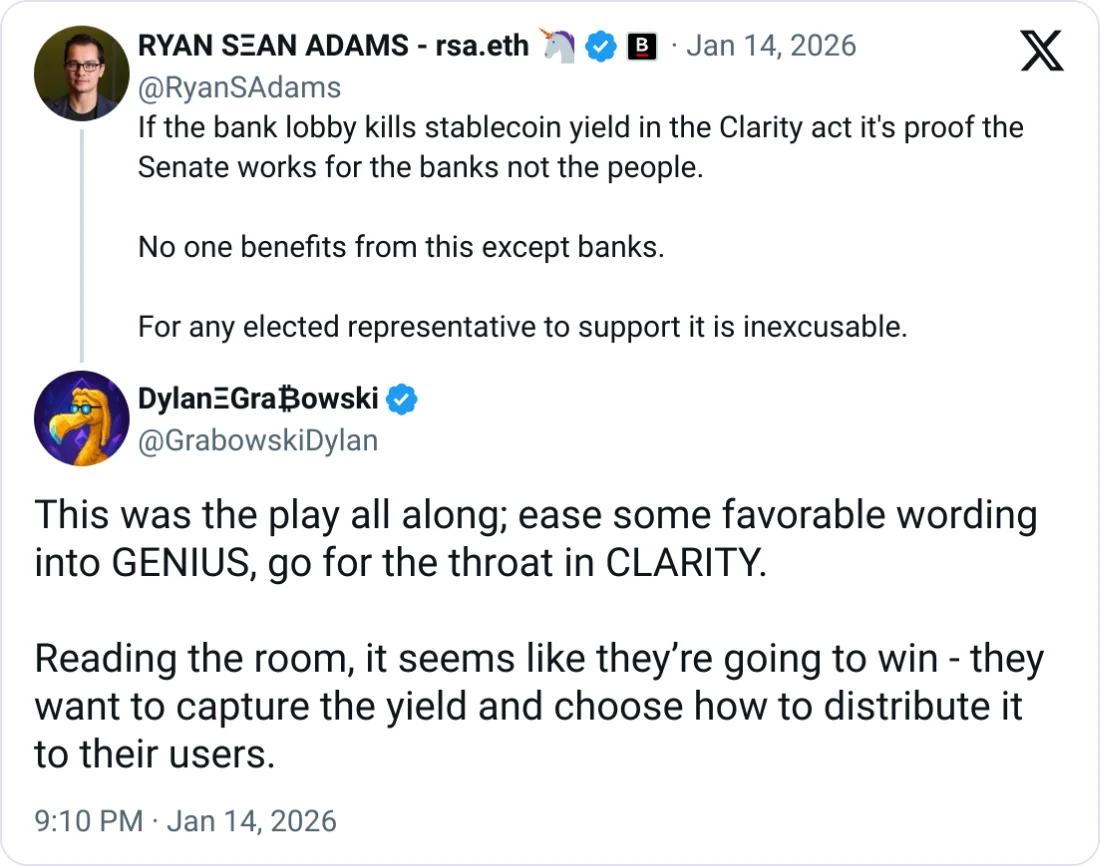
Coinbase’s objections centered on provisions it viewed as insufficiently protective of decentralized and non-custodial infrastructure. Particular concern focused on ongoing criminal exposure for developers and compliance standards that critics say advantage large financial institutions. The company’s withdrawal fractured what had been a fragile industry coalition, weakening external pressure on lawmakers to push the bill through committee.
Developer liability emerged as the most contentious flashpoint. A mid-January draft drew heavy criticism for failing to shield blockchain developers from prosecution when their software is later used for illicit purposes. The text does not prevent federal agencies from pursuing cases against developers who lack operational control over deployed code, a stance critics say preserves a legal theory equating open-source development with facilitation. The backlash came not only from regulation skeptics but also from former supporters who viewed the issue as a red line.
Concerns also intensified around the bill’s expansion of Treasury Department surveillance authority. Industry groups warned the framework could significantly broaden transaction reporting requirements and extend monitoring deeper into on-chain activity. Lawmakers backing the language argued stronger oversight is necessary to combat illicit finance and prevent regulatory arbitrage, while opponents countered that such measures risk importing bank-style surveillance into decentralized systems.
Stablecoins became another focal point of debate. Provisions that could restrict yield-bearing stablecoin products or subject them to bank-like compliance standards drew warnings that innovation could be pushed offshore. Critics argued these rules would reduce consumer access to on-chain yield, while supporters maintained they are essential for financial stability and market integrity.
Jurisdictional tension between the Securities and Exchange Commission and the CFTC remains unresolved, despite the bill’s promise of regulatory clarity. The Agriculture Committee’s version strengthens the CFTC’s hand in spot markets, but Banking Committee members are divided over how much discretion the SEC should retain in classifying tokens. That turf war contributed to the Banking Committee’s inability to proceed with markup despite months of preparation.
Publicly, lawmakers struck an optimistic tone following the delay, repeatedly describing the bill as “closer than ever.”
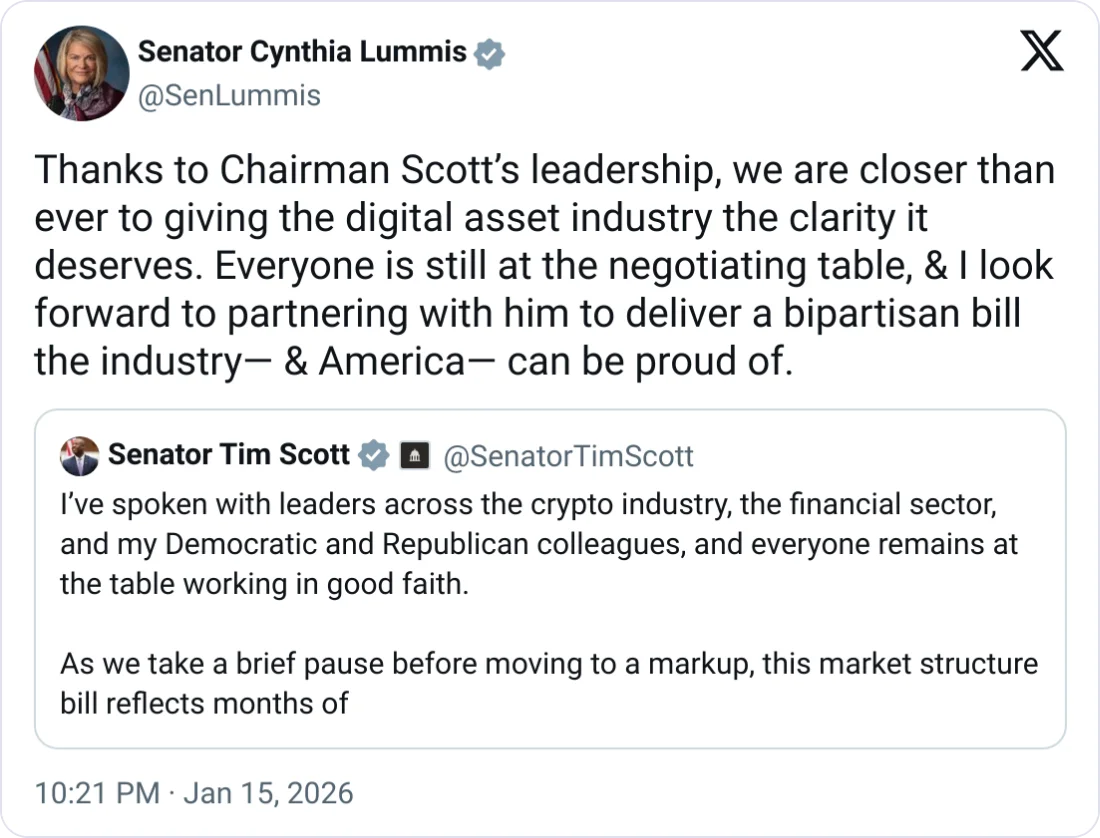
Behind closed doors, however, negotiations hardened as amendment counts grew and industry unity eroded. Policy experts cautioned that even if the legislation ultimately passes, it would not deliver immediate clarity. Years of agency rulemaking by the SEC, CFTC, and Treasury would still be required, a long horizon that has already tempered market expectations and enthusiasm around the effort.
This article has been refined and enhanced by ChatGPT.


