




 USD
USD
Aave DAO Rejects Brand Ownership Proposal as Governance Process and Founder Token Purchases Come Under Fire

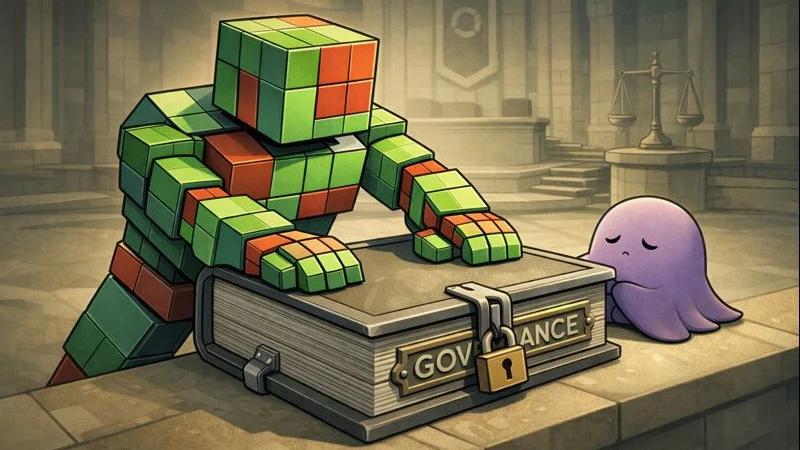
Disputed Snapshot Vote Exposes Deeper Tensions Over Power, Process, and Token-Based Governance
TL;DR
- Aave DAO voters rejected a proposal to transfer brand ownership rights to the DAO, with 55.29% voting against and only 3.5% in favor.
- The snapshot vote triggered backlash over governance process, timing, and concentrated voting power, especially amid a reported $10 million AAVE token purchase by founder Stani Kulechov.
- The episode has reignited broader debate over incentive alignment, token-based governance risks, and the limits of decentralization in large DeFi protocols.
We’ve just launched the all-new COIN360 Perp DEX, built for traders who move fast!
Trade 130+ assets with up to 100× leverage, enjoy instant order placement and low-slippage swaps, and earn USDC passive yield while climbing the leaderboard. Your trades deserve more than speed — they deserve mastery.
A governance vote that was meant to clarify ownership and alignment within Aave instead laid bare deep fractures in how one of decentralized finance’s largest protocols makes decisions. On Dec. 26, 2025, Aave DAO participants overwhelmingly rejected a proposal that sought to place control of the protocol’s brand assets under direct DAO ownership. Snapshot results showed 55.29% of votes cast against the measure, 41.21% abstaining, and just 3.5% supporting it, a lopsided outcome that reflected not only disagreement with the substance of the proposal but also mounting frustration with how it reached a vote.
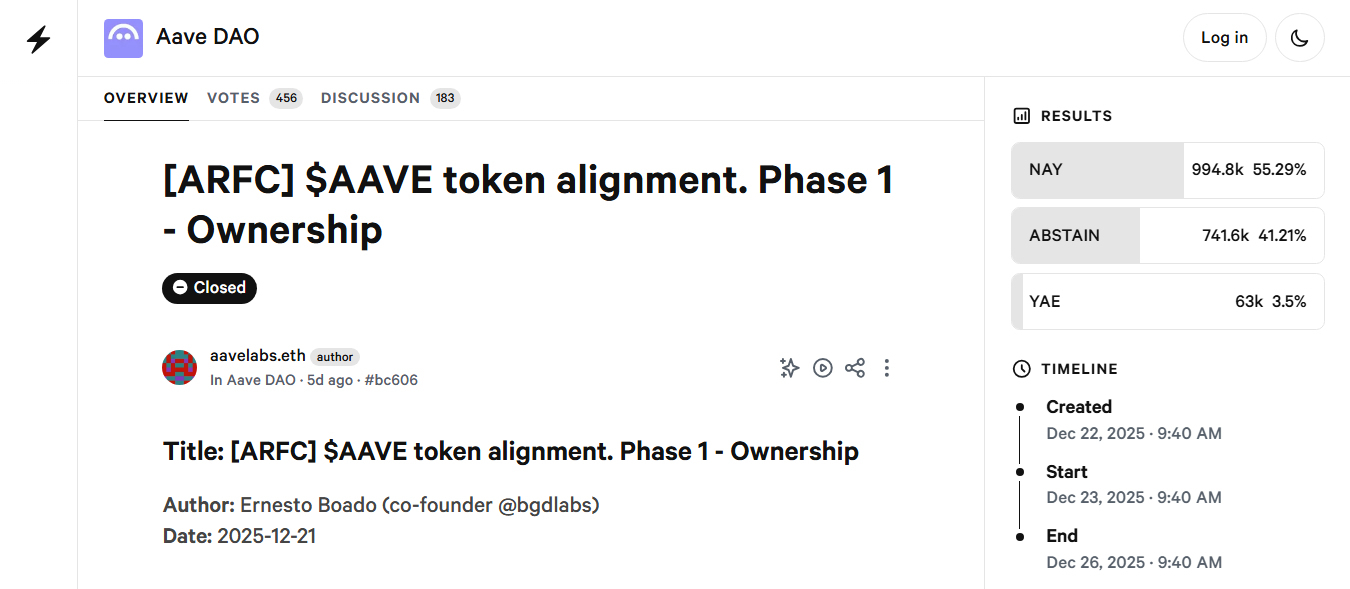
The proposal, formally titled “ARFC $AAVE token alignment. Phase 1 – Ownership,” aimed to transfer ownership of Aave’s brand-related assets to a DAO-controlled legal entity. That scope included domains, social media accounts, naming rights, code repositories, and other intellectual property tied to the Aave name. Supporters framed the plan as a natural evolution toward decentralization, arguing that governance authority over the protocol should be matched by ownership of the brand itself. Critics, however, questioned whether such a fundamental change should be rushed through governance, especially while discussions were still active and unresolved.
Discontent intensified after the proposal was escalated to a snapshot vote while debate continued across governance forums, which had already logged hundreds of comments. Several community members argued the move bypassed established norms intended to give delegates adequate time to assess implications and reach consensus. The timing of the vote, landing during a holiday period, further fueled accusations that participation would be muted and that the process disadvantaged smaller or less active delegates.
Tensions sharpened when Ernesto Boado, former Aave Labs chief technology officer and listed author of the proposal, publicly distanced himself from the escalation. Boado said the snapshot vote was initiated without his consent and described it as a break from governance expectations. Marc Zeller, founder of the Aave Chan Initiative, went further, characterizing the maneuver as a “hostile takeover attempt” and warning that unilateral escalation risked undermining trust in the DAO’s decision-making framework.
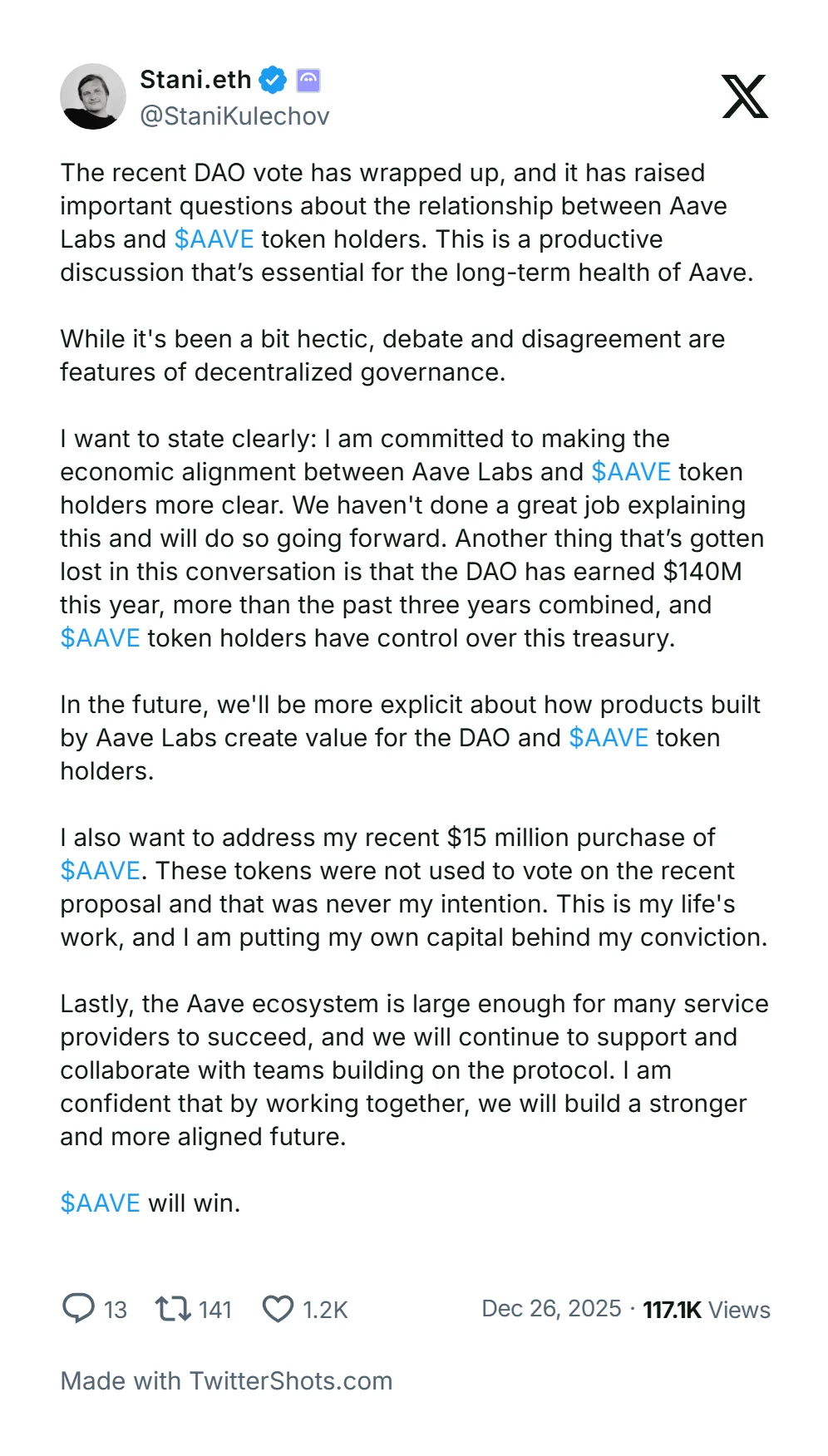
Governance concerns were compounded by scrutiny surrounding Aave founder Stani Kulechov, who reportedly acquired about $10-$15 million worth of AAVE tokens shortly before the vote. The purchase significantly increased his voting power at a critical juncture, prompting critics to question whether token-based governance adequately guards against influence concentration. Snapshot data showed that the top three voters controlled roughly 58% of total voting weight, with the largest single wallet accounting for about 27%, or approximately 333,000 AAVE tokens.
Kulechov publicly pushed back against those claims, denying that the tokens were used to influence the brand ownership vote. In statements addressing the controversy, he said he did not vote with the newly acquired AAVE and rejected accusations that the purchases were intended to sway governance outcomes. The denial did little to quiet debate, instead shifting the focus toward transparency standards, disclosure expectations, and whether governance frameworks should distinguish between token ownership and active voting participation.
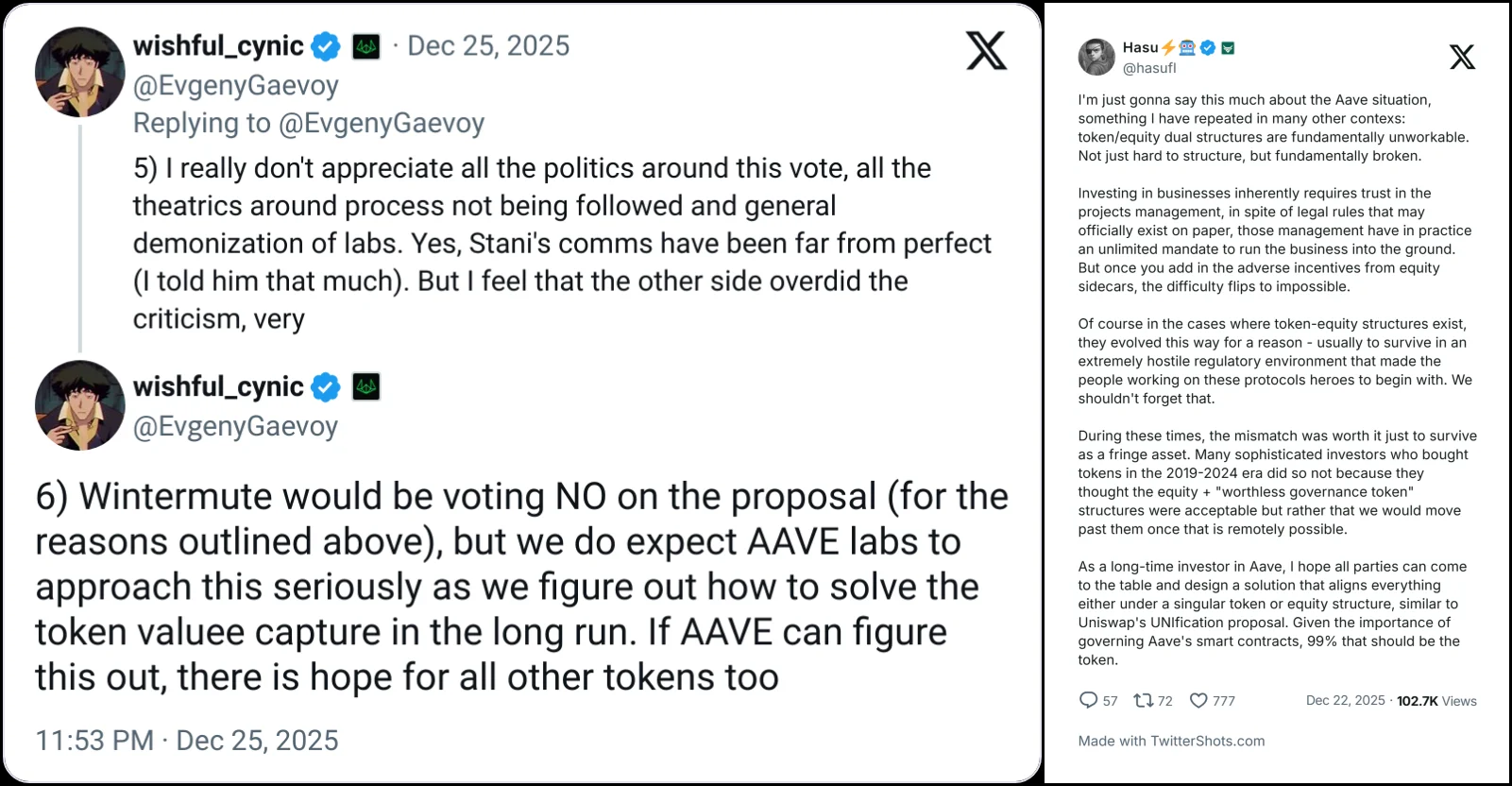
The episode reignited long-standing concerns about incentive alignment within decentralized protocols where governance tokens and corporate entities coexist. Several industry participants pointed out that Aave, like many major DeFi projects, operates with a separation between token governance and equity ownership, a structure some argue is inherently unstable over the long term. Wintermute founder and CEO Evgeny Gaevoy publicly stated that his firm voted against the proposal while calling for deeper engagement on how token holders and core contributors can achieve sustainable alignment. Lido advisor Hasu framed the dispute as symptomatic of broader industry challenges, arguing that token–equity dual structures are difficult to govern effectively, particularly under increasing regulatory pressure.
Market behavior mirrored the internal turbulence. AAVE experienced heightened volatility during the governance dispute, with analysts pointing to governance uncertainty and concentrated whale activity as contributing factors. Reports of large holders exiting positions at a loss further weighed on sentiment, underscoring how internal governance conflicts can spill over into market dynamics even when protocol operations remain intact.
This article has been refined and enhanced by ChatGPT.


