




 USD
USD
Weekly roundup: Politics, Power Plays, and the Global Rewiring of Crypto

TL;DR
- Political and regulatory pressure is increasingly shaping monetary and market outcomes, exposing structural fragility in traditional financial governance.
- Regulatory uncertainty and enforcement-heavy approaches are fragmenting crypto access globally rather than eliminating usage.
- In economies facing capital controls or currency instability, crypto adoption continues to grow as a practical financial alternative, not a speculative one.
We’ve launched the all-new COIN360 Perp DEX, built for traders who move fast!
Trade 130+ assets with up to 100× leverage, enjoy instant order placement and low-slippage swaps, and earn USDC passive yield while climbing the leaderboard. Your trades deserve more than speed — they deserve mastery.
This week wasn’t loud, but it was consequential. Power struggles, regulatory friction, and currency stress all surfaced at once, revealing where the traditional system bends—and where crypto quietly fills the gaps. Less spectacle, more signal. If you’re tracking adoption, this was a week worth studying.
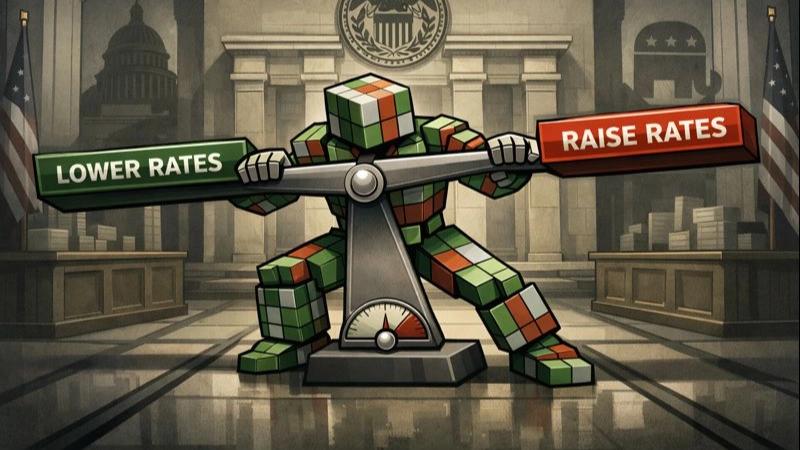
Powell Warns DOJ Probe Threatens Fed's Independence Amid Pressure to Cut Rates
Federal Reserve Chair Jerome Powell addressed serious concerns regarding the Trump administration's influence on the Fed, particularly following the Department of Justice's grand jury subpoenas related to his congressional testimony on a headquarters renovation. Powell indicated that these actions reflect an attempt to pressure the Fed into cutting interest rates, raising alarms about the independence of the central bank. He emphasized the danger of political intimidation affecting economic decisions, suggesting such pressures undermine regulatory stability, especially for sensitive markets like cryptocurrency. This incident marks a critical point in maintaining the integrity of monetary policy amidst political pressures.
Senate Crypto Bill Stalls After Coinbase Withdrawal and Industry Backlash
The U.S. Senate's crypto market structure bill stalled in January 2026 after Coinbase withdrew support amid backlash over amendments regarding developer liability, stablecoin rewards, and surveillance powers. Over 130 amendments were proposed, complicating the bill’s implementation, which could require about 45 separate rulemakings and extend for years. Inter-committee disputes and concerns from decentralized finance groups further delayed progress. Galaxy CEO Michael Novogratz urged lawmakers to advance the legislation despite these issues. A key focus remains on protecting noncustodial developers, while the Senate Banking Committee postponed the markup indefinitely as discussions with industry representatives continue.
Belarus Legalizes State-Regulated Cryptobanks with Decree No. 19
On January 16, 2026, Belarus enacted Decree No. 19, establishing a legal framework for state-regulated cryptobanks, which must be joint-stock companies, High-Tech Park residents, and registered with the National Bank. This decree integrates digital asset services into the national banking system, requiring dual oversight from both the central bank and High-Tech Park authorities. Cryptobanks can offer hybrid financial products that blend traditional banking with token transactions, adhering to existing financial compliance regulations. This initiative reinforces Belarus's commitment to supervised crypto services, creating entry barriers for unlicensed platforms and aligning with global trends in crypto regulation.
Google Play to Block Unregistered Overseas Crypto Exchanges in South Korea Starting January 28
Starting January 28, 2026, Google Play Store will block unregistered overseas crypto exchanges and wallets in South Korea, mandating that all platforms register as Virtual Asset Service Providers (VASPs) with the Korea Financial Intelligence Unit. This ban will restrict global exchanges like Binance, Bybit, and OKX, while favoring 27 local platforms, such as Upbit and Bithumb. Compliance challenges arise due to the stringent local security and anti-money laundering (AML) certifications required from foreign firms. Although users may still access these exchanges via web browsers, this could drive them toward VPNs and APK downloads, heightening security risks.
Russia Moves to Normalize Cryptocurrencies by Exempting Them from Financial Regulations
Russia is advancing legislation to integrate cryptocurrencies into everyday life by exempting them from existing financial regulations, as outlined by Anatoly Aksakov, Chairman of the State Duma Committee on Financial Markets. The drafted bill aims to normalize digital currency use among citizens, with significant legislative focus on cryptocurrencies slated for the State Duma's spring session. This development reflects a growing rift between lawmakers and the Central Bank of Russia, which has expressed concerns about allowing unqualified investors access to digital assets. Russia’s approach has been cautious, balancing limited permissions against strict regulatory controls.
Iran’s Crypto Surge: $7.8B Ecosystem Fueled by IRGC, Bitcoin Exodus Amid 90% Rial Collapse
Amid Iran’s soaring inflation (40–50%) and a 90% collapse of the rial since 2018, crypto usage has surged, with Bitcoin withdrawals to personal wallets rising sharply, according to Chainalysis. Iran’s crypto ecosystem hit $7.78B in 2025, driven by the Islamic Revolutionary Guard Corps (IRGC), which accounted for 50%+ of on-chain value in Q4. IRGC-linked flows hit $620M in 2024 and $410M in 2025. Events like the Jan 2024 Kerman bombing and June 2025 war triggered spikes in IRGC crypto activity. UK exchanges Zedcex/Zedxion quietly processed $1B for the IRGC, tied to sanctions-evader Babak Zanjani.
China's mBridge Platform Reaches $55.5 Billion in Cross-Border Transactions Amid U.S. CBDC Ban by Trump
The mBridge platform, led by China and central banks from Asian countries, has seen a remarkable surge in cross-border transactions, reaching $55.5 billion from over 4,000 transactions, reflecting a staggering 2,500-fold increase since 2022. The digital yuan (e-CNY) accounts for 95% of this volume, marking it as the world's largest central bank digital currency project. Meanwhile, U.S. President Donald Trump has banned CBDCs through an executive order, citing privacy risks, while endorsing privately issued stablecoins. Stablecoin market interest has grown, with Tether’s USDT and Circle’s USDC leading the sector, which reached a total market cap of $310.117 billion.
The Bigger Picture
Across markets, trust in centralized control keeps eroding while capital keeps adapting. Political interference weakens policy credibility. Regulatory gridlock slows innovation but doesn’t stop it—it just reroutes it. Capital controls and currency decay push users on-chain by necessity, not ideology. The endgame isn’t mass hype; it’s normalization. Crypto is becoming financial infrastructure of last resort—and eventually, first choice.
This article has been refined and enhanced by ChatGPT.


