




 USD
USD
U.S. Senate Crypto Market Structure Bill Stalls as Coinbase Withdraws Support and Industry Pushback Intensifies

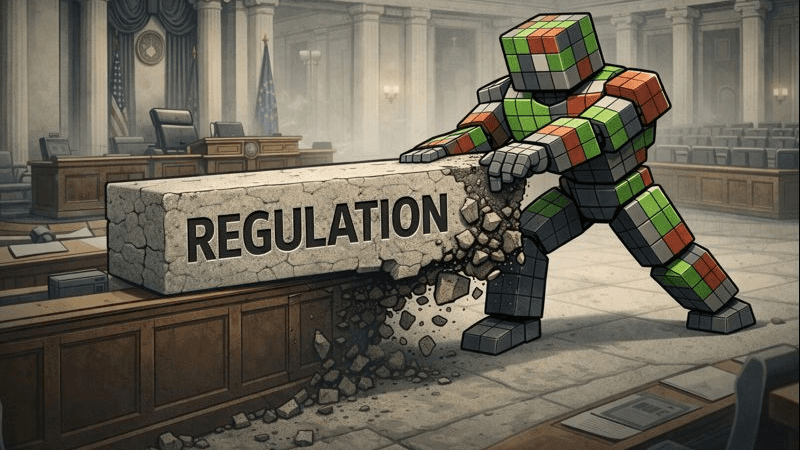
Lawmakers face mounting amendments, developer backlash, and internal Senate disputes
TL;DR
- The Senate’s crypto market structure bill stalled in mid-January 2026 after more than 130 amendments and Coinbase’s withdrawal of support.
- DeFi groups, venture firms, and Senate Judiciary leaders raised concerns over developer liability, stablecoin rewards, and surveillance powers.
- Lawmakers estimate passage would still trigger about 45 separate rulemakings spanning several years.
We’ve launched the all-new COIN360 Perp DEX, built for traders who move fast!
Trade 130+ assets with up to 100× leverage, enjoy instant order placement and low-slippage swaps, and earn USDC passive yield while climbing the leaderboard. Your trades deserve more than speed — they deserve mastery.
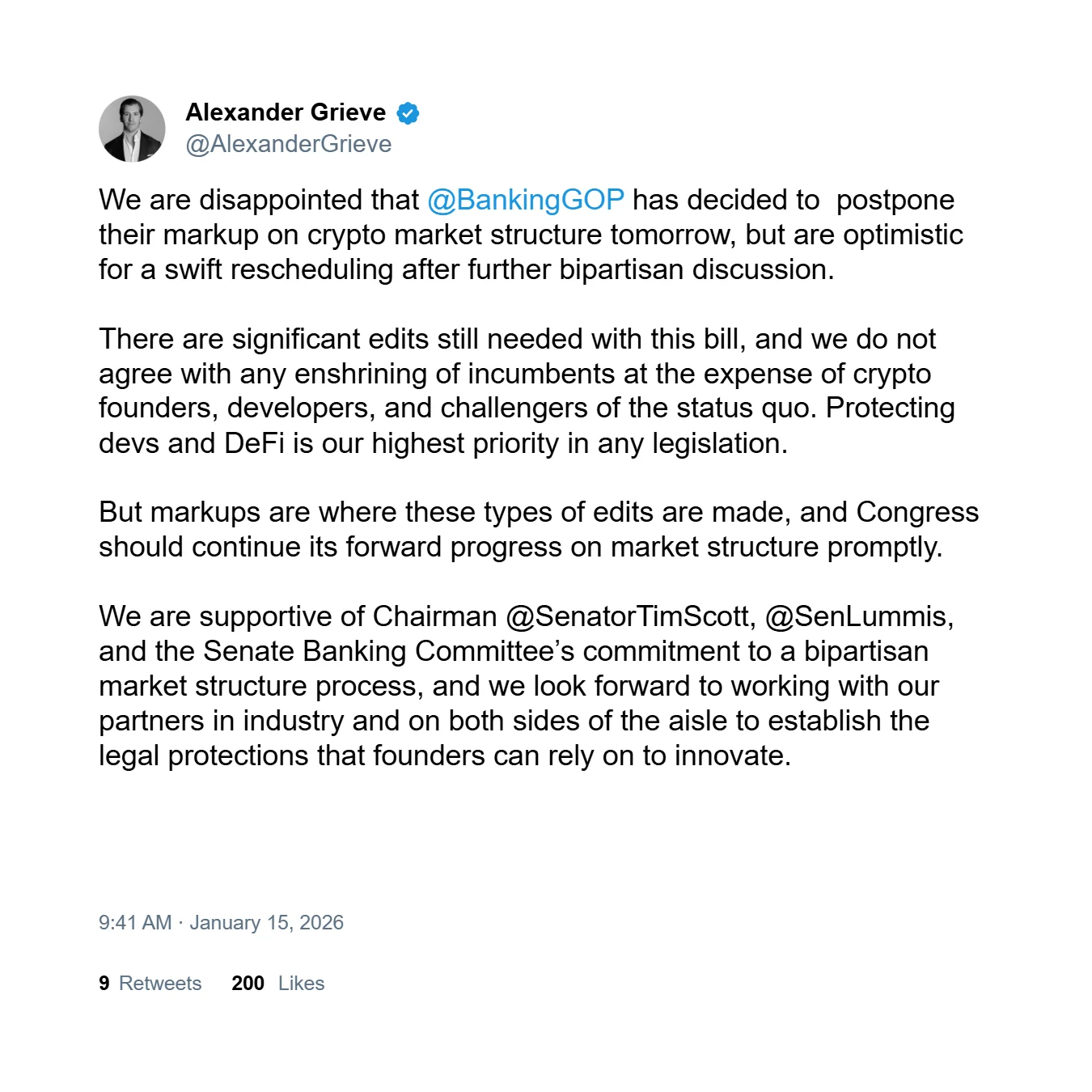
U.S. Senate efforts to advance comprehensive crypto market structure legislation slowed sharply after the Senate Banking Committee postponed its planned markup of the Digital Asset Market Clarity Act indefinitely. The delay followed the accumulation of more than 130 proposed amendments and the warning by Coinbase to pull its support, according to published timelines dated January 14, 2026, and January 16, 2026.
The bill’s scope and complexity expanded as policy analysts estimated it would require around 45 separate rulemakings across federal agencies, including the SEC, CFTC, and the Treasury Department. The implementation process was described as likely extending over several years rather than months, even if the legislation were enacted, based on assessments cited during the January 14, 2026, reporting window.
Coinbase’s withdrawal in January 2026 centered on objections to amendments addressing stablecoin rewards, expanded surveillance authority, and competitive dynamics between crypto firms and traditional banks. The move weakened industry consensus around the bill and added uncertainty ahead of the postponed markup, according to reporting dated January 16, 2026.
Citron Research publicly criticized Coinbase on January 16, 2026, after the exchange withdrew its backing of the CLARITY Act. The firm voiced support for Securitize as an example of regulatory engagement and framed Coinbase’s stance as conflicting with the broader push for structured crypto oversight, based on statements published that day.

Decentralized finance organizations used the delay to escalate concerns over developer exposure and protocol design. The DeFi Education Fund said on January 16, 2026, that certain proposed amendments could “seriously harm DeFi technology and/or make market structure legislation worse for software developers,” referencing provisions tied to tokenized equities, stablecoin rewards, and noncustodial software.
Venture capital firms including Paradigm argued revisions were necessary to preserve protections for noncustodial developers who do not control user funds. Industry representatives reiterated that some bill language could inadvertently extend liability to open-source developers, according to remarks attributed to policy discussions on January 16, 2026.
Senate Judiciary Committee leaders entered the debate on January 16, 2026, when Sens. Chuck Grassley and Dick Durbin sent a letter to Senate Banking Committee leadership objecting to the inclusion of the Blockchain Regulatory Certainty Act without Judiciary Committee consultation. The lawmakers stated the provision sought to clarify that noncustodial software developers are not money transmitters when they do not hold or control customer assets.
The Judiciary Committee leaders emphasized their oversight of the Department of Justice, the FBI, and the Department of Homeland Security, underscoring enforcement implications tied to the legislation. The inter-committee dispute added procedural friction to an already delayed process as of January 16, 2026.
Industry groups also warned that sections of the bill would expand U.S. Treasury surveillance authority in ways comparable to powers introduced after 2001. The provisions would allow broad designations of high-risk jurisdictions, entities, or transaction types across crypto networks, according to policy language cited in January 14, 2026, reporting.
Galaxy CEO Michael Novogratz publicly broke with Coinbase’s position on January 16, 2026, urging lawmakers to continue advancing the legislation despite unresolved issues. Speaking to CNBC, Novogratz said, “If it’s not perfect, who cares? We’ll fix it in time,” while stating that a crypto market structure bill could be finalized within the next few weeks.
Democratic staff from the Senate Agriculture Committee and the Senate Banking Committee scheduled calls with industry representatives at noon on January 16, 2026, to discuss the stalled legislation. The discussions followed the postponed markup and the growing list of amendments affecting stablecoin rewards, developer protections, and federal oversight authority.
This article has been refined and enhanced by ChatGPT.


