


 USD

US Treasury Orders MEXC Cutoff Over Alleged $16 Billion in Illicit Crypto Transfers

FinCEN cites sanctions evasion, money laundering concerns and compliance failures tied to Russia and Iran
TL;DR
- The U.S. Treasury ordered MEXC Global cut off from the American financial system over allegations involving at least $16 billion in illicit transactions linked to Iran, North Korea and Russia.
- FinCEN identified serious anti-money-laundering deficiencies and transactions involving sanctioned Russian exchanges Garantex and Grinex.
- The restrictions will take effect 30 days after publication in the Federal Register, extending Treasury's broader crackdown on sanctions evasion through cryptocurrency platforms.
Trade smarter on Jupiter, Solana’s leading DEX built for fast execution and deep liquidity.
Swap tokens at competitive rates, route across multiple liquidity sources automatically, and access perpetuals, DCA, and advanced trading tools — all in one place!
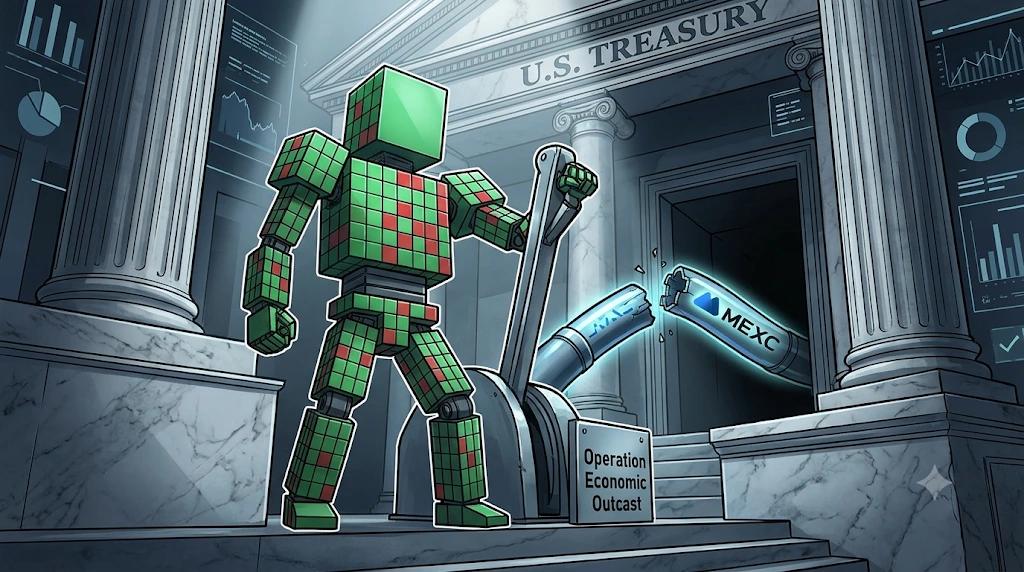
The U.S. Treasury Department ordered crypto exchange MEXC Global cut off from the American financial system on Friday, November 6, 2026, accusing the platform of facilitating at least $16 billion in illicit transactions connected to Iran, North Korea and Russia. The Financial Crimes Enforcement Network (FinCEN) designated MEXC a "primary money laundering concern" in connection with Russian illicit finance, citing alleged sanctions evasion, cybercrime and serious deficiencies in the exchange's compliance controls.
The order, issued under Treasury's Operation Economic Outcast initiative, prohibits U.S. financial institutions from processing funds transfers to or from MEXC. The restriction takes effect 30 days after publication in the Federal Register. FinCEN used a provision of the Combating Russian Money Laundering Act rather than a standard sanctions designation, applying a measure Treasury has increasingly used against crypto infrastructure operating outside traditional correspondent banking systems.
Treasury Secretary Scott Bessent said the action targeted financial networks allegedly helping sanctioned governments bypass U.S. restrictions. "Financial institutions cannot have it both ways: Either you support the Iranian regime, or you have access to the U.S. financial system," Bessent said in a statement. He added, "Treasury will continue to sever the Iranian regime’s economic lifelines and thwart its desperate attempts to circumvent U.S. sanctions using digital assets."
FinCEN Details MEXC's Alleged Illicit Transactions and Compliance Failures
Founded in 2018, MEXC ranks among the world's 20 largest cryptocurrency exchanges, according to FinCEN. The regulator said the platform handles more than $1 billion in daily transactions, maintains approximately $5 billion in reserves and offers trading in more than 3,000 tokens. FinCEN identified alleged illicit activity during the period from May 2021 through May 2026, including transactions associated with Russian sanctions evasion, sanctioned financial entities and Iranian government institutions.
The agency identified several categories of financial activity connected to the exchange:
Although MEXC publicly claimed to maintain anti-money-laundering safeguards and prohibit users from restricted jurisdictions, including Iran and North Korea, FinCEN said its compliance program contained "severe deficiencies." The regulator alleged that MEXC continued transacting with sanctioned Russian cryptocurrency exchange Garantex and its successor, Grinex, as recently as June 2026, more than four years after Garantex was initially designated.
Treasury said the action was intended to prevent further exposure of American financial institutions to transactions involving the exchange. "Today's action will protect the U.S. financial system from the significant illicit finance threats posed by MEXC Global," the department said.
Treasury Expands Crackdown on Russian and Iranian Crypto Networks
The MEXC order follows a series of Treasury actions against cryptocurrency networks accused of facilitating sanctions evasion. During October 2026, the department designated Russia's A7 Network a transnational criminal organization and proposed cutting its front companies off from the U.S. financial system. Treasury identified more than $179 billion in transactions involving the network's ruble-backed A7A5 token, much of which passed through Garantex and Grinex.
The enforcement campaign has also targeted cryptocurrency businesses connected to Iran. Treasury sanctioned Nobitex, Iran's largest cryptocurrency exchange, in June after determining that it had processed more than half of the country's cryptocurrency inflows in 2025. The department also gained broad authority to sanction entities operating in Iran's cryptocurrency sector, including businesses allegedly helping the Islamic Revolutionary Guard Corps move funds.
Another enforcement action followed in September, when the United States sanctioned Iranian cryptocurrency exchange BitBank over alleged Bitcoin transfers to the Islamic Revolutionary Guard Corps. Those measures formed part of Treasury's wider effort to disrupt digital asset networks accused of helping sanctioned entities access international financial channels.
This article has been refined and enhanced by ChatGPT.


