




 USD
USD
Solana Fees Hit Record as OpenSea Expands NFT Support

Validator vote accelerates disinflation as marketplace restores Solana collectibles access
TL;DR
- Solana network activity reached record levels as validators approved a faster reduction in inflation-based token issuance.
- The monetary-policy change will reduce staking rewards and put greater pressure on validators that depend heavily on inflation income.
- OpenSea is adding native Solana NFT trading through OS2, returning to a market it first tested more than four years earlier.
Trade smarter on Jupiter, Solana’s leading DEX built for fast execution and deep liquidity.
Swap tokens at competitive rates, route across multiple liquidity sources automatically, and access perpetuals, DCA, and advanced trading tools — all in one place!
Solana entered September with record network activity, a newly approved plan to accelerate reductions in SOL inflation and an expansion of NFT trading support from OpenSea. The developments followed an Aug. 31, 2026, announcement that OpenSea was adding native Solana NFTs through OS2, while Solana validators had separately approved SGP-0002, the “Double Disinflation” proposal, which will reduce future token issuance more quickly.
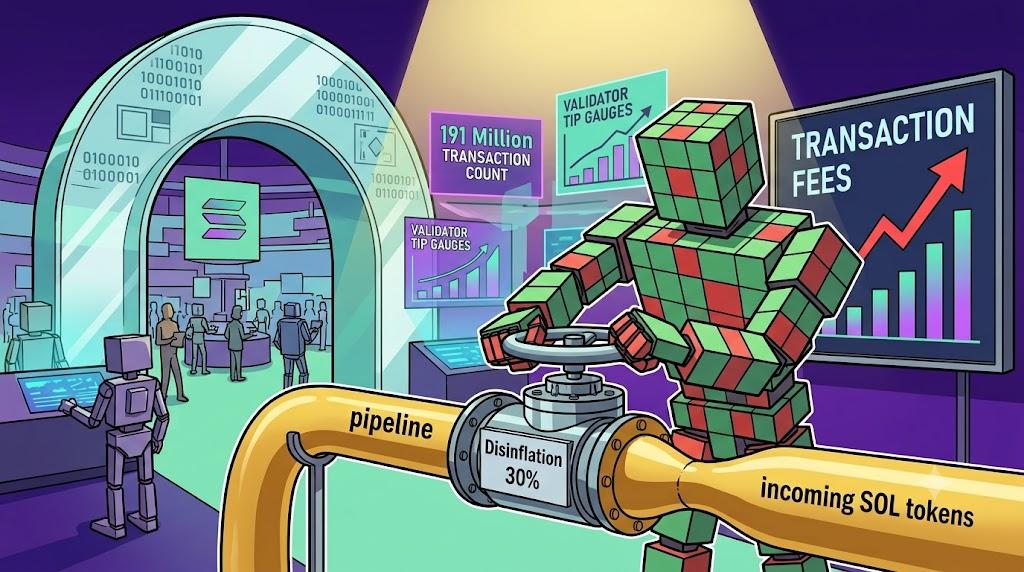
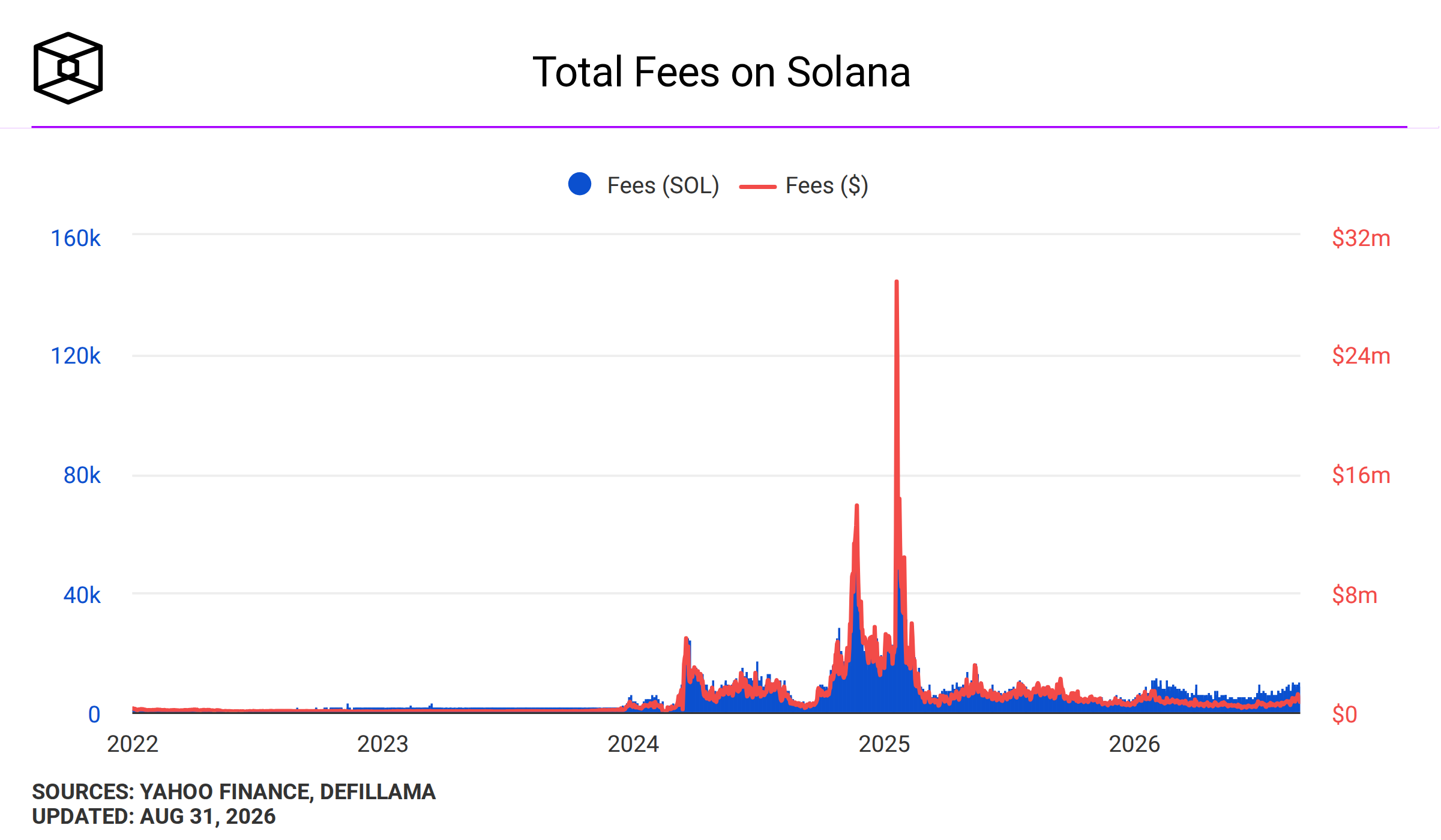
Solana’s network activity had already climbed sharply ahead of the governance change. Fee generation denominated in SOL reached a record seven-day average, non-vote transactions set a new high and Jito validator tips increased from the previous week. Those activity measures arrived as validators voted to make inflation-funded rewards decline faster, increasing the importance of transaction-related revenue for operators over time.
Validators Approve Faster Disinflation
SGP-0002 passed on Friday, Aug. 28, with 67.001% support, narrowly exceeding the 66.67% threshold required for approval. Turnout reached 60.7% across 1,326 validators, the highest level of onchain governance participation in Solana’s history. The proposal doubles Solana’s annual disinflation rate from 15% to 30%, accelerating the reduction in new SOL issuance rather than immediately eliminating inflation.
The revised schedule is projected to remove roughly 18.9 million SOL from issuance over six years compared with the previous schedule. As less new SOL reaches the market each year, validators will receive less compensation from inflation for performing the same validation work, increasing pressure on operators whose economics rely more heavily on newly issued tokens than transaction-generated income.
Staking rewards are expected to fall from about 5.25% to 2.25% by the third year under the faster disinflation schedule. Validators that depend heavily on inflation rewards could become unprofitable within the next three years, with smaller independent operators expected to face more pressure than the largest validators. The change is not expected to produce a noticeable difference for ordinary users in Solana network speed or transaction fees.
OpenSea Brings Solana NFTs Back to OS2
OpenSea said it was adding support for Solana non-fungible tokens, allowing users to buy, sell and trade digital collectibles from the blockchain through its platform. An editor’s note added after publication clarified that Solana NFT trading was not yet live and was expected to become available during the week of the announcement.
The rollout follows OpenSea’s first Solana NFT beta in April 2022. That version supported 165 collections but gained limited traction, while Magic Eden and Tensor captured most Solana NFT trading volume at the time. Magic Eden later shut its Bitcoin and Ethereum Virtual Machine marketplaces earlier in 2026 as it refocused its marketplace operations on Solana.
Solana returned to OpenSea through OS2 in April 2025, initially with support limited to fungible tokens. OpenSea said then that NFT functionality would follow. SOL also became usable during 2025 as a payment asset for NFTs on other blockchains.
An OpenSea representative said: “OS2 was rebuilt from the ground up as multi-chain platform. We led with Solana token support, and NFTs are now being added. They're particularly relevant now with the emergence of so many collectibles platforms utilizing Solana NFTs.”
Solana becomes OpenSea’s first non-EVM blockchain for NFT trading since the earlier beta ended. OpenSea’s other supported networks are almost entirely EVM-compatible and include Ethereum, Polygon, Arbitrum, Optimism, Avalanche, Base, Monad, Sei and Berachain.
OpenSea said users will be able to find and trade Solana collections including Claynosaurz, Mad Lads, BoDoggos, Collector Crypt and Phygitals.
NFT Trading Remains Far Below Peak Levels
OpenSea’s Solana expansion comes during a substantially smaller NFT market than the one that existed during its original beta. Monthly NFT marketplace volumes that reached billions of dollars during 2021 and 2022 had fallen to a few hundred million dollars by 2026.
Several marketplace operators have withdrawn from the sector during that contraction. Binance closed its centralized NFT service in June 2026 and instructed users to move transferable assets to Binance Wallet or another compatible external wallet. Nifty Gateway, Kraken NFT and X2Y2 have also shut down NFT marketplace operations across recent months and years.
OpenSea’s Solana expansion is proceeding within that weaker trading environment as OS2 broadens its multi-chain support from Solana fungible tokens to native NFT collections.
This article has been refined and enhanced by ChatGPT.


