




 USD
USD
Solana Foundation deploys USDT to support Aave as DeFi United push hits $300M

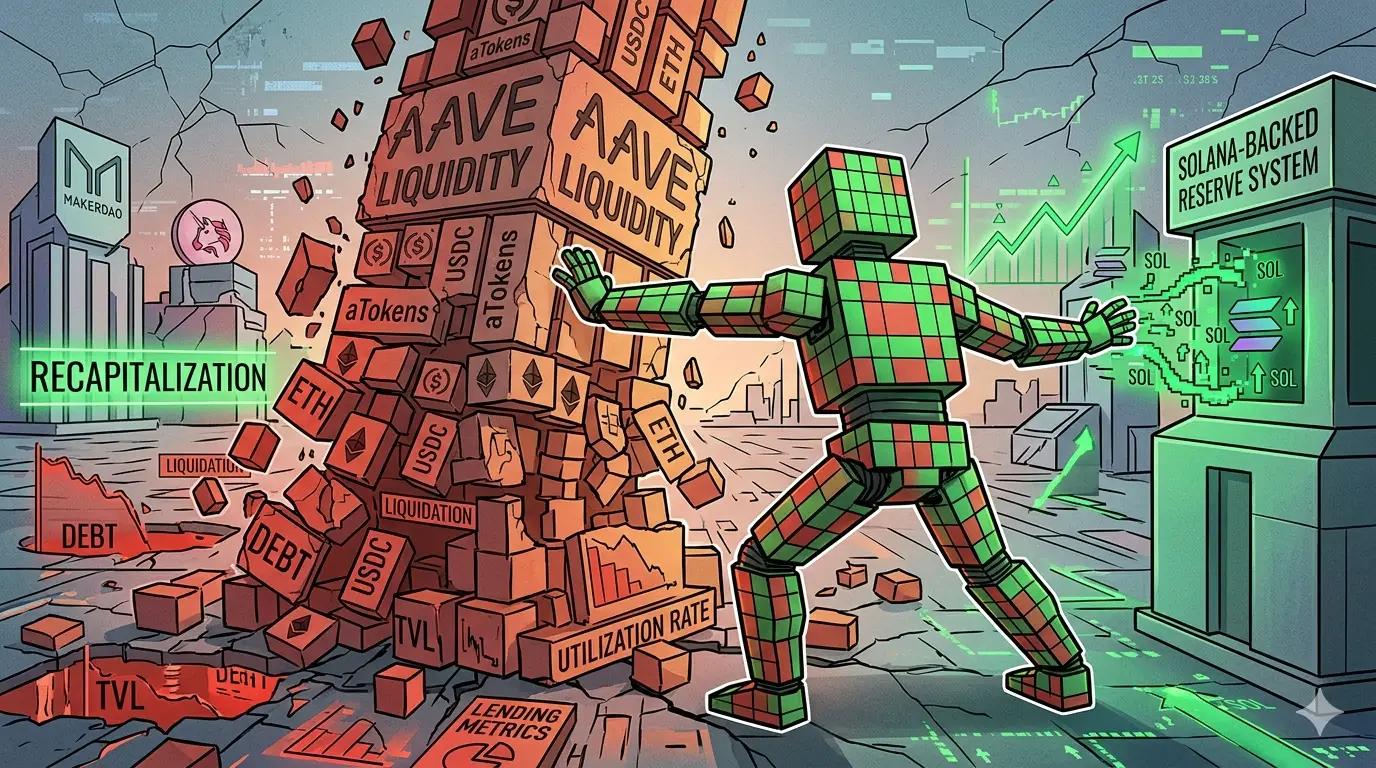
Cross-chain support and frozen funds shape recovery after bridge-triggered DeFi shock
TL;DR
- Solana Foundation deployed USDT into Aave and AAVE listed on Solana via Sunrise DeFi
- Arbitrum froze 30,765 ETH as Aave seeks to redirect funds to recovery effort
- DeFi United raised $160M with nearly $240M committed to cover rsETH shortfall
We’ve launched the all-new COIN360 Perp DEX, built for traders who move fast!
Trade 130+ assets with up to 100× leverage, enjoy instant order placement and low-slippage swaps, and earn USDC passive yield while climbing the leaderboard. Your trades deserve more than speed — they deserve mastery.
A cross-chain bridge exploit on April 18, 2026, allowed attackers to mint 116,500 unbacked rsETH tokens worth about $292 million, triggering a cascading liquidity crisis across Aave and broader decentralized finance markets, with recovery efforts now approaching nearly $240 million in pledged support.
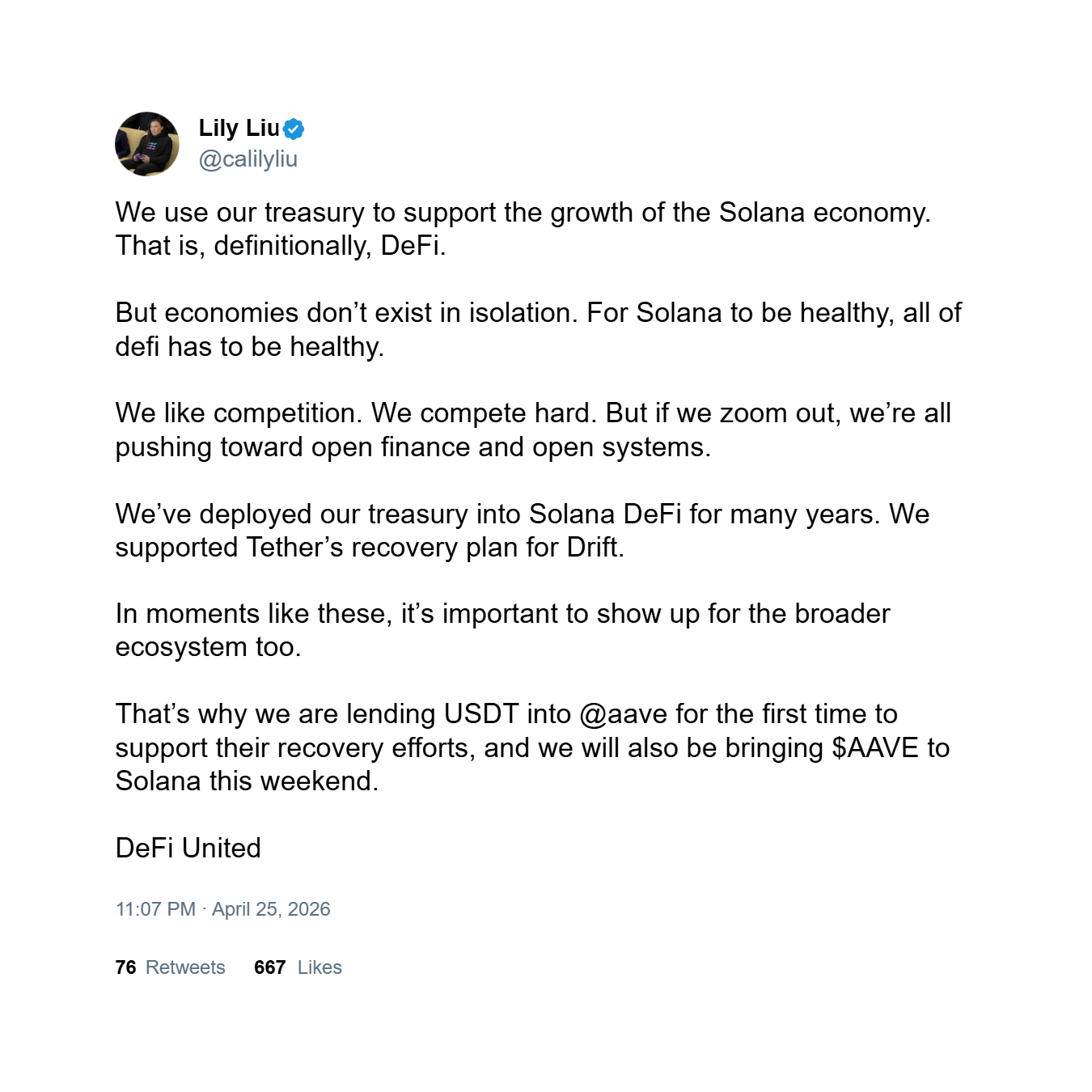
The Solana Foundation entered the effort on April 25, with President Lily Liu announcing USDT lending into Aave, marking its first deployment outside its native ecosystem. The amount was not disclosed but was framed as support for the broader open-finance market.
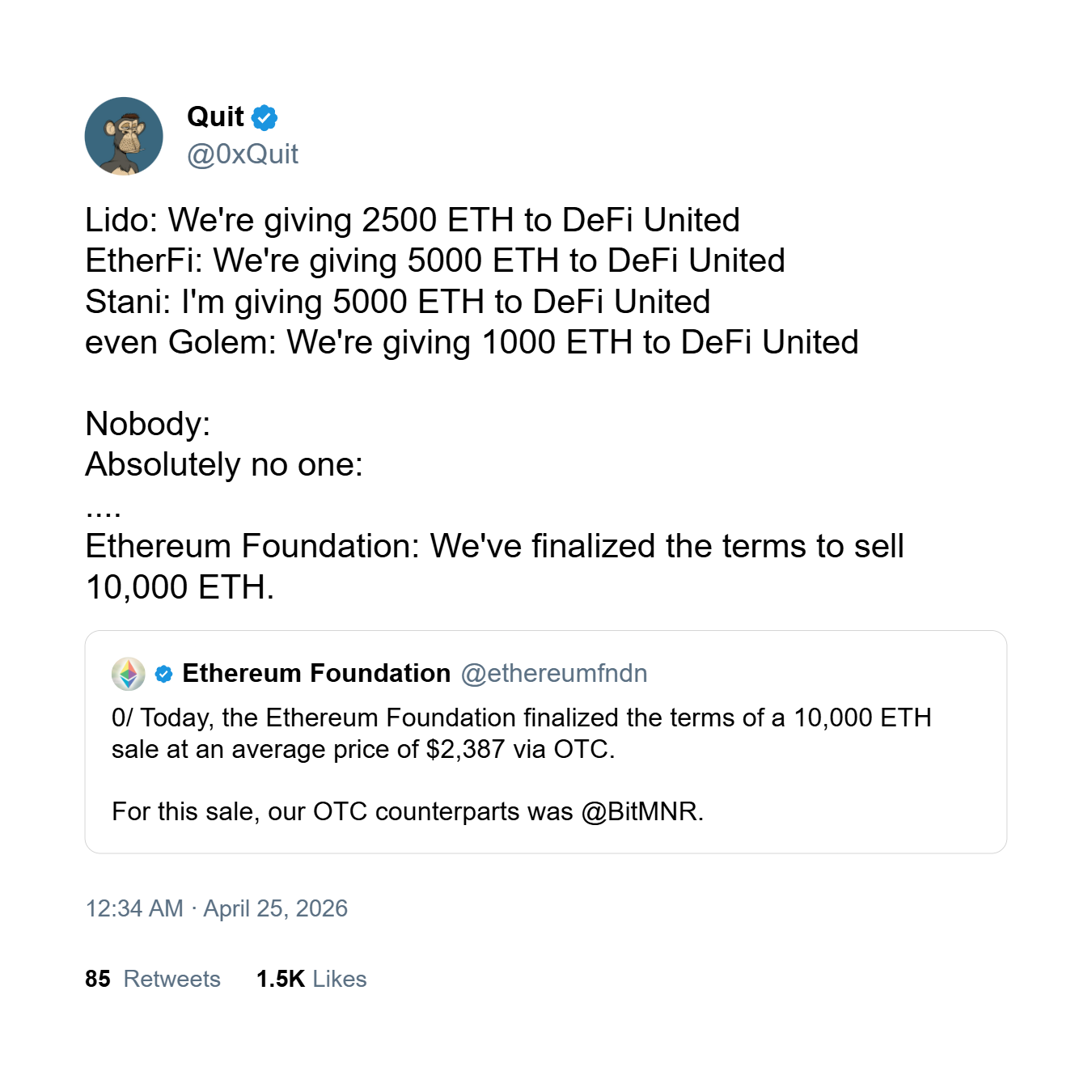
In contrast, the Ethereum Foundation was criticized as it had not publicly addressed the exploit at the time of reporting and instead completed a sale of 10,000 ETH in an over-the-counter deal to Bitmine.
Shortly after, the AAVE token was listed natively on Solana via Sunrise DeFi, a Wormhole-powered gateway. Saeed Badreg said: "Sunrise is about uniting capital markets. The speed at which the Solana ecosystem and the broader community have come together to expand Aave and support DeFi United has been incredible to be a part of."
The exploit has reignited concerns over bridge security and collateral verification, highlighting how external infrastructure risks can propagate across interconnected DeFi systems even when core protocols remain technically sound.
Arbitrum freeze and recovery proposal
Arbitrum’s Security Council froze 30,765 ETH linked to the attacker. On April 27, Aave Labs proposed unfreezing the funds, valued at about $73.5 million, and redirecting them to the DeFi United recovery address.
Aave Labs said the funds would “restore normal conditions for Arbitrum users” and described the assets as “a material contribution” to restoring rsETH backing. The proposal includes returning funds to Arbitrum if recovery fails and sets a 49-day timeline for completion.
The attack began at 17:35 UTC at Ethereum block 24,908,285, targeting KelpDAO’s LayerZero V2 bridge configured as a 1-of-1 Decentralized Verifier Network. Attackers submitted a forged inbound packet that bypassed verification, minting rsETH without any corresponding asset backing.
The attacker rapidly deployed the assets, depositing approximately 89,567 rsETH valued at around $221 million as collateral across Aave V3 markets on Ethereum and Arbitrum. Against this, roughly 82,650 WETH, worth about $191 million, along with smaller amounts of wstETH, were borrowed. Positions were structured with health factors between 1.01 and 1.03, leaving them just above liquidation thresholds and making repayment unlikely.
A second malicious packet targeting an additional 40,000 rsETH was submitted but stopped before execution, indicating further intended damage. Aave’s core smart contracts were not breached, with losses stemming from acceptance of unbacked collateral originating from the bridge failure.
Liquidity shock and bad debt exposure
The exploit rapidly escalated into a systemic liquidity crisis. WETH utilization across Aave pools reached 100%, preventing withdrawals due to lack of available liquidity. Galaxy Research explained: "At full utilization, Aave's design doesn't allow withdrawals, because there is no idle liquidity in the pool to redeem against. Whoever withdraws first is made whole, while whoever comes later must wait for new supply to arrive or borrowers to repay."
Aave’s Protocol Guardian froze all rsETH and wrsETH reserves across deployments by approximately 19:00 UTC, setting loan-to-value ratios to zero and adjusting interest models. Aave Labs and Llamarisk later outlined two bad debt scenarios on April 20.
External estimates placed total exposure between $196 million and $200 million. Oak Research reported a 17% decline in total value locked across DeFi, with more than $12 billion in outflows from Aave alone. Aave’s TVL dropped between $6 billion and $9 billion, while broader DeFi losses exceeded $13 billion. The AAVE token declined between 10% and 22% following the incident.
Oak Research said the episode exposed how lending protocols can function as designed while still importing catastrophic risk from external infrastructure, describing the event as having “bank-run optics” across DeFi.
DeFi United mobilizes multi-protocol recovery
A coordinated recovery effort, DeFi United, was formed to backstop the rsETH shortfall. The initiative targets between 68,900 ETH and more than 100,000 ETH in contributions depending on recovery outcomes.
By April 26, Arkham Intelligence confirmed $160 million raised, while total commitments approached nearly $240 million as of April 27. Dune Analytics data showed about $21 million deposited on-chain, with $215 million pledged pending governance approval.
Additional contributions included 1,000 ETH from Golem Foundation and 500 ETH from Emilio Frangella, alongside more than 272 ETH in community donations.
Later on, support for the DeFi United recovery effort expanded further as Circle Ventures, Consensys, and Joseph Lubin pledged additional backing to address losses tied to the KelpDAO exploit.
Circle Ventures said it is purchasing AAVE tokens to help offset the impact of the incident, stating: "Strong DeFi infrastructure does not build itself. Aave is helping to shape the future of onchain finance, and we’re backing that ecosystem and the entire community built around it."
Consensys and Lubin confirmed a combined contribution of 30,000 ETH, representing one of the largest single commitments within the coordinated recovery effort.
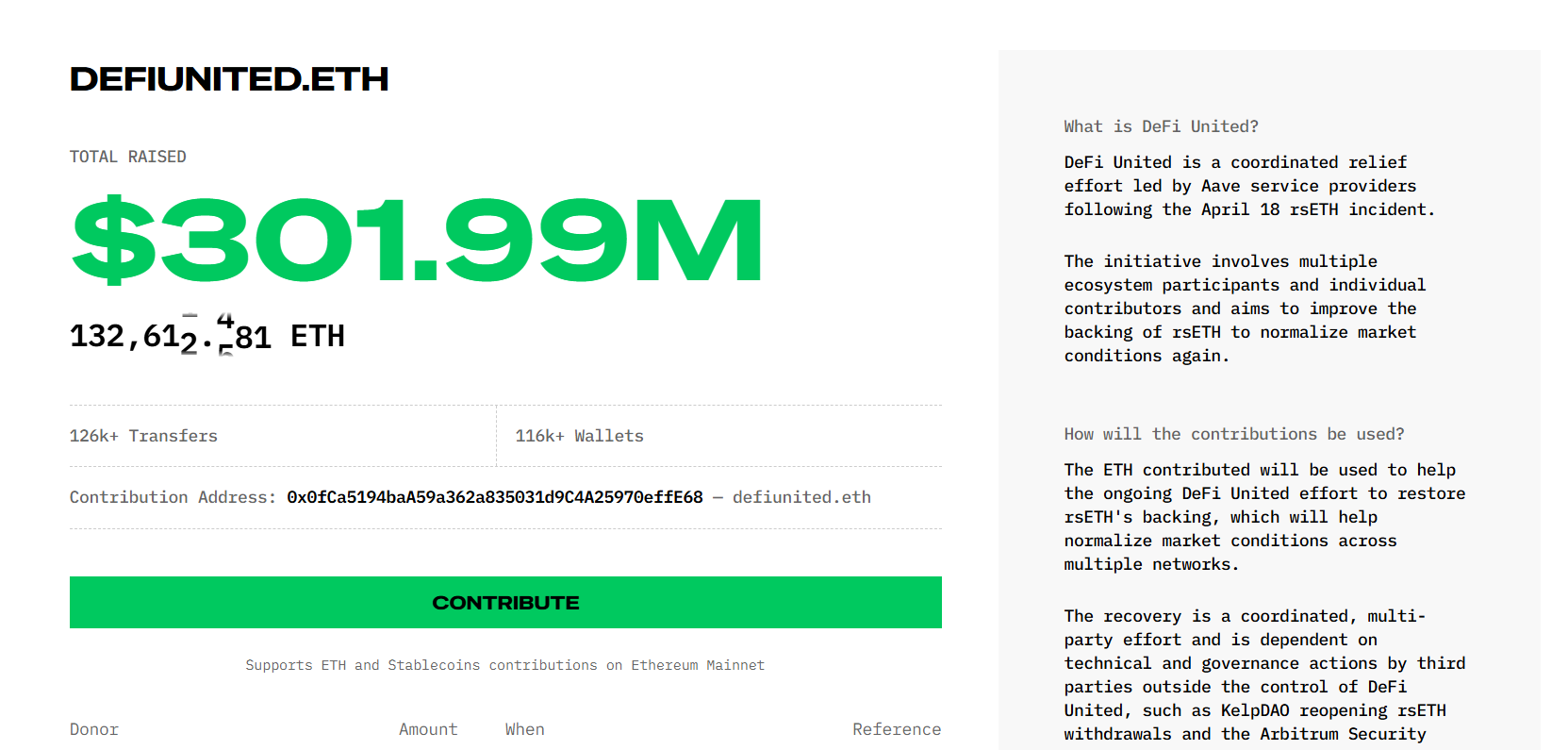
With the latest pledges, DeFi United has surpassed 132,000 ETH in total contributions, valued at more than $300 million, marking a continued escalation in ecosystem-wide support as protocols and industry participants respond to the shortfall.
Curve founder proposes market-based recovery alternative
Michael Egorov proposed an alternative approach to handling bad debt in DeFi lending markets, framing it as a market-driven mechanism rather than a coordinated bailout response.
Egorov outlined a model that would convert distressed positions into a tradable investment product, allowing participants to buy into recovery opportunities instead of relying on direct capital injections or treasury-backed support. The proposal is being tested using Curve’s CRV-long LlamaLend market as an initial pilot.
He described the concept as “not a donation but an investment vehicle for everyone who participates,” suggesting that recovery efforts could be structured to align incentives between risk-takers and capital providers.
The idea enters an ongoing debate over how DeFi should handle cross-protocol failures, as the KelpDAO exploit has already prompted multiple recovery strategies ranging from structured loans to ecosystem-wide funding commitments.
Aave outlines structured recovery plan with governance execution path
On April 28, Aave Labs detailed a technical remediation framework aimed at restoring rsETH backing through a coordinated mix of on-chain recovery, governance actions, and phased liquidity normalization, signaling a shift from emergency fundraising to execution.
The plan centers on consolidating recovered assets and pledged capital into a controlled recovery address, with funds managed jointly by protocol stakeholders and security partners. This structure is designed to ensure capital deployment follows predefined rules rather than discretionary intervention, reducing coordination risk during repayment.
Aave also outlined a staged approach to restoring market functionality, prioritizing stabilization of collateral backing before gradually reopening liquidity conditions for affected users. The process is expected to unfold under governance oversight, with tokenholders determining key parameters tied to treasury usage and repayment sequencing.
The proposal includes mechanisms to integrate frozen assets and external contributions into the recovery pipeline, positioning them as critical inputs to narrowing the remaining shortfall.
FAQ
What caused the exploit?
A forged cross-chain message exploited a 1-of-1 verifier bridge configuration.
Was Aave directly hacked?
No, losses came from unbacked collateral accepted by Aave.
How much has been raised?
$160 million raised, nearly $240 million committed.
What is DeFi United?
A coordinated multi-protocol fund to cover rsETH shortfall.
This article has been refined and enhanced by ChatGPT.


