




 USD
USD
South Korea Blocks 27 Unregistered Crypto Exchange Websites

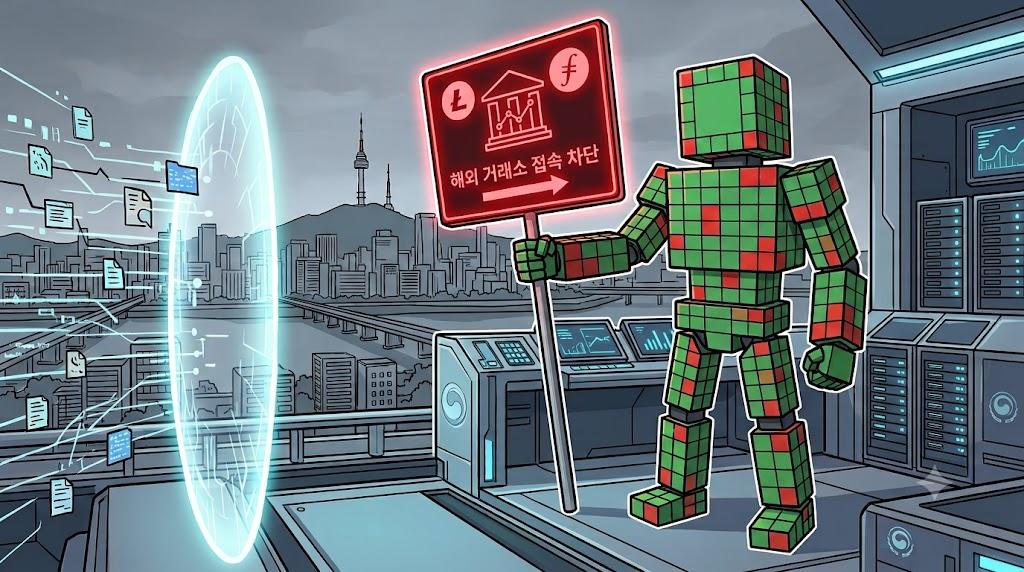
FIU expands enforcement from app stores to web access as withdrawal support is prepared
TL;DR
- South Korea has approved web-level blocks against 27 unregistered crypto exchange sites.
- The FIU has referred 44 unregistered operators to investigators and plans further action against mirror domains.
- Regulators will work with DAXA to help affected users withdraw funds when access restrictions create problems.
Trade smarter on Jupiter, Solana’s leading DEX built for fast execution and deep liquidity.
Swap tokens at competitive rates, route across multiple liquidity sources automatically, and access perpetuals, DCA, and advanced trading tools — all in one place!
South Korea is blocking domestic access to 27 unregistered crypto exchange websites, including KuCoin, MEXC, BitMart, Phemex, XT.com, Bitrue and BingX. The action extends earlier restrictions on exchange apps and targets platforms without requiring users to first show that they suffered financial losses.
The Korea Communications Standards Commission approved the network-level restrictions after reviews on Oct. 6 and 7, following a request from the Financial Intelligence Unit. The enforcement order was approved on Oct. 13, 2026. The FIU said overseas-operated websites will be blocked, while services operating domestically face termination. The FIU did not set a duration for the restrictions or a deadline for the exchanges to register.
Unregistered exchanges face faster access blocks
South Korea’s Act on Reporting and Use of Financial Information bars unregistered virtual asset service providers from operating in the country. Exchanges seeking to serve South Korean users must obtain Information Security Management System certification and register with the FIU, while also meeting security and anti-money-laundering requirements.
The enforcement framework allows the FIU to seek access restrictions as soon as it detects unregistered activity targeting Korean residents. Regulators do not need to wait for a court ruling or confirmed consumer losses. Authorities had already restricted access to affected exchanges’ mobile apps on Google and Apple last year.
The FIU has referred 44 unregistered operators to investigators and said it will pursue additional blocks when platforms reappear under alternative website addresses. Financial authorities also said they will track mirror domains and other access routes. Only 28 virtual asset service providers are currently registered with the regulator.
Regulators warned that users of unauthorized platforms may face difficulty recovering funds. The FIU plans to work with DAXA to support withdrawal procedures when the new restrictions create access problems. Investors were also urged to verify whether an exchange is registered and to withdraw assets from unauthorized operators.
KuCoin responded to the action. “We respect applicable laws and regulations across jurisdictions and continuously strengthen our compliance framework in response to evolving regulatory requirements,” a KuCoin spokesperson said. “User assets remain safe and secure, and we will communicate any further updates through our official channels.”
Local crypto market remains heavily concentrated
Chainalysis data put South Korea’s crypto market at $449.1 billion, up 12.3% between January 2025 and June 2026. Other market figures show trading activity concentrated among the largest won-based exchanges.
An estimated $110 billion left South Korean domestic exchanges in 2025 as investors moved crypto overseas amid stricter rules.
Separate from the website-blocking action, South Korea’s proposed Digital Asset Basic Law has not yet taken effect. The proposal would establish a framework covering digital-asset issuance, trading, custody and supervision. The Financial Services Commission and Financial Supervisory Service also announced rules in April that removed exchanges’ discretion to let users bypass holding periods.
The Financial Services Commission has also been developing roadmaps for corporate and nonprofit participation in the local crypto market, which remains largely driven by retail trading.
This article has been refined and enhanced by ChatGPT.


