




 USD
USD
CFTC Chair Says U.S. Is “Crypto Capital of the World” as Regulators Launch Project Crypto and Draft Asset Taxonomy

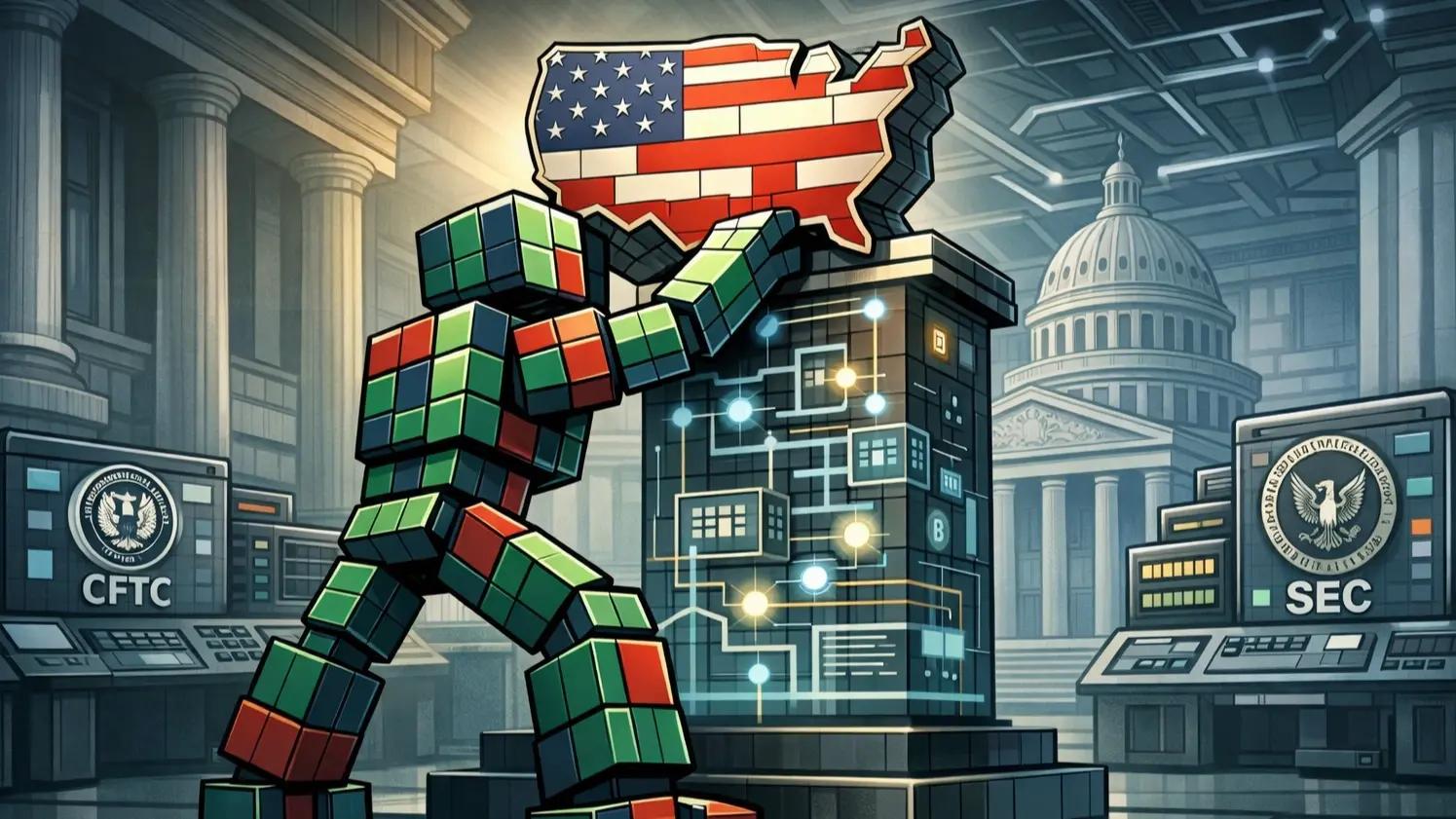
Federal agencies move to clarify digital asset oversight, derivatives policy and DeFi guidance as Washington reshapes crypto regulation
TL;DR
- CFTC Chair Michael Selig said the United States is now the “crypto capital of the world” during remarks at the FIA conference in Boca Raton as regulators outline a new digital asset framework.
- Regulators are developing a formal crypto asset taxonomy and launching a joint SEC–CFTC initiative called Project Crypto aimed at resolving jurisdiction conflicts.
- Policy discussions also include guidance for DeFi developers and wallet software, reviews of crypto perpetual derivatives and leveraged retail trading, and cybersecurity planning recognizing blockchain as a strategic technology.
We’ve launched the all-new COIN360 Perp DEX, built for traders who move fast!
Trade 130+ assets with up to 100× leverage, enjoy instant order placement and low-slippage swaps, and earn USDC passive yield while climbing the leaderboard. Your trades deserve more than speed — they deserve mastery.
Michael Selig was sworn in as the 16th chairman of the Commodity Futures Trading Commission on Dec. 22, 2025, taking leadership of the federal regulator created in 1974 to oversee derivatives markets including futures, swaps and options. His appointment places him at the center of a policy shift affecting digital asset oversight as lawmakers debate expanding the agency’s authority over crypto commodities such as Bitcoin and Ethereum. The discussion comes as policymakers consider frameworks that could place a large portion of the roughly $4 trillion cryptocurrency market under the CFTC’s supervision.
Selig assumed control of the regulator as officials reconsider how digital asset markets should be governed after years of enforcement disputes. Data from the agency show that 58 enforcement actions in fiscal year 2024 produced $17.1 billion in monetary relief, while later regulatory changes coincided with a decline in enforcement activity to 11 cases totaling less than $1 billion in penalties. Enforcement updates released Jan. 16, 2026 included several smaller cases, among them penalties of $200,000 and $150,000 tied to spoofing violations and another enforcement order imposing $335,000 in disgorgement and fines related to misuse of confidential information and fictitious trading.
Policy discussions expanded during the FIA International Futures Industry Conference in Boca Raton, Florida, where Selig addressed the role of the United States in digital asset markets. Speaking at the event, the CFTC chair said the country is now the “crypto capital of the world.” The remarks came as regulators described plans to reshape oversight frameworks governing cryptocurrencies, trading platforms and derivatives markets.
SEC Chairman Paul Atkins also addressed the conference, describing efforts to coordinate rulemaking between the securities regulator and the derivatives watchdog. Atkins said the agencies are working to end overlapping enforcement actions that have characterized digital asset oversight, stating that “the regrettable era of duplicative enforcement actions” would come to an end as regulators align their approaches to crypto markets.
Regulators are developing a formal classification system designed to define different categories of digital assets and determine which authority governs each type of token. The proposed framework would establish a crypto asset taxonomy intended to clarify whether particular assets fall under securities regulation, commodities oversight or another legal category. Officials involved in the discussions said the effort is intended to address long-standing uncertainty faced by crypto companies attempting to determine which federal rules apply to their products.
Coordination between regulators also includes a joint initiative known as Project Crypto, a program designed to reduce jurisdiction disputes between federal agencies overseeing digital asset markets. The initiative focuses on establishing clearer regulatory frameworks for crypto trading platforms, derivatives products and blockchain-based financial systems that have previously fallen into overlapping oversight categories.

Officials have also discussed creating mechanisms that would allow companies to engage both regulators simultaneously when seeking regulatory guidance. Among the proposals under review is a shared online portal where crypto firms could request consultations with the SEC and the CFTC before launching new products or services in the United States.
Regulatory discussions have also turned toward decentralized finance developers and software infrastructure providers operating in the digital asset ecosystem. Policymakers are examining how non-custodial wallet software and DeFi protocols should be treated under existing financial rules, including whether developers of decentralized tools should register as financial intermediaries or remain categorized as software providers.
Derivatives regulation remains a major focus of the CFTC’s agenda. Regulators are reviewing cryptocurrency perpetual futures contracts, trading instruments widely offered by offshore exchanges that allow leveraged positions to remain open indefinitely without expiration. Selig indicated that guidance enabling such contracts to operate within regulated U.S. markets could arrive “within the next month or so.”
Officials reviewing derivatives frameworks have also examined leveraged retail crypto trading markets as part of the same regulatory discussions surrounding digital asset derivatives and platform oversight. The review includes evaluating how such products might operate within existing derivatives regulations administered by federal agencies.
Event-based prediction markets have emerged as another subject of regulatory attention. Officials have discussed drafting rules governing contracts that allow traders to speculate on real-world outcomes such as political developments, sports results or economic indicators. Selig addressed the issue directly during policy discussions, stating, “For too long, the CFTC’s existing framework has proven difficult to apply and has failed our market participants. That is something I intend to fix by establishing clear standards for event contracts that provide certainty.”
Modernization of capital market infrastructure has also become part of the broader regulatory conversation. Federal officials have examined proposals allowing crypto asset securities and blockchain-native tokens to trade on shared regulated platforms while remaining subject to distinct legal classifications under federal financial law.
Legislative activity has also shaped the evolving regulatory environment. Congress passed the GENIUS Act on July 18, 2025, establishing a federal framework governing payment stablecoins and creating oversight standards for issuers operating in the United States financial system.
Cybersecurity planning has begun incorporating blockchain technology into federal strategy documents as well. A national cyber strategy released by the White House lists blockchain alongside artificial intelligence and quantum computing as technologies requiring protection within critical digital infrastructure.
The policy document states that the government will “build secure technologies and supply chains that protect user privacy from design to deployment, including supporting the security of cryptocurrencies and blockchain technologies.” Federal planning documents also reference the development of post-quantum cryptography aimed at protecting digital systems from potential future threats posed by advanced computing capabilities.
Government discussions have also referenced proposals for a national digital asset reserve containing cryptocurrencies including Bitcoin, Ethereum, Solana, Cardano and XRP as part of broader debates about the country’s role in digital asset markets and financial infrastructure.
This article has been refined and enhanced by ChatGPT.


