




 USD
USD
Washington in Focus: Weekly Briefing on U.S. Crypto Power, Policy, and Regulation

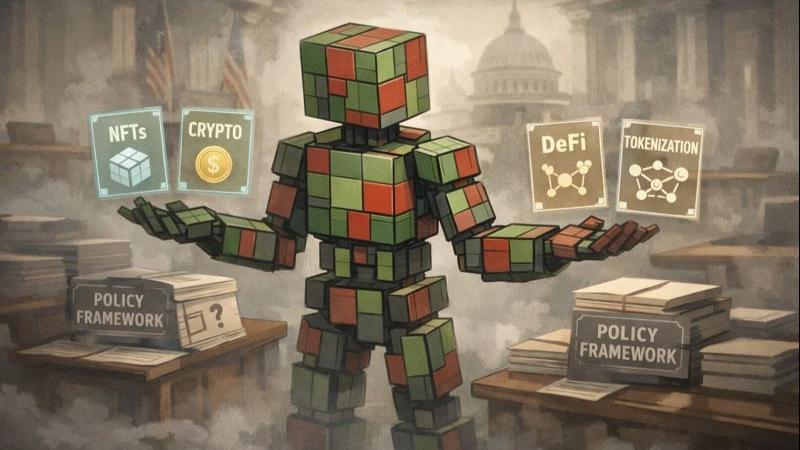
This weekly briefing decodes how crypto is being rewritten inside Washington. From market-structure fights and stablecoin turf wars to Bitcoin reserves, agency power shifts, and state-level experiments, the U.S. is no longer debating crypto’s existence—it’s negotiating control, jurisdiction, and long-term strategy across the entire digital asset stack.
We’ve launched the all-new COIN360 Perp DEX, built for traders who move fast!
Trade 130+ assets with up to 100× leverage, enjoy instant order placement and low-slippage swaps, and earn USDC passive yield while climbing the leaderboard. Your trades deserve more than speed — they deserve mastery.
Trump Aims to Sign Crypto Market Structure Bill Amid Stablecoin Disputes
President Trump aims to sign a comprehensive cryptocurrency market structure bill soon, following a speech at the World Economic Forum in Davos. The bill faces division, particularly over the treatment of stablecoin rewards, with banks opposing the GENIUS law while crypto firms advocate for competition. Coinbase withdrew support, delaying Senate Banking Committee activities. Key stakeholders, including Ripple and the President's Council of Advisors for Digital Assets, urge rapid passage, emphasizing the need for a clear regulatory framework. The Senate Agriculture Committee is set to discuss amendments on January 27, while the Banking Committee's hearing remains unscheduled.
U.S. Senate Pushes Crypto Market Structure Bill With Ethics Ban, Faces Political Resistance
The Senate Agriculture Committee released its version of a sweeping U.S. crypto market structure bill on January 22, 2026, aiming to define regulatory jurisdiction between the CFTC and SEC, establish digital asset classifications, and create a federal framework for spot and derivatives markets, but it lacks sufficient Democratic support, according to observers. Ahead of a markup hearing, amendments were filed on January 23, 2026, including Sen. Michael Bennet’s “Digital Asset Ethics Act,” which would ban the president, vice president, and lawmakers from certain crypto transactions, plus additional ethics and conflict-of-interest measures tied to political figures’ digital asset exposure.
U.S. Treasury Locks In Bitcoin Strategy, Halts Seized BTC Sales to Build Strategic Reserve
Treasury Secretary Scott Bessent said on January 21, 2026 that the U.S. will position itself as a global crypto leader while formalizing a Strategic Bitcoin Reserve, ending the long-standing practice of selling seized BTC. Speaking at the World Economic Forum in Davos, Bessent confirmed President Trump’s executive order treats government-held bitcoin as a strategic, budget-neutral sovereign asset, comparable to a long-term store of value. All confiscated bitcoin will now flow into the reserve, halting U.S. Marshals Service auctions. Treasury estimates holdings exceed 200,000 BTC, signaling a structural shift in fiscal and digital-asset policy.
CFTC and SEC to Hold Joint Meeting on Crypto Amid Congressional Delays
On January 27, 2026, the CFTC and SEC will hold a joint meeting from 10:00 a.m. to 11:00 a.m. ET at CFTC headquarters in Washington, D.C. Amid Congress delaying crypto legislation, this meeting underscores crypto’s significance in the financial landscape. While no new regulations or token approvals will be made, the coordination between these agencies aims to clarify the regulatory environment. Key figures like Michael Selig and Paul Atkins may discuss boundaries, reinforcing the notion that crypto is integrating into mainstream finance. The meeting indicates a proactive approach to regulation, paving the way for potential future legislation.
Kansas Proposes Bitcoin Reserve Fund Using Unclaimed Digital Assets
Kansas lawmakers are considering legislation to create a Bitcoin and digital assets reserve funded by unclaimed digital property rather than taxpayer money. Introduced by Senator Craig Bowser, Senate Bill 352 would use abandoned crypto, airdrops, and staking rewards to build the reserve, explicitly avoiding direct Bitcoin purchases. The bill aims to define terms related to digital assets and streamline their management under Kansas' unclaimed property laws. Ten percent of any deposits will go to the general fund, while the reserve will retain the assets for long-term appreciation. This proposal aligns with broader trends in digital asset management at both state and federal levels.
Oklahoma Bill Allows State Employees and Vendors to Receive Payments in Bitcoin
Oklahoma's Senate Bill 2064, introduced by Senator Dusty Deevers, aims to enable state employees and vendors to receive payments in Bitcoin, set to take effect in November 2026 if approved. The bill establishes Bitcoin as a financial instrument without recognizing it as legal tender, allowing individuals to choose between Bitcoin and USD for payments. Payments will be based on market value, with deposits into self-hosted or third-party wallets. It also streamlines regulations for crypto businesses. The Oklahoma State Treasurer will select a crypto firm for processing by January 1, 2027, and provide guidance on tax treatment of digital assets.
SEC Dismisses Gemini Earn Case, Citing Full Customer Restitution
The SEC has dismissed its civil enforcement action against Gemini Trust Company, marking the closure of a significant case related to the collapse of crypto yield products in 2022. The dismissal, filed on January 23, 2026, was based on the complete restitution of customer crypto assets to Gemini Earn investors and does not allow the SEC to refile the claims. While this outcome emphasizes restitution in enforcement resolutions, it does not set a legal precedent for crypto yield products or indicate regulatory leniency. The case has concluded after nearly three years, highlighting ongoing regulatory scrutiny in the crypto sector.
Caroline Ellison Released Early from Custody After Cooperation in FTX Case
Caroline Ellison has been released from U.S. federal custody after serving approximately 14 months of a originally two-year sentence related to the FTX collapse. Her release, confirmed by the Federal Bureau of Prisons on January 22, 2026, followed significant cooperation with prosecutors, making her a key witness against Sam Bankman-Fried. Ellison received a reduced sentence due to good conduct and compliance while incarcerated. Despite her freedom, she faces ongoing legal restrictions, including a decade-long ban from executive roles and three years of federal supervision, alongside an $11 billion asset forfeiture agreement reflecting FTX-related losses.
DOJ Drops OpenSea Insider Trading Case After Appeals Court Overturns Conviction
The DOJ dropped its insider trading case against former OpenSea manager Nathaniel Chastain after an appeals court found jury instructions flawed, allowing conviction based on ethical violations instead of tangible theft. Chastain, charged in June 2022 for exploiting confidential information to profit from NFTs, had served three months in prison and forfeited 15.98 ETH. The appeals court ruled that featured NFT data lacked commercial value under federal law. This case reflects shifting federal crypto enforcement, with a 60% decline in SEC actions in 2025. The global NFT market cap currently stands at $2.56 billion, a significant drop from its peak of $16.82 billion in April 2022.
This article has been refined and enhanced by ChatGPT.


